
All Articles, Newest First
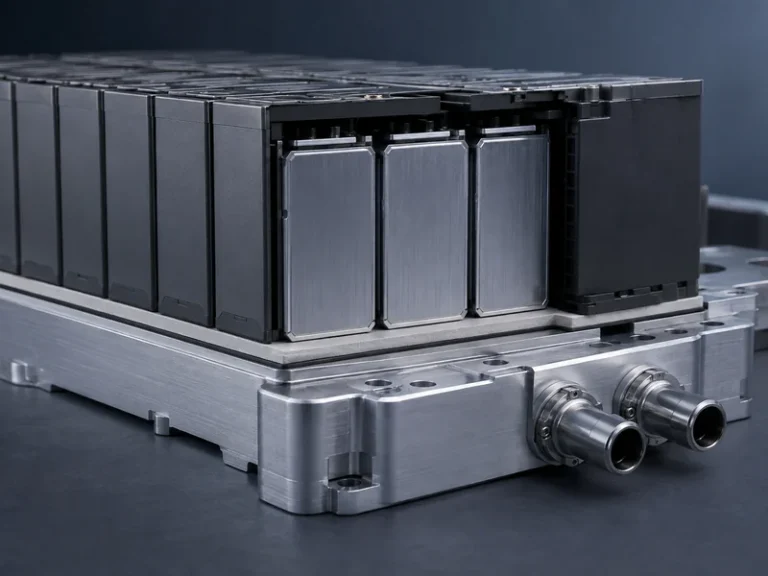
Electrically Insulating Thermal Interface Materials
Electrically insulating thermal interface materials move heat and block current in a battery pack. Pick fillers, pads, or films by dielectric strength.
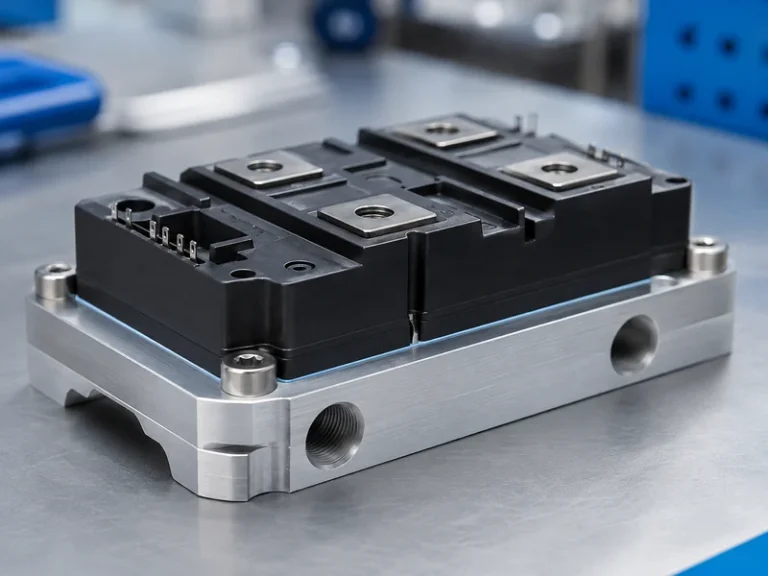
Thermal Interface Materials for Power Electronics Cooling
Thermal interface materials for power electronics start with the interface, not the datasheet: choose by gap, flatness, insulation, and cure, then verify.
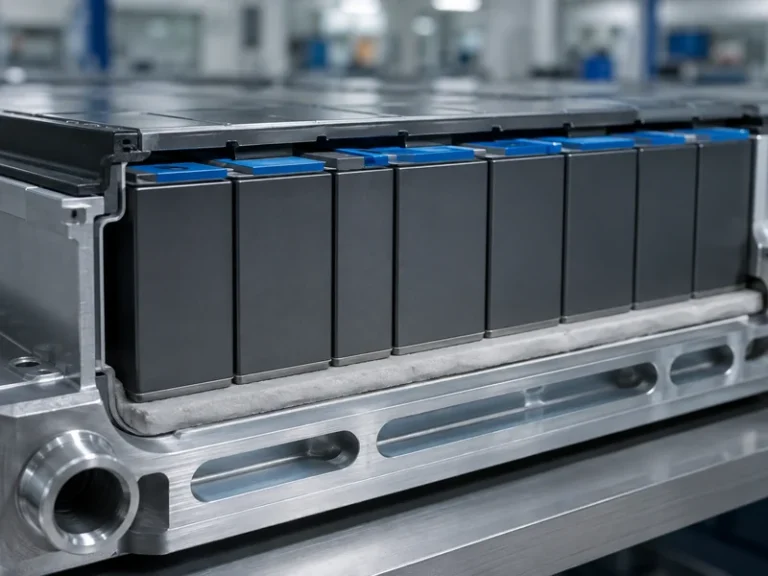
Thermal Interface Material Comparison for Battery Packs
Thermal interface material comparison for battery packs: fit TIM class to gap, conformability, insulation, cure and rework, then let conductivity decide.
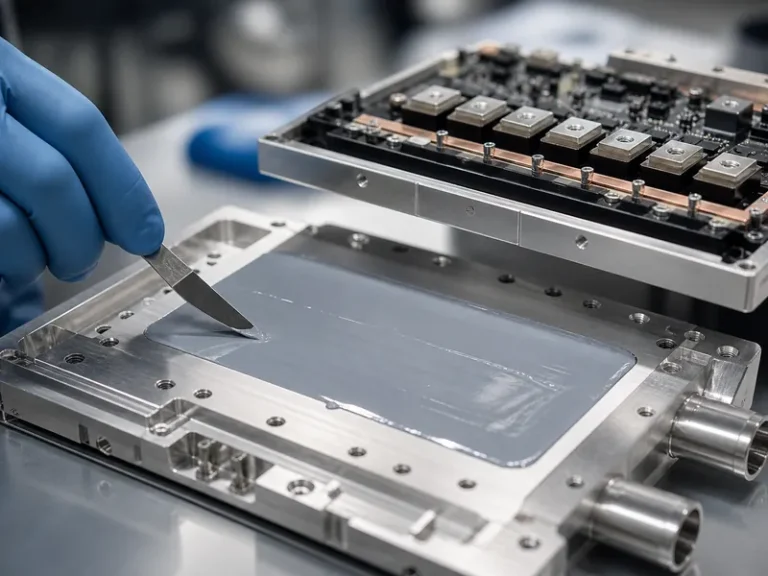
What is Thermal Grease?
Thermal grease is a non-curing thermal interface material (TIM) that fills the microscopic air gaps between a heat source and a cooling surface so…
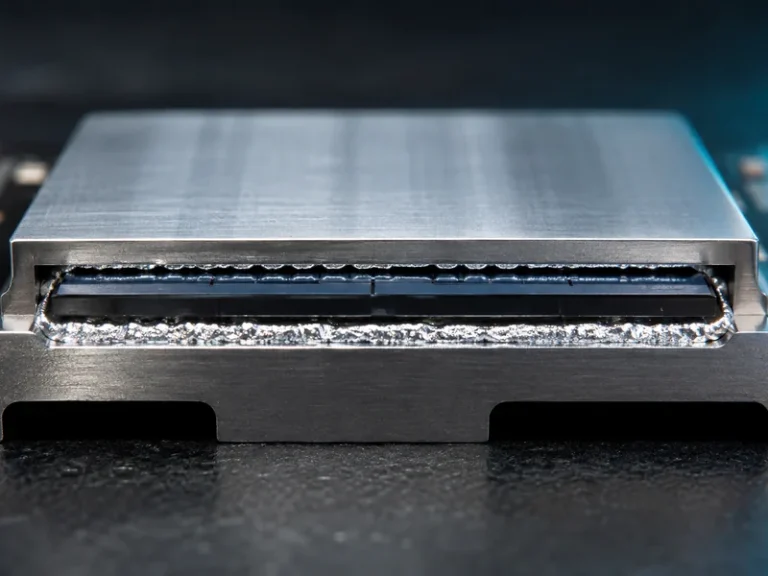
Solder Thermal Interface Material: Uses and Limits
Solder thermal interface material gives the lowest die-level thermal resistance on thin, flat, solderable joints. See where it fits and where pads win.
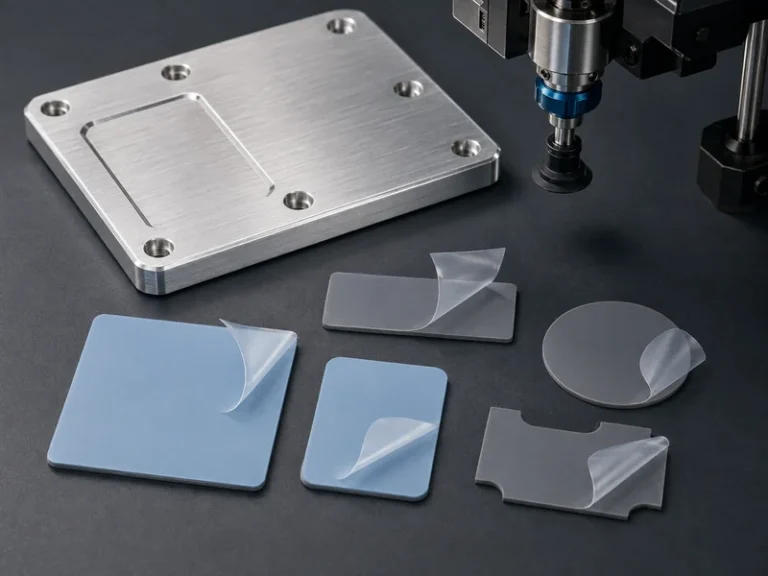
Die Cut Thermal Interface Material: Types and Selection
Die cut thermal interface material selection: compare pre-cut pads and dispensed gap fillers by gap, insulation, and assembly stress before you spec.

Carbon Nanotube Thermal Interface Material Explained
Carbon nanotube thermal interface materials promise extreme conductivity; real performance depends on contact resistance and integration. Verify first.
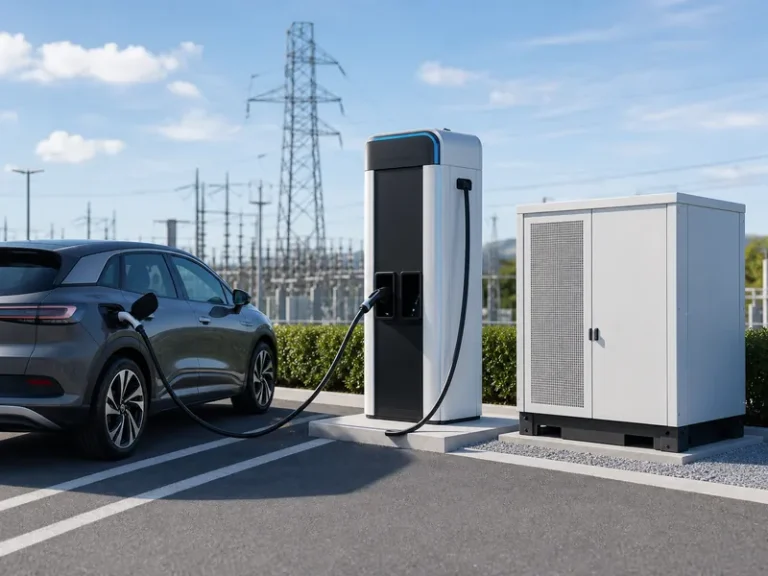
Energy Storage Battery Packs in EV Charging Stations
A storage battery pack lets an EV charging station draw steady, low power from the grid while delivering short bursts of high power to…
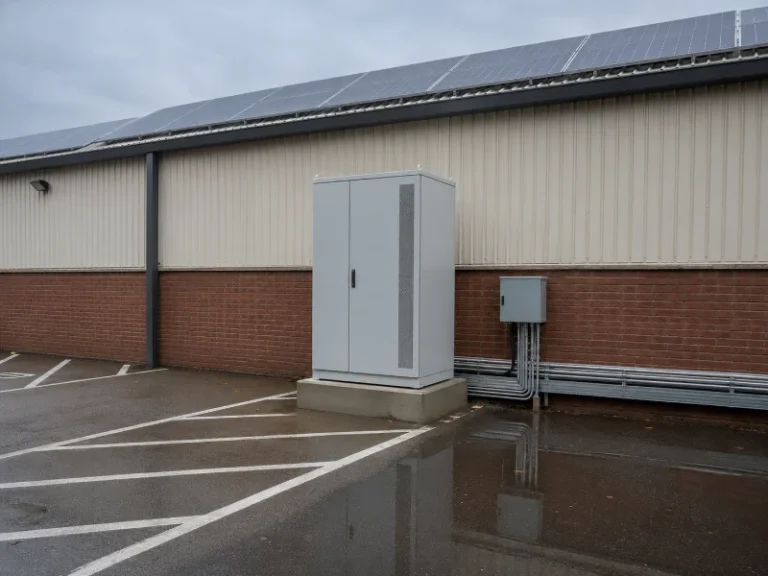
How Much Does an ESS Battery Cost?
An ESS battery costs about $70/kWh as a bare pack, $117/kWh as a turnkey system, and $125/kWh as a finished utility project. These are…
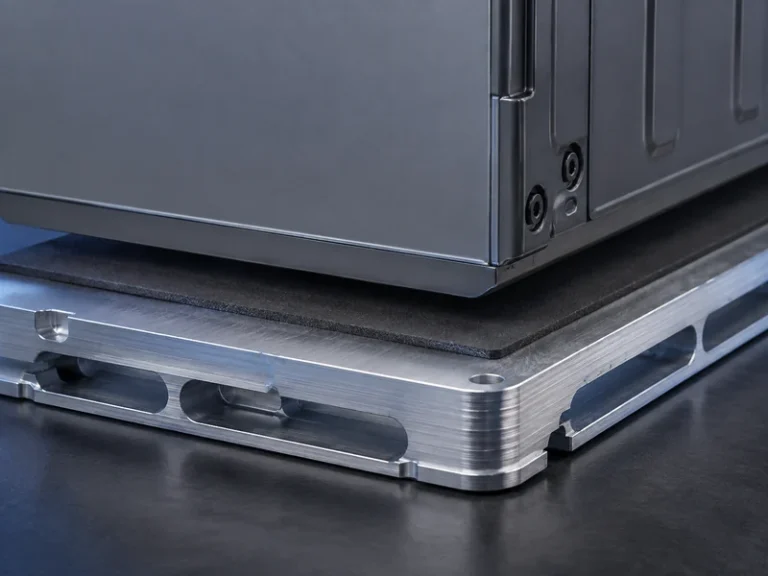
Carbon Fiber Thermal Interface Material for Battery Packs
Carbon fiber thermal interface material conducts battery heat via oriented fibers. See how orientation, isolation, and gap size drive selection.
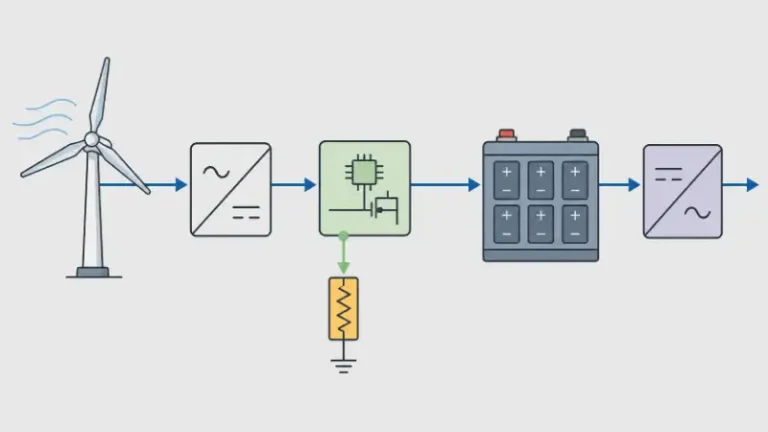
Wind Turbine Battery Storage System: How to Size and Match Storage to a Variable Wind Profile
A wind turbine battery storage system stores the electricity a turbine produces, so it serves load during calm periods or through an outage instead…
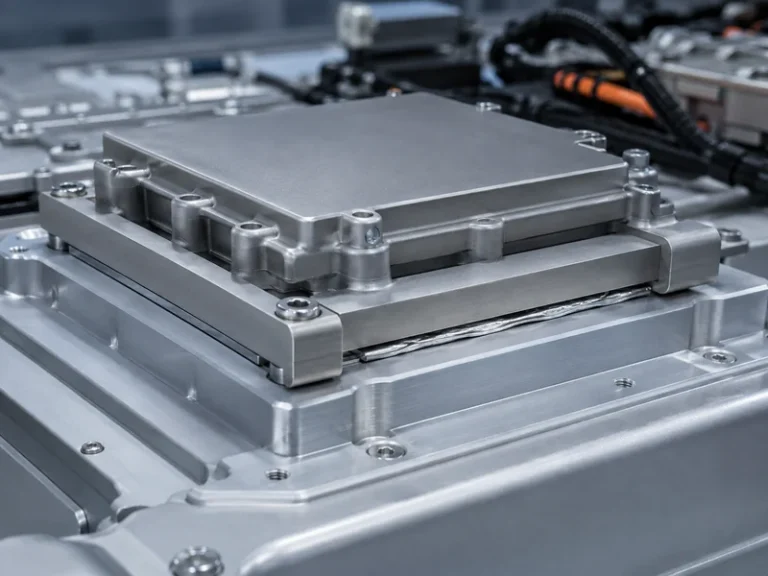
Indium Thermal Interface Material: Properties and Uses
Indium thermal interface material: bulk conductivity near 82 W/m·K, softness, melting point, forms, and where a metal TIM fits in EV battery packs.

How Are AI Servers Cooled?
How are AI servers cooled? Modern AI racks rely on liquid—cold plates, rear-door exchangers, and immersion—chosen by rack power density and the heat path.
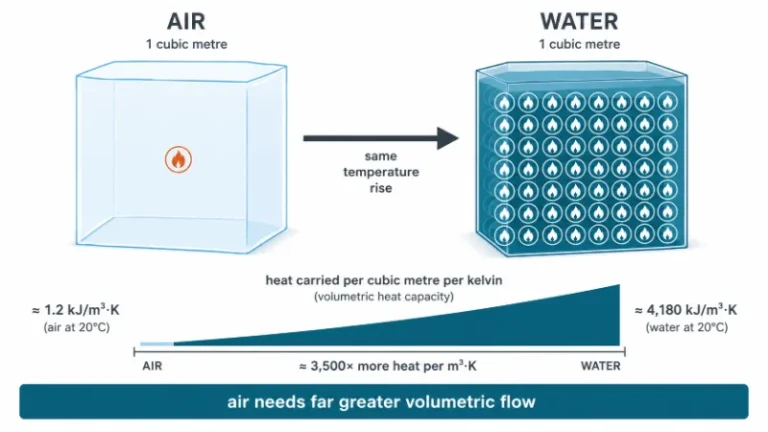
EV Battery Cooling: Matching the Method to Heat Load and Cell Temperature Uniformity
EV battery cooling keeps a lithium-ion pack inside a working temperature band while limiting how far individual cells drift from one another, and the…
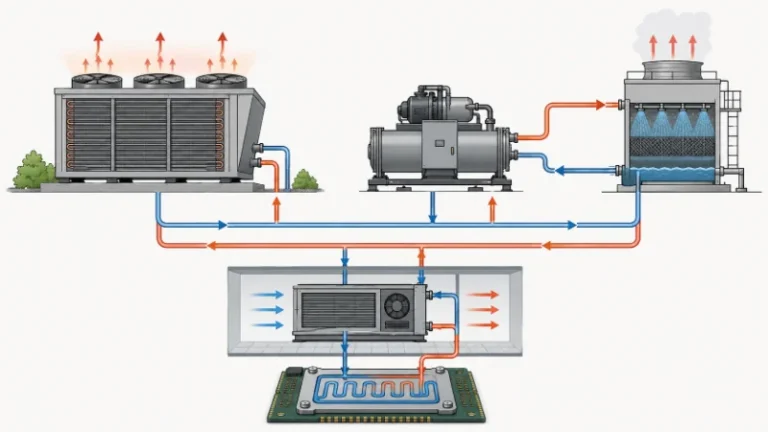
Data Center Chillers: Choosing Between Air-Cooled and Water-Cooled Plants
Choosing between an air-cooled and a water-cooled chiller is the cooling decision that most shapes a data center's energy and water bills, once a…
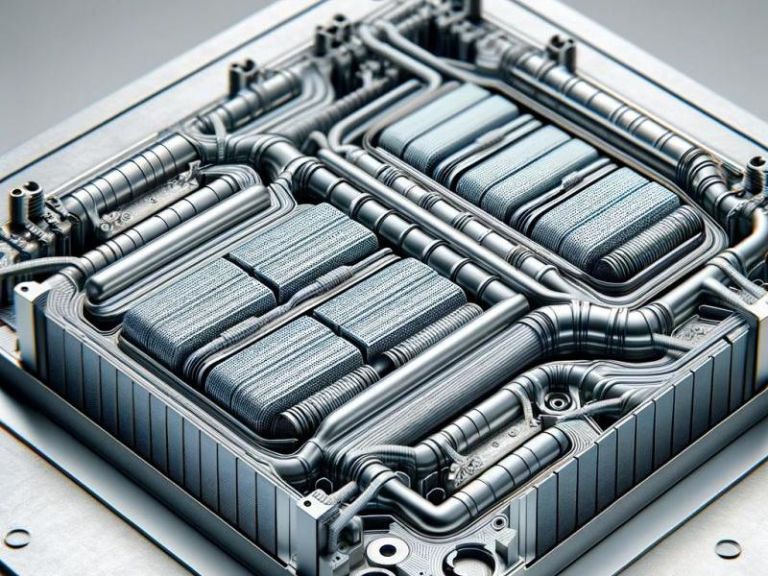
What is a Battery Cold Plate?
A battery cold plate is a liquid-cooled metal plate that sits in the heat path between battery cells and a circulating coolant, pulling heat…
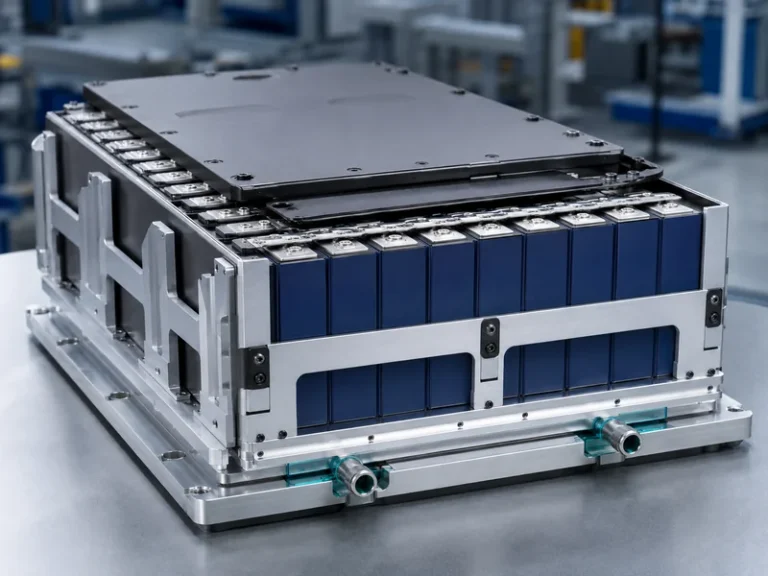
Energy Storage Battery Module: From Cell to Coolant
An energy storage battery module bridges cell and pack, fixing voltage and the cell-to-coolant path. See how cell format and cold plates cool a…
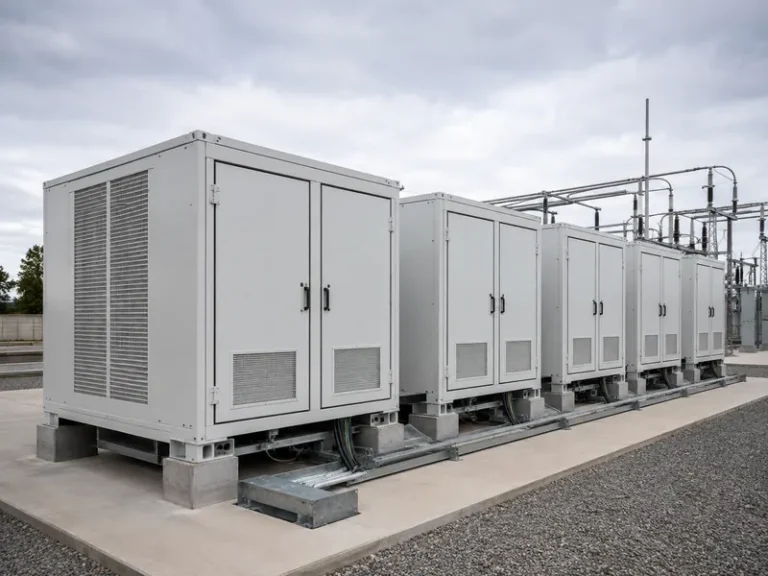
How to Choose a Battery Energy Storage System Configuration
A battery energy storage system solution is an integrated package — cells, battery management system, power conversion system, energy management software, thermal management, and…
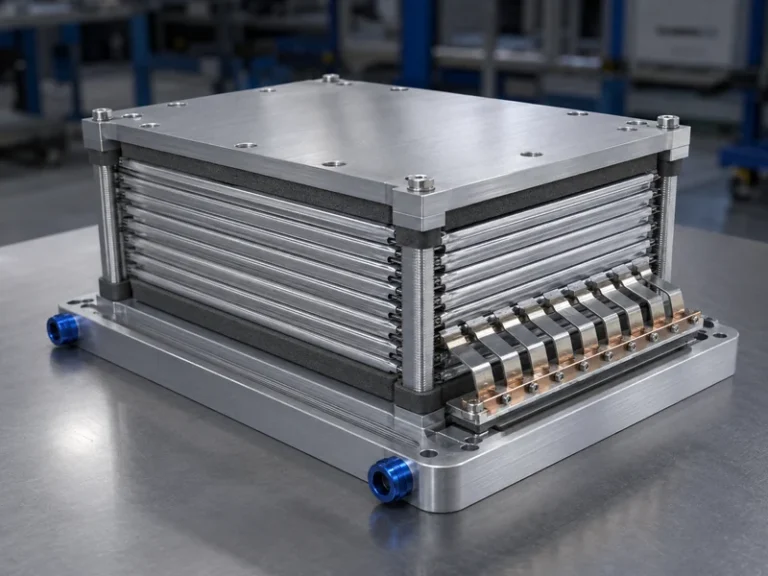
Pouch Cell Battery Module: Design, Swelling, and Cooling
A pouch cell battery module supplies the stiffness, compression, and heat path soft pouch cells give up. See how format, swelling, and cooling connect.
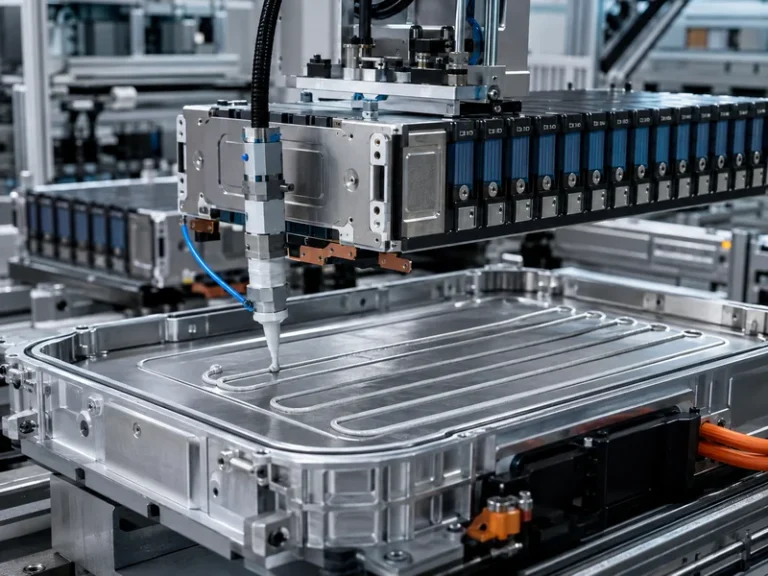
Battery Module and Pack Assembly Process
Battery module and pack assembly process, step by step: cell sorting, compression, connections, and where thermal interface materials and cold plates fit.

Battery Liquid Cooling System Overview
A battery liquid cooling system circulates coolant through sealed cold plates and channels that sit against the cells, moving heat away far faster than…

Commercial Building Solar Energy Storage System Case Studies
Read commercial building solar energy storage system case studies as engineering evidence, and their headline numbers become a checklist instead of a promise. Demand-charge…
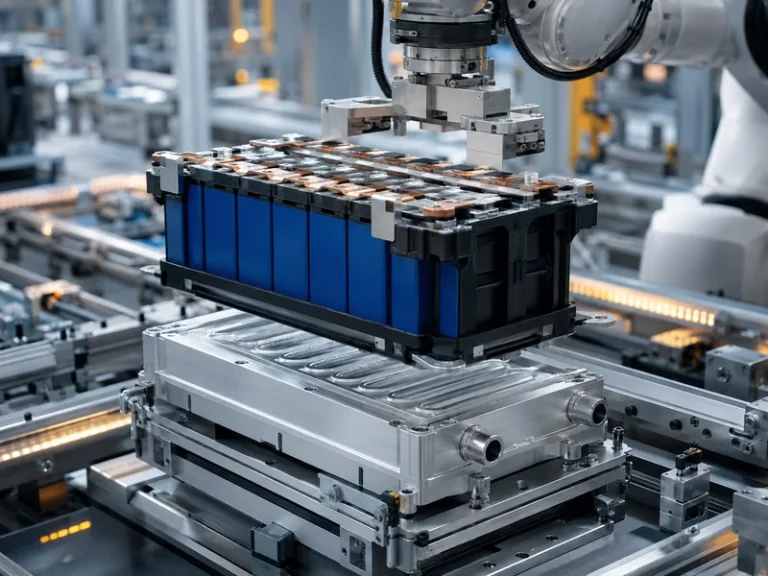
Battery Module Assembly Steps and Thermal Integration
How battery module assembly joins cells and sets the cell-to-coolant heat path, from busbar welding and thermal interface materials to module testing.

What Are The Benefits Of ESS Liquid Cooling?
ESS liquid cooling earns its place in modern battery energy storage for three engineering reasons: it holds cells inside their optimal temperature band, it…
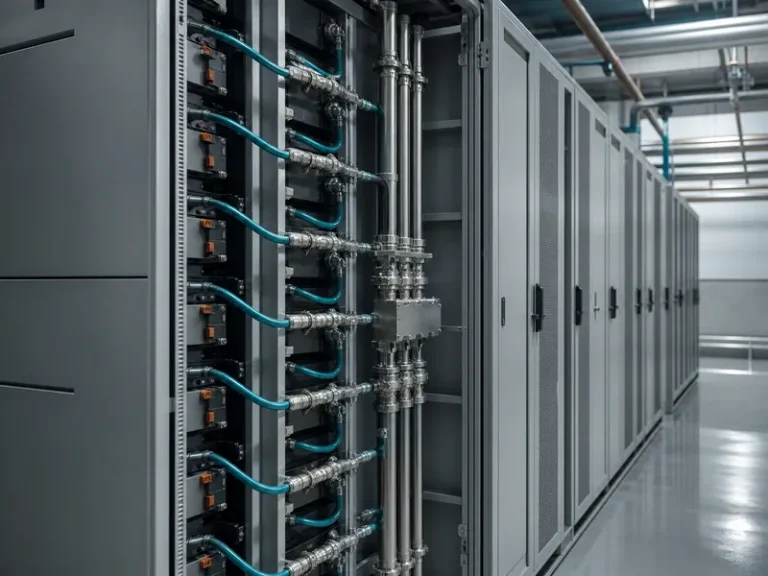
Optimizing Thermal Management of Industrial Energy Storage
Optimizing thermal management of industrial energy storage means holding cells inside their allowed temperature window while keeping cell-to-cell differences small, at the lowest sustainable…

What Is ESS Liquid Cooling?
ESS liquid cooling is a thermal-management method that circulates a liquid coolant through cold plates in contact with the battery modules to carry heat…
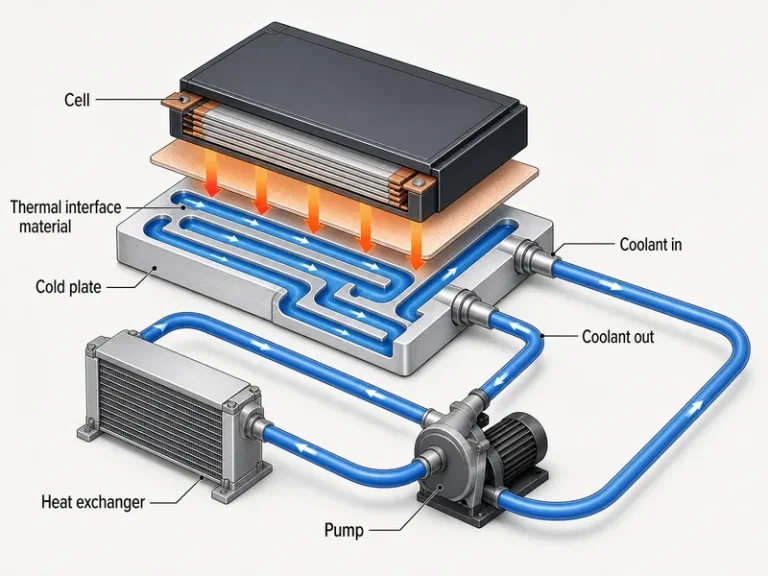
How Do Liquid Cold Plates Work?
A liquid cold plate works by conducting heat out of a mounted component into a metal body, then carrying that heat away in a…
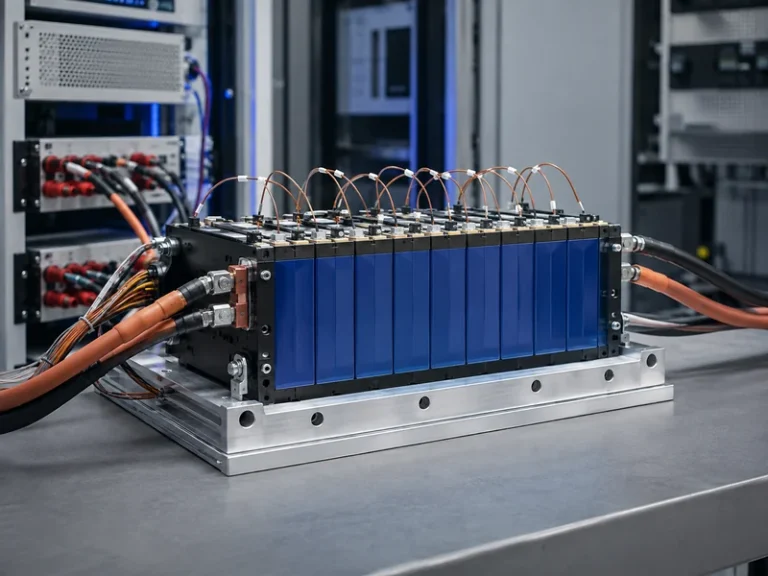
Battery Module Testing: What Changes at Module Level
Battery module testing covers electrical, thermal, mechanical, and environmental checks cell data misses—busbar resistance, weld quality, and standards.
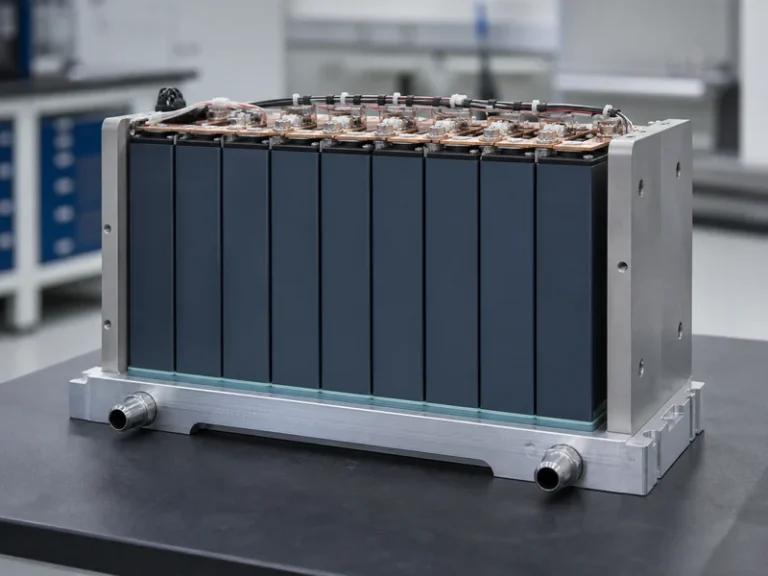
Battery Module Design: From Cell Format to Coolant Path
Battery module design couples cell format, the cell-to-coolant heat path, and mechanical retention. See how to size each link before you build the module.
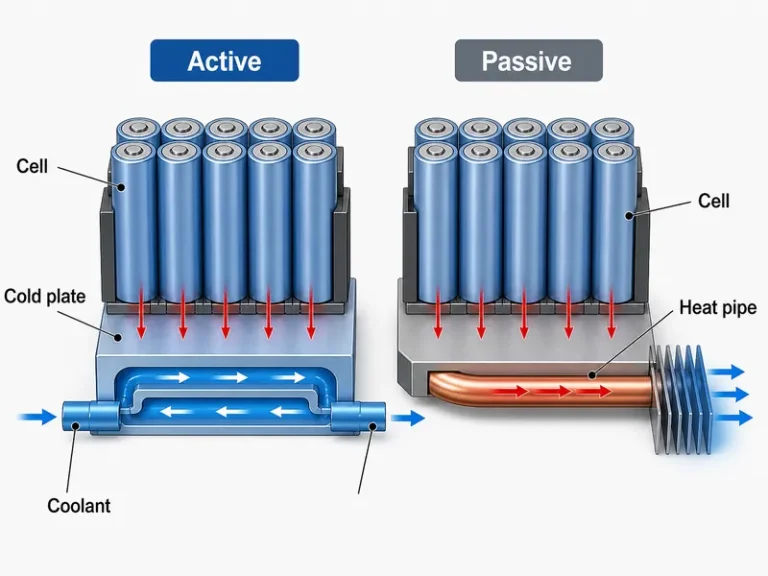
Active VS Passive Thermal Management
Active vs passive thermal management turns on one question for a battery pack: does the cooling path need external energy to move heat. Active…
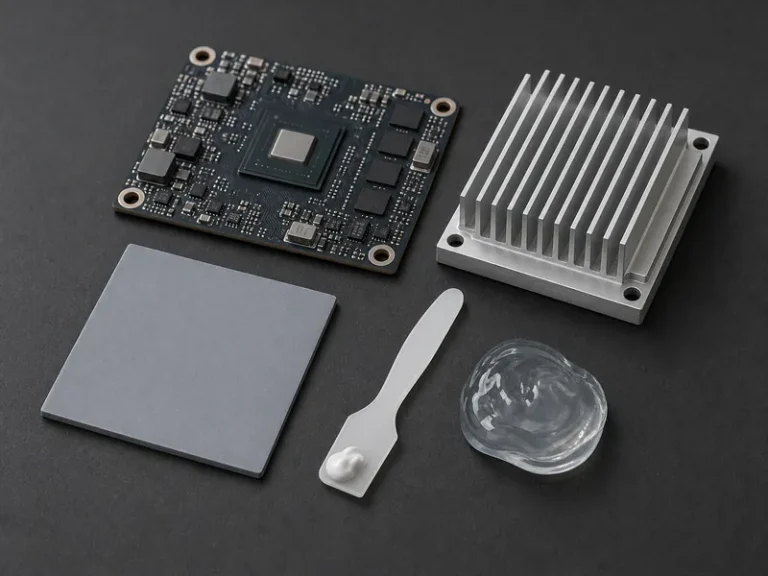
Best Materials for Dissipating Heat in Electronics
No single material is the "best" heat dissipator for every board or battery pack. The right choice follows the gap you have to fill,…
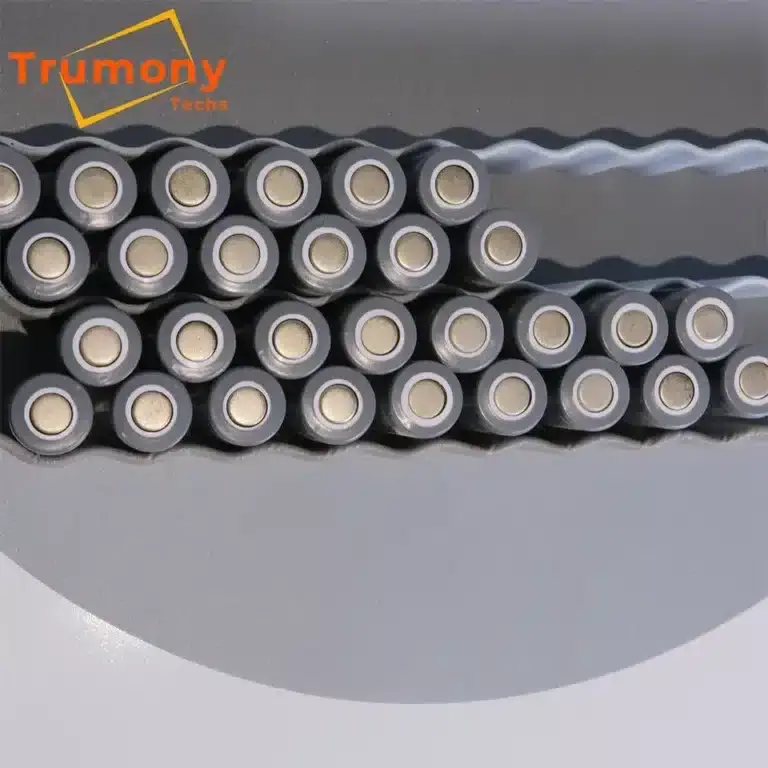
Cold Plate & Welding: Thermal Management
In a liquid-cooled battery pack, the weld is one key control point for sealing integrity and manufacturing reliability. It sits alongside the other things…
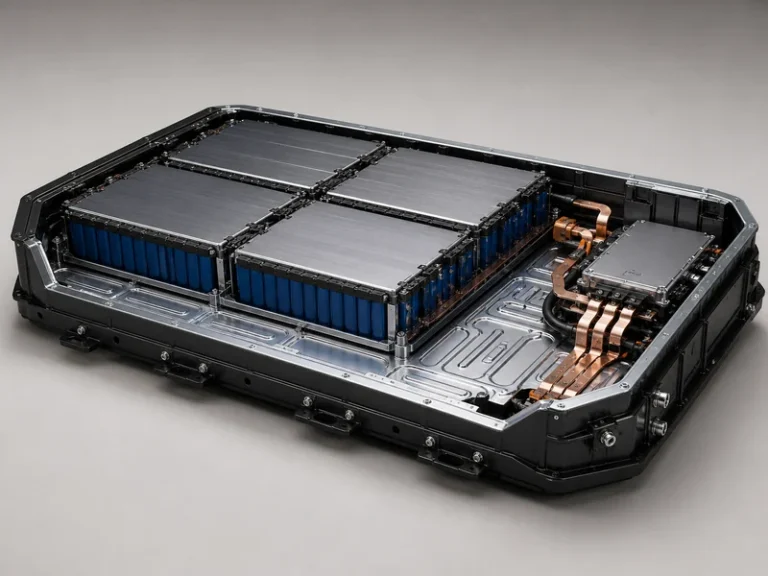
Difference Between Battery Module and Battery Pack
The difference between battery module and battery pack is scope: a module groups cells; a pack adds a BMS, protection, enclosure, and pack-level cooling.
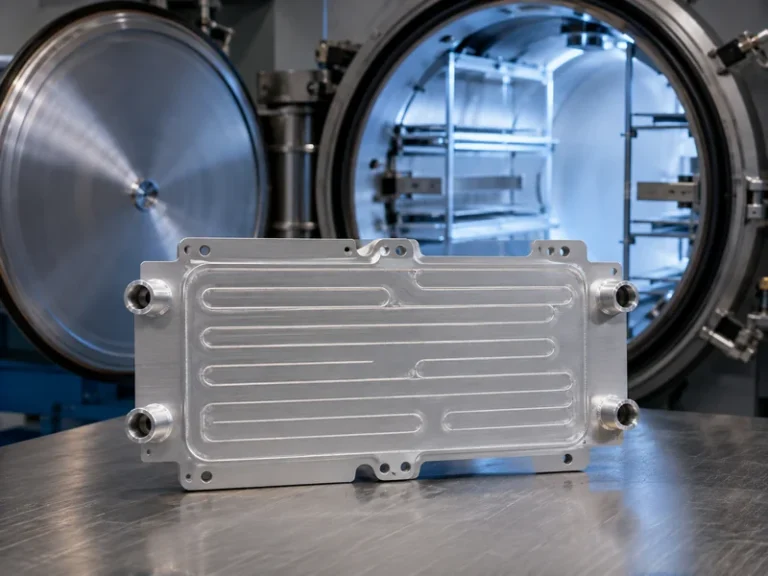
Aluminium Vacuum Brazing in Battery Cold Plates
Aluminium vacuum brazing seals leak-tight aluminum cold plates flux-free in one cycle. How it works, the temperature and vacuum window, and CAB trade-offs.
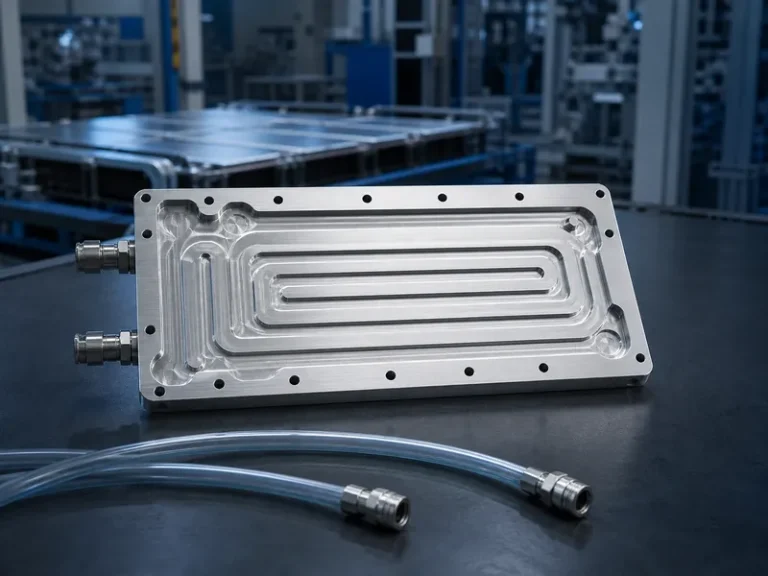
Cold Plate Design For Thermal Management
A cold plate is a sealed metal plate that carries liquid coolant through internal channels to pull heat out of a device. In a…
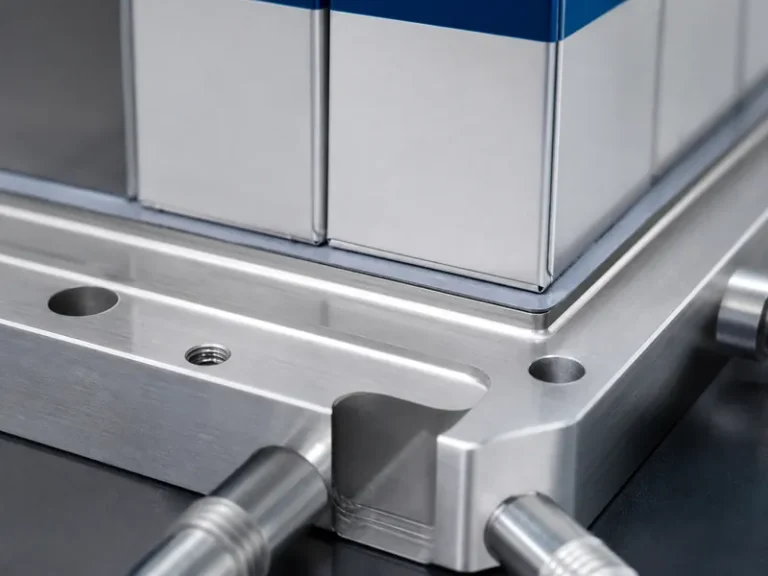
How Does Liquid Cooling Extend The ESS Lifespan?
Liquid cooling extends the ESS lifespan by holding cells inside a narrow temperature window and keeping the temperature spread between cells small, which…
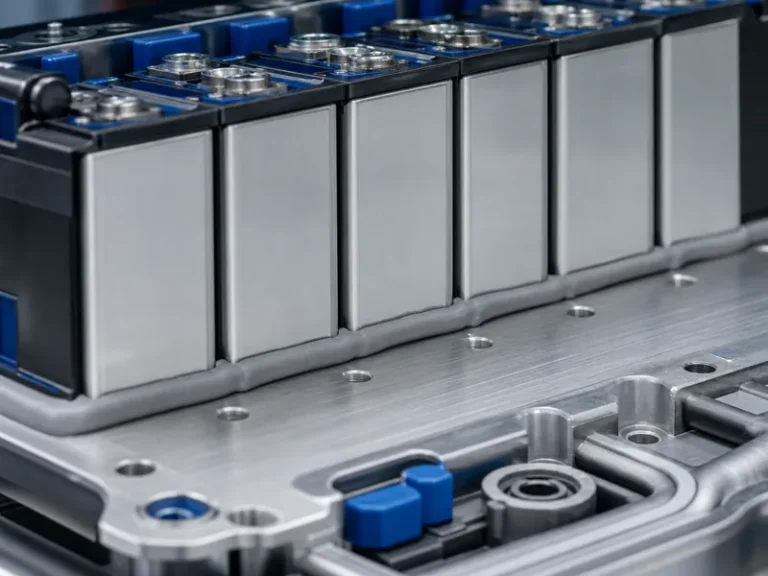
Is Silicone Thermal Pad Good?
A silicone thermal pad is good for most electronics and battery-pack interfaces that have an uneven gap, need electrical isolation, and run within the…
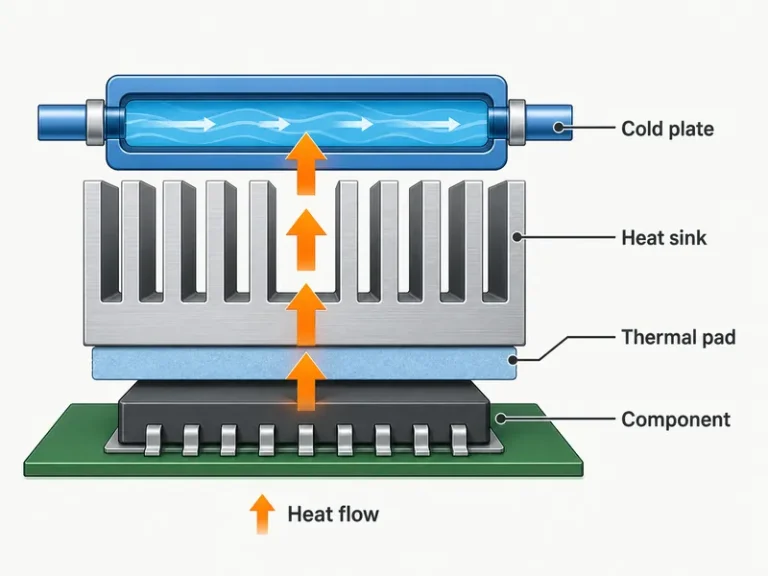
Enhancing Pcb Performance With Trumonytechs’s Advanced Thermal Pads
A thermal pad improves PCB performance by replacing the insulating air gap between a hot component and its heat sink with a conformable, solid…
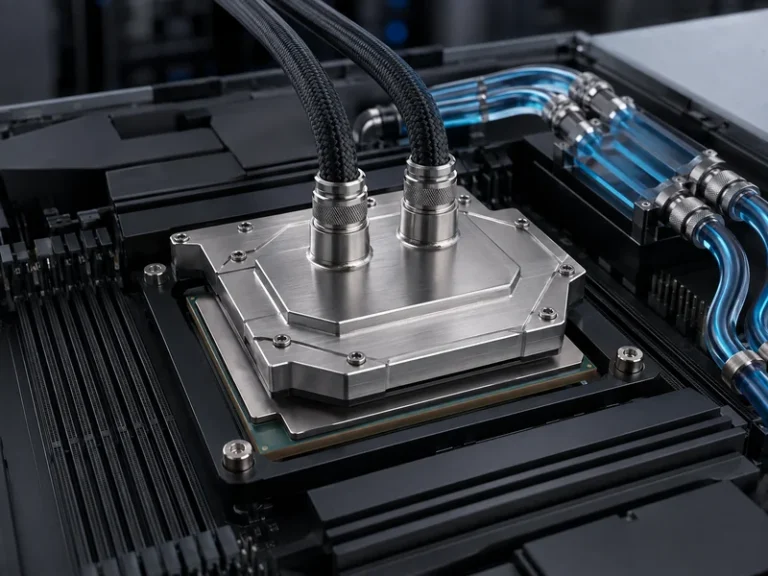
DLC Cooling: How Direct Liquid Cooling Works
DLC cooling explained: how direct-to-chip liquid cooling works, single-phase vs two-phase, and what the cold plate contact interface must get right.

The Importance Of Thermal Management In Electric Vehicles
Thermal management decides whether an electric vehicle's battery delivers its rated range, charge rate, and service life. Temperature sets how much power the cells…
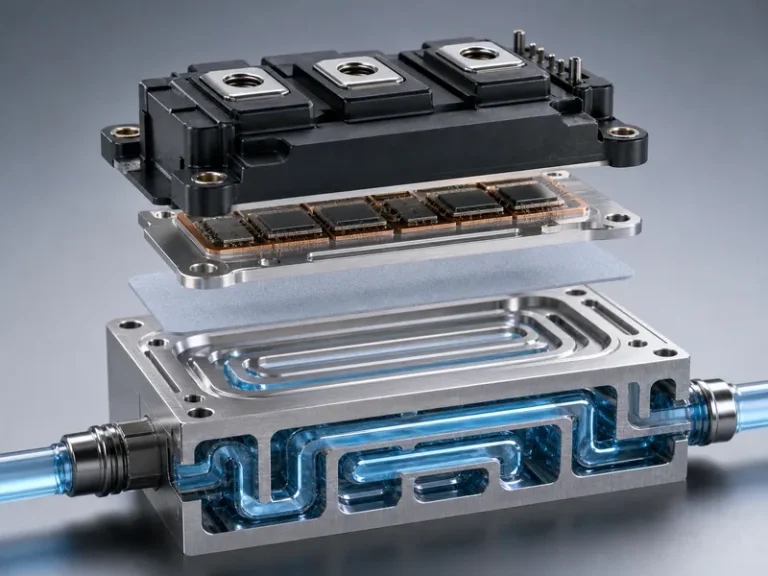
IGBT Cooling Using Liquid Technology: Enhancing Electronic Efficiency
Liquid cooling manages an IGBT's heat by carrying it from the silicon junction, through the module baseplate and a thermal interface layer, into a…
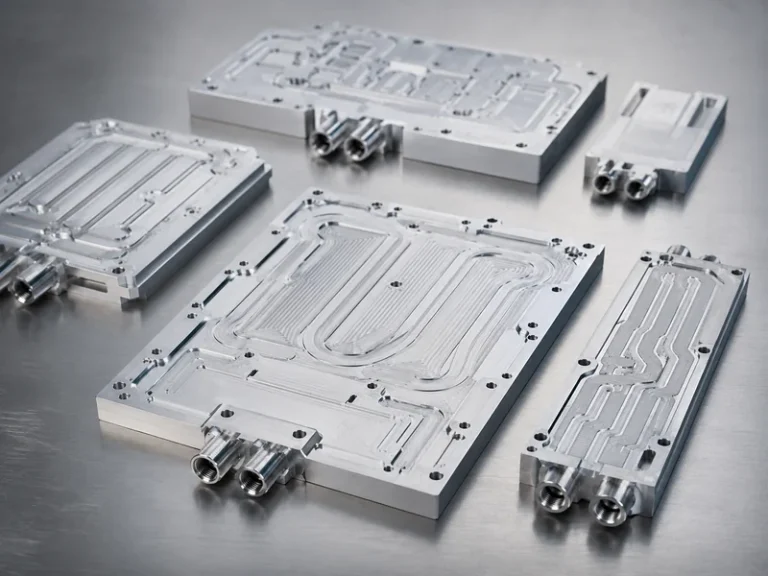
Cold Plate Liquid Cooling Company: 11 Suppliers Compared
Compare 11 cold plate liquid cooling company options for EV and ESS battery packs by construction, alloy, and region, with what to verify before…
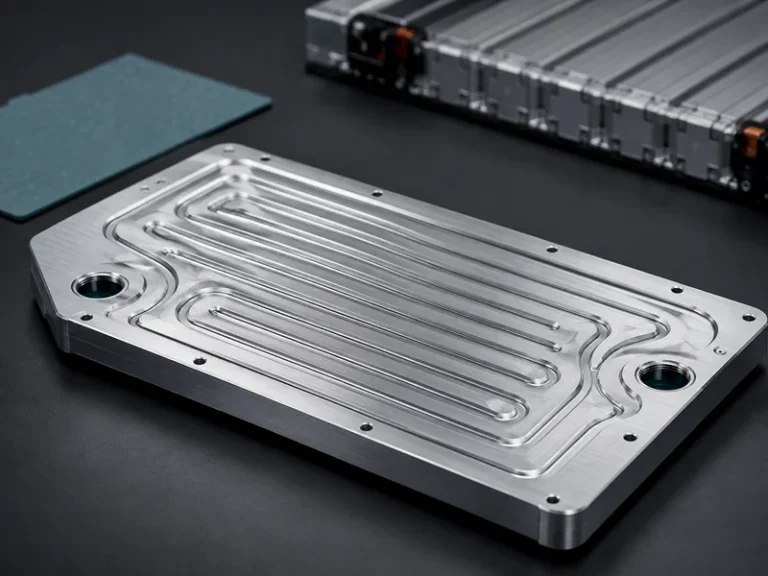
Liquid Cooling Plate Design: Structures and Trade-offs
Liquid cooling plate design for battery packs: how structure, material, and flow-path choices trade pressure drop against temperature uniformity.
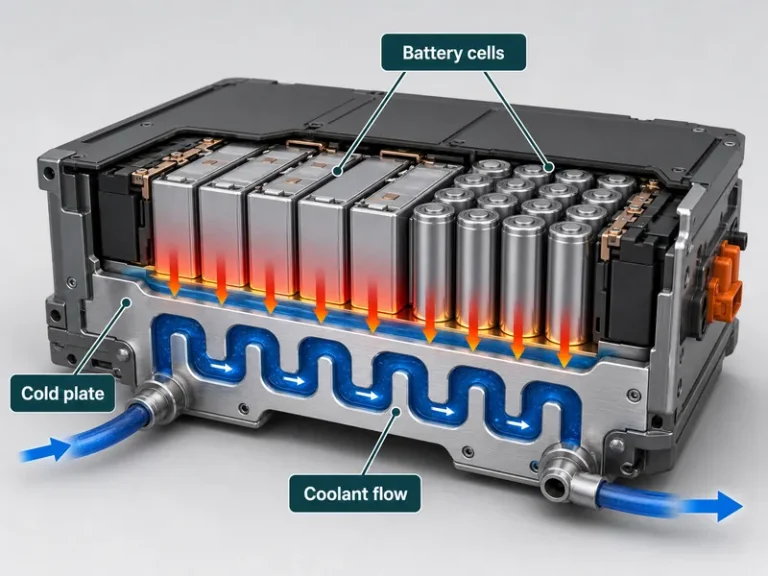
Advances In Battery Safety and Liquid Cooling Systems
Battery safety in electric vehicles (EVs) and energy storage systems (ESS) turns on the hottest cell and the temperature spread between cells. Lithium-ion cells…
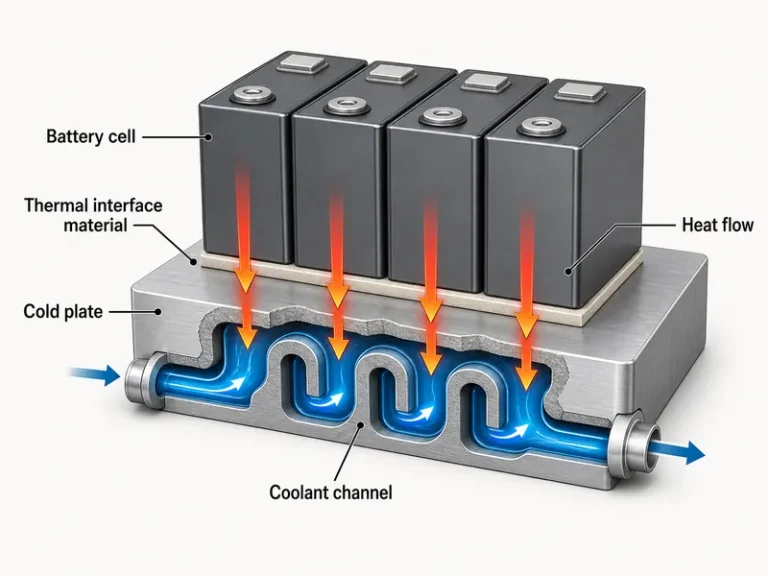
Comprehensive Comparison of Liquid Cooling Plates vs. Traditional Cooling Technologie
Liquid cold plates and traditional air cooling solve the same job of holding cells inside a safe temperature window, but they split apart the…
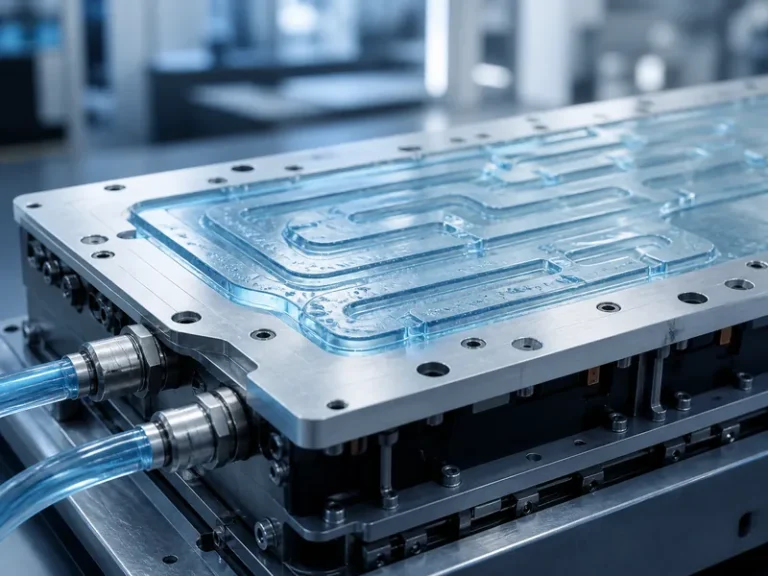
What Is the Best Liquid for Cooling?
The best liquid for cooling is the one matched to your operating window, wetted materials, and heat load. There is no single winner. For…
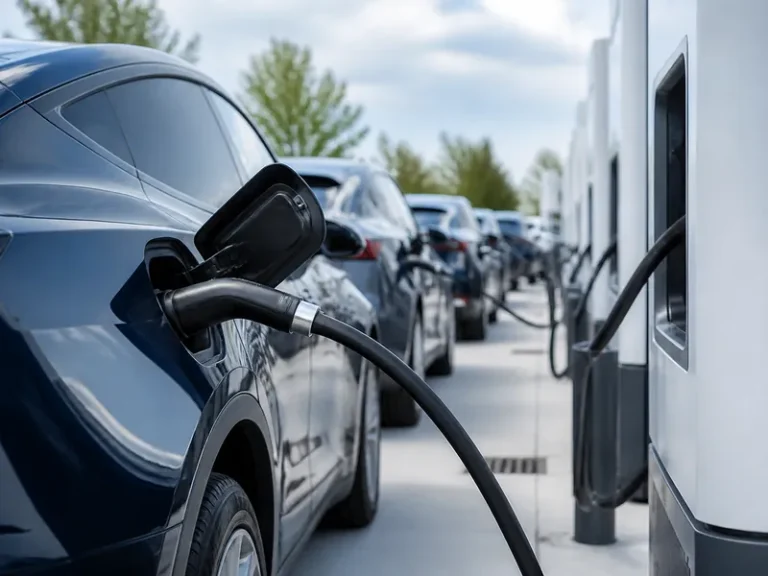
The Role of Innovative Liquid Cooling Technology in Enhancing EV Range
Liquid cooling extends usable EV range mainly by holding cells inside a narrow temperature band and keeping cell-to-cell differences small. It does not add…
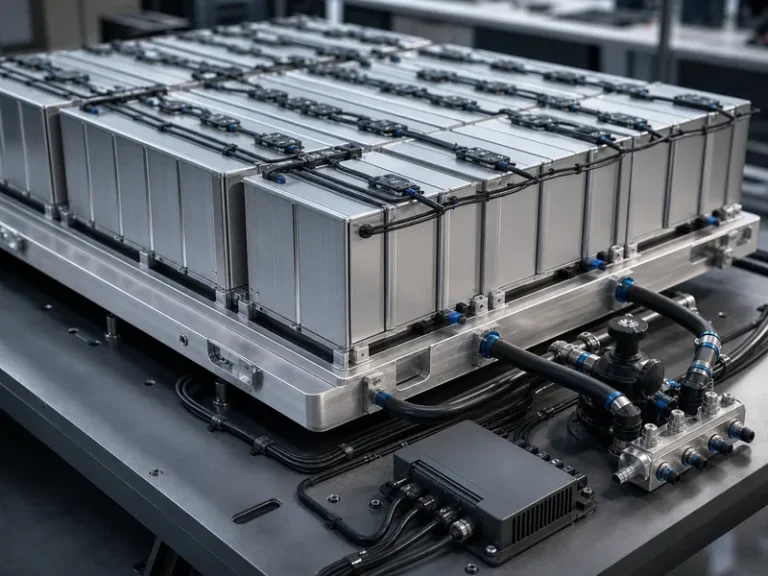
Integration And Optimisation Of Intelligent Cooling Systems
An intelligent cooling system for an EV or ESS battery pack combines three things: a liquid cooling path, the thermal interface between the cells…

Advances in Silicone-Free Thermal Interface Materials
Silicone-free thermal interface materials earn their place in a battery pack wherever silicone bleed or outgassing would put the cell-to-coolant heat path at risk.…
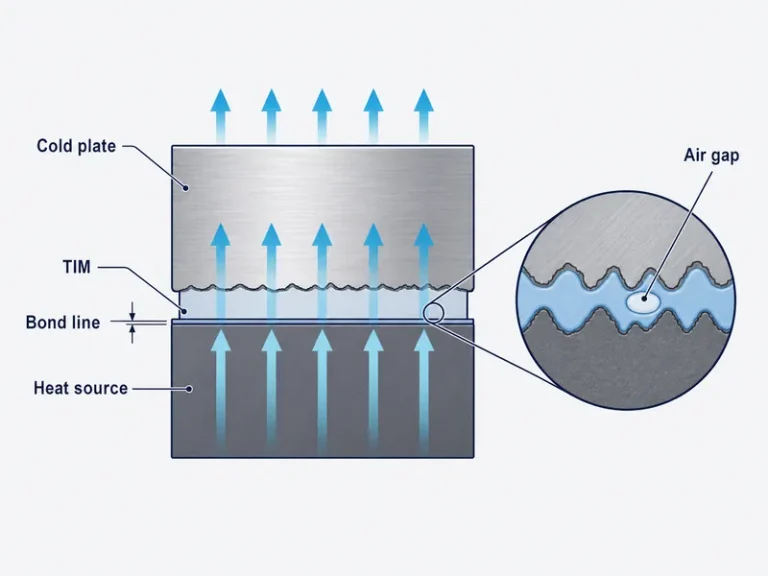
Innovations in TIMs for Enhanced Thermal Management of Electronics
The most useful innovation in thermal interface materials is not a higher headline conductivity number but a material that actually moves heat across a…
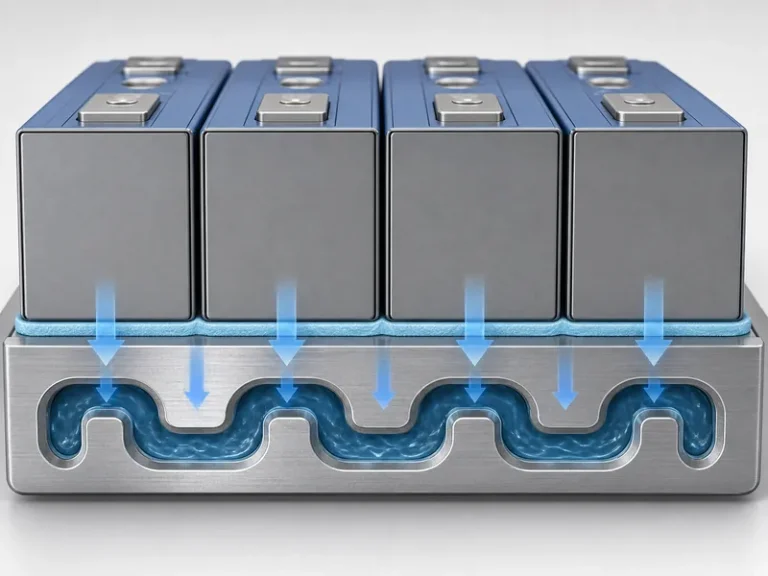
Thermal Interface Materials Battery
Thermal interface materials (TIM) sit in the heat path between battery cells and the cold plate, closing the microscopic air gaps that would otherwise…
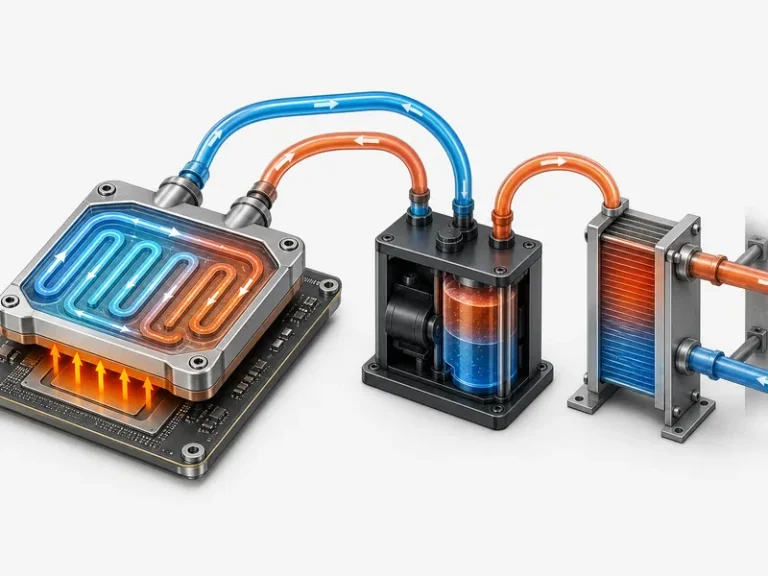
Overcoming Challenges in Data Centers With Innovative Cold Plate Cooling Solutions
Cold plate liquid cooling removes heat from data center racks that now produce more of it than moving air can carry away. High-density servers…
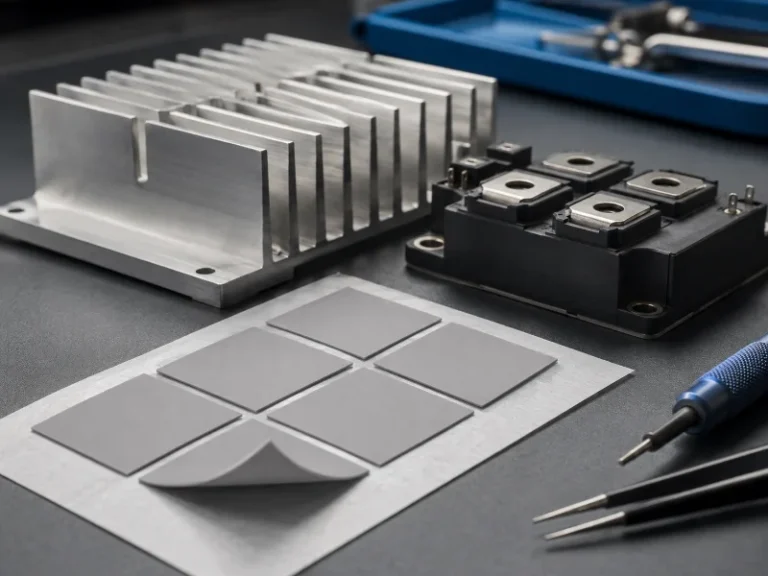
Phase Change Thermal Pad: Transition Band, Clamp Pressure, and Bond Line
A phase change thermal pad is a thermal interface material that ships as a handleable solid and softens at a grade-specific transition band, commonly…

Liquid Cooling Technology for Fast Charging Stations
Liquid cooling technology for fast charging stations is applied in two places: the cable and connector assembly, and the power modules inside the cabinet.…

Difference Between Heat Sink and Cold Plate
The difference between a heat sink and a cold plate is the cooling medium. A heat sink sheds heat into the air through its…
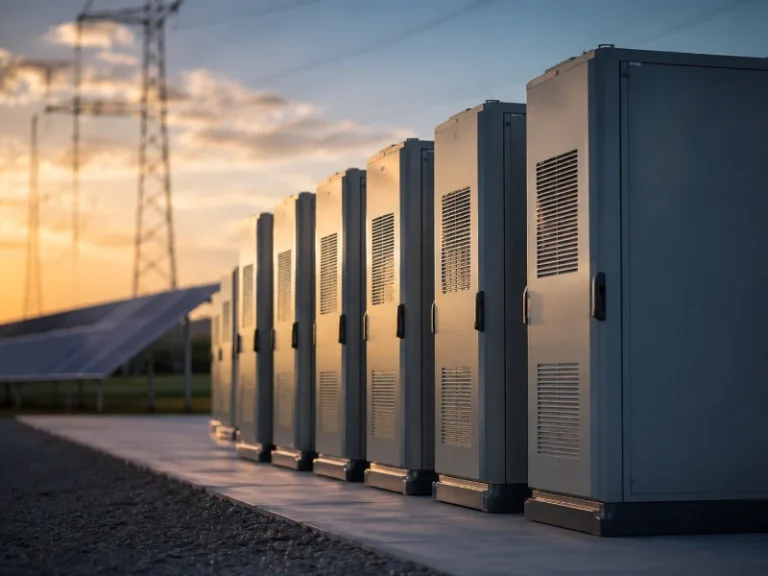
What Is the Lifespan of Energy Storage Systems?
The lifespan of an energy storage system is how long it holds enough usable capacity to do its job. Most modern lithium-based systems last…

Basic Principle of Liquid Cooling Plate
Liquid Cooling Plates are a leading thermal solution in modern technology. They use liquid as a heat transfer medium to remove heat from the…

What Are The Best Materials To Seal EV Batteries?
The widespread use of electric vehicles has changed the way transport is viewed. It provides a better solution for sustainable mobility. The rapid development…

EV vs ESS Battery: Key Differences & Thermal Management
This article delves into the core differences between electric vehicle (EV) batteries and energy storage system (ESS) batteries in terms of design philosophy, chemical…
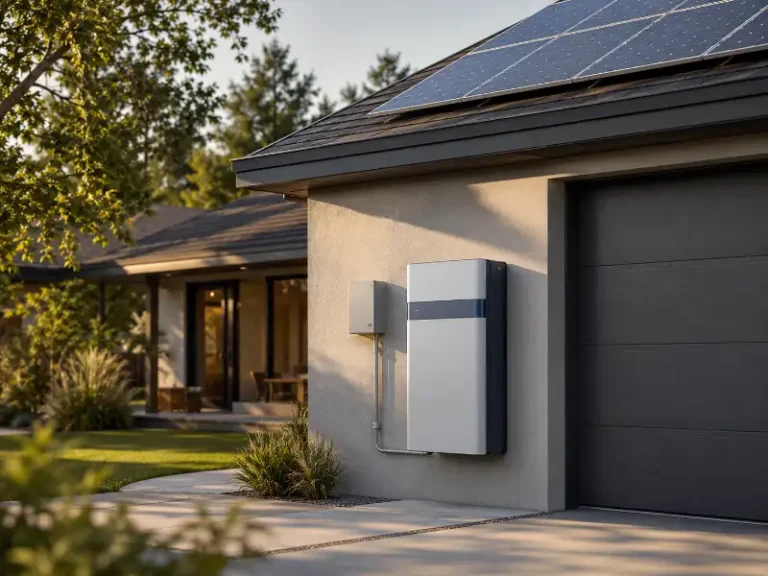
What Is PV Battery Storage?
PV battery storage pairs photovoltaic (solar) panels with a rechargeable battery. Electricity made during the day is stored and used later, when the panels…