
Thermal Management Solutions: Liquid Cold Plates and Interface Materials
Trumonytechs supplies thermal management solutions for EV battery packs, energy storage systems and power electronics: thermal interface materials, liquid cold plates, and the cooling tubes and manifolds that link them. Custom battery modules on 32, 38 and 46 series cylindrical cells are a third product line, with pack design and BMS development available around them. Cold plates and cooling tubes are built in factories in Suzhou and Suqian.
Start with what you already know: the cell type and temperature target for cold plates, the gap thickness for interface materials, or the target voltage and capacity for modules.
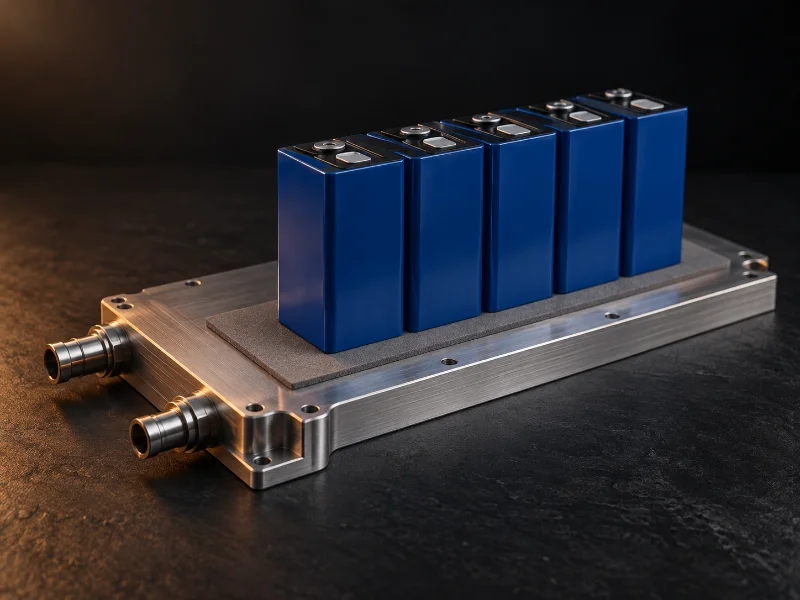
Cold Plates, Interface Materials and Battery Modules
Our thermal management solutions follow the heat path through a battery system: cold plates and tubes carry coolant past the cells, and interface materials fill the gap between each cell and its plate. Battery modules are a separate product line, and the two solution pages show how cooling parts and interface materials come together in EV packs and energy storage.

Liquid Cold Plates
Microchannel plates serve prismatic and pouch cells, snake-tube plates serve cylindrical 18650, 2170 and 4680 modules where space for tube routing is limited, and stamped plates serve large-area packs at production volume.

Thermal Interface Materials
We supply thermal pads, silicone grease, two-part gels, structural adhesives and potting compound from listed model ranges, for gap filling, cell bonding and module potting.

Battery Modules
Custom modules on 32, 38 and 46 series cylindrical cells, with natural, air or liquid cooling. Pack design, BMS development and chassis design can be added around them, and complete 48 V and 320 kWh packs are listed as well.

Battery Pack Thermal Management
Cold plates, cooling tubes, manifolds and interface materials for EV packs with prismatic, pouch or cylindrical cells, cooled from the bottom or the side.
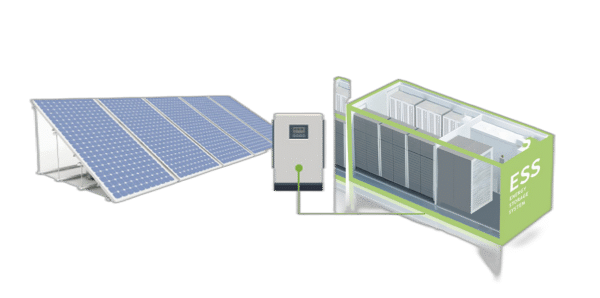
ESS Cooling Solutions
Cold plates, cooling tubes and distribution manifolds sized for grid-scale, C&I, and solar and wind storage systems.
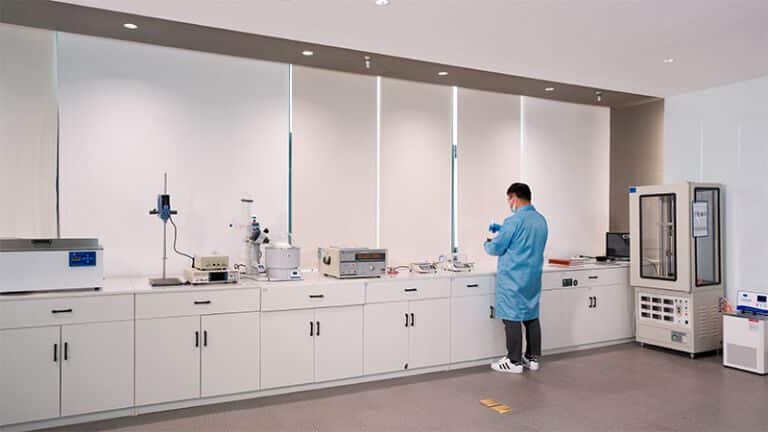
Production Lines and Test Evidence
Cold plates and cooling tubes from Trumonytechs are manufactured in factories in Suzhou and Suqian, with the process set by the plate construction. Stamping, extrusion, CNC machining, vacuum brazing and friction stir welding cover the range, and CFD review is completed before any tooling is cut. What can be checked differs by product line, as summarized below.


Every cold plate is helium leak tested before it ships. Outgoing checks also include CMM inspection with thermal interface flatness, hydrostatic burst testing above the rated working pressure, and first-article inspection.
Conductivity, dielectric strength and flame rating figures come from model datasheets that name their test method, such as ISO 22007-2, ASTM D149 and UL 94.
Every module is tested for open-circuit voltage, internal resistance, insulation withstand and BMS protection, and its code traces back to the cell batch inside.
Certificates and Test Documents
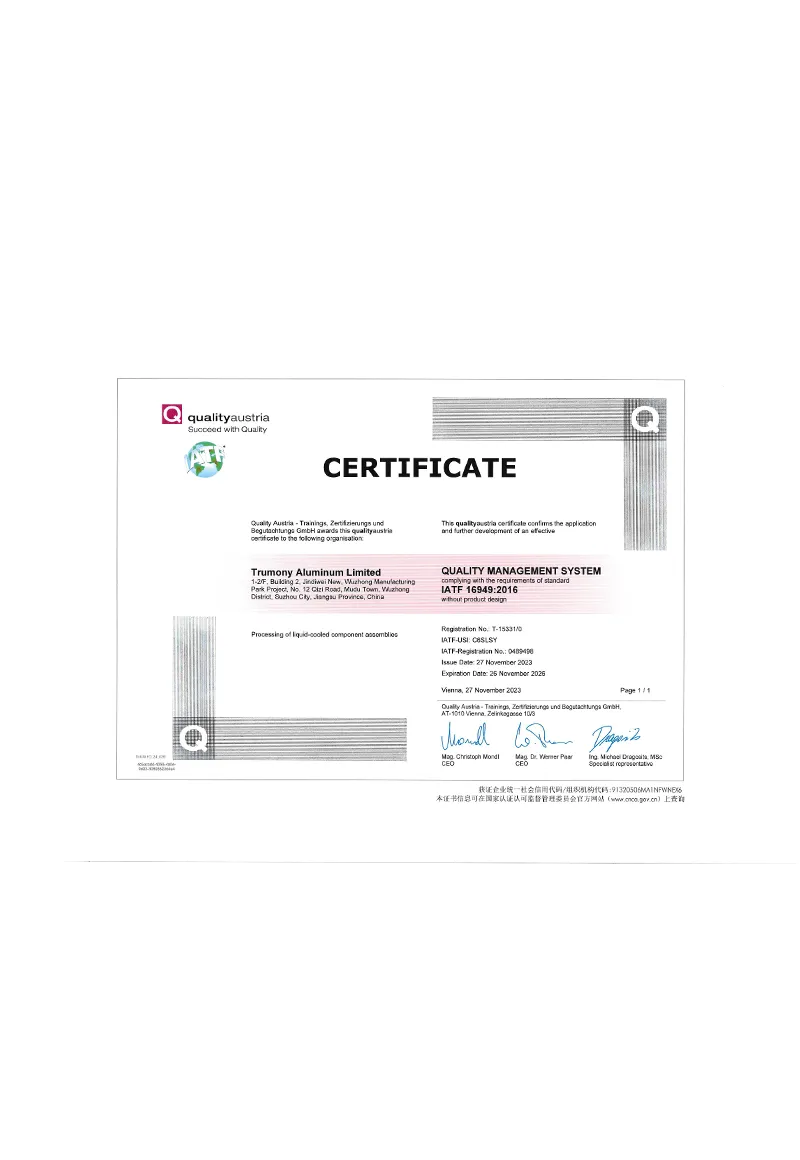
The three certificates below cover cold plate and cooling tube production at the factories in Suzhou and Suqian. Interface material figures come from model datasheets that name their test method, and battery module shipments carry the UN 38.3 test summary for their design.
IATF 16949:2016
Automotive quality management for the processing of liquid-cooled component assemblies, without product design.
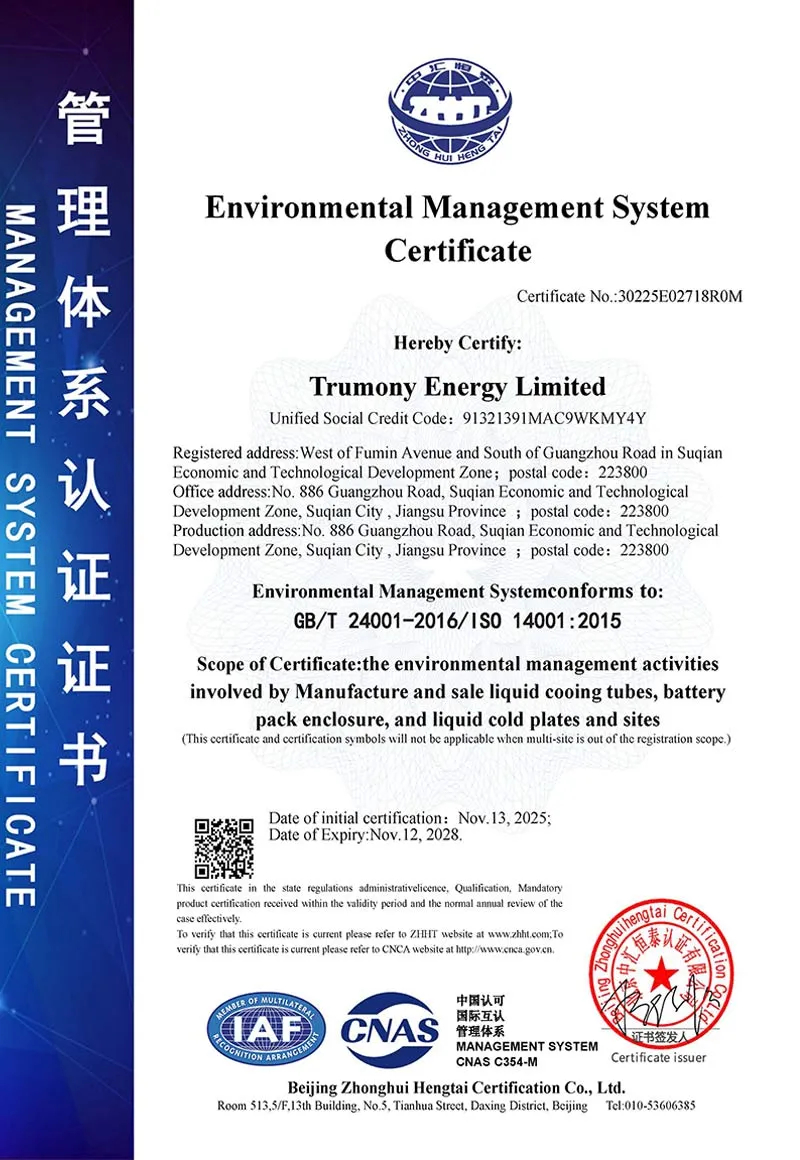
ISO 14001:2015
Environmental management for the manufacture and sale of liquid cooling tubes and liquid cold plates.
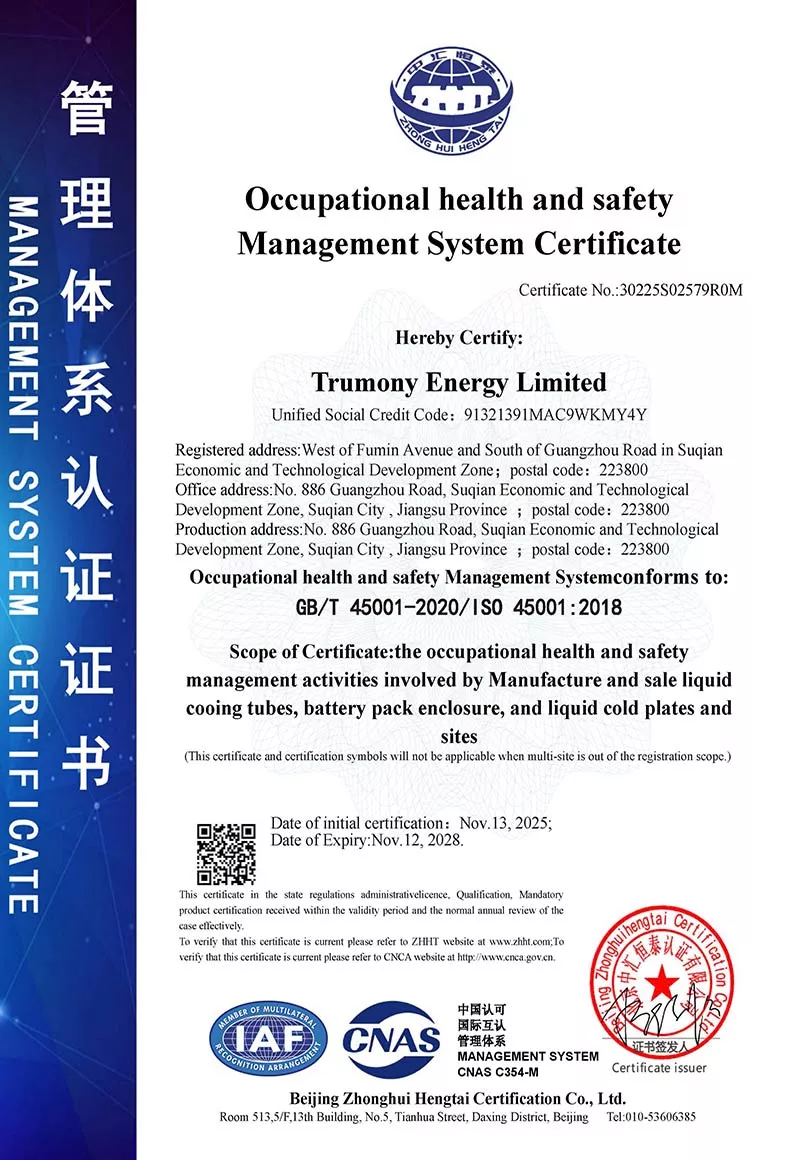
ISO 45001:2018
Occupational health and safety management for the manufacture and sale of liquid cooling tubes and liquid cold plates.
Industries Using Our Thermal Management Solutions
Thermal management solutions from Trumonytechs cover electric vehicles, energy storage and power electronics, and our battery modules go into commercial vehicles and user-side storage.
- Electric vehicles
Cold plates for prismatic, pouch and cylindrical cell packs, interface materials for the cell-to-plate joint, and custom battery modules for commercial and logistics vehicles.
- Energy storage systems
Grid-scale, C&I, and solar and wind storage, where heat load runs steadily through long duty cycles, plus pull-out modules for user-side storage.
- Power electronics
IGBT and SiC modules, with channels packed closer together near each heat source to handle local hot spots.
Data center server and GPU cold plates are also listed as an application, and the interface materials are supplied beyond battery packs as well. Liquid cooling is the wrong buy when passive cooling already holds cell temperatures, and a battery module is the wrong purchase when a single cell can already run the device.
From First Inquiry to Production
Cold plate projects need your sign-off on the simulation and on the validated sample, battery modules move from sample sets to production orders, and interface materials are quoted by model.
- InputsWhat you send
Cell format and heat load for cold plates, gap thickness for interface materials, or voltage and capacity for battery modules.
- ProposalBy product line
Cold plates get a CFD review before any tooling, interface materials a proposed model, and battery modules a quotation valid for 30 days.
- SamplesPrototype timing
CNC cold plate prototypes typically take 2–3 weeks after design confirmation, and 1 to 5 battery module sample sets take 4–8 weeks.
- Sign-offYour approval
Cold plate prototypes go through leak, pressure and thermal resistance tests before your sign-off, and modules accept buyer or third-party inspection before shipment.
- ProductionLead time
Cold plate production starts from the validated sample, and battery module orders from 100 sets take 4–6 weeks, depending on cell stock at the time of order.
We send DFM feedback with cold plate quotations at no extra charge, and interface material choice is reviewed in the same design discussion without a separate fee. For battery modules, one-off charges for new structural-part tooling, custom BMS development or certification testing are refunded or amortized once an agreed order volume is reached.
- Product line and application
- Cell format and layout
- Heat load or gap thickness
- Module voltage and capacity
- CAD drawing or boundary dimensions
- Expected annual volume
Send whichever of these inputs apply to your project through the quote form or by email.
Buyer Questions on Cold Plates, Interface Materials and Battery Modules
How long does a cold plate project take to reach samples?
CNC prototypes typically take 2–3 weeks, counted from design confirmation. Constructions that need dedicated tooling add the tooling lead time, which is confirmed at the design review, and series lead time is set per program against volume and construction.
Is there a minimum order quantity for cold plates?
Prototype quantities stay flexible. A CNC or friction stir welded plate can run at low quantity because there is no die to amortize, while a stamped plate needs enough annual volume to justify one.
Should a battery line use thermal pads or dispensed gel?
Pads arrive as pre-formed sheets and are placed by hand, so the line needs no mixing equipment for them. The two-component gel is mixed and dispensed automatically, is surface-dry after 90 min and fully cured after 24 h at 25 °C.
Are interface materials reviewed together with the cold plate?
Yes. Interface material choice is reviewed in the same design discussion as the cold plate, without a separate fee. Thermal pads, silicone grease, two-part gels, structural adhesives and potting compound are supplied from listed model ranges.
What are the MOQ and lead times for a custom battery module?
Sample orders of 1 to 5 sets carry no MOQ, and production orders start from 100 sets. Samples take 4 to 8 weeks, and production takes 4 to 6 weeks depending on cell stock at the time of order.
Do you supply cells and complete packs as well as modules?
Yes. The published range covers 32, 38 and 46 series cylindrical cells, custom modules, 48 V packs at 20 Ah and 30 Ah, and a 320 kWh pack. Pack design, BMS development and chassis design can be added around the modules.
How are shipping and duties handled?
Transit time depends on the destination port and is confirmed in the quotation, together with the duties for the destination country. Battery modules shipped on their own travel as Class 9 dangerous goods under UN 3480, with the UN 38.3 test summary for their design.
Latest Thermal Management Articles
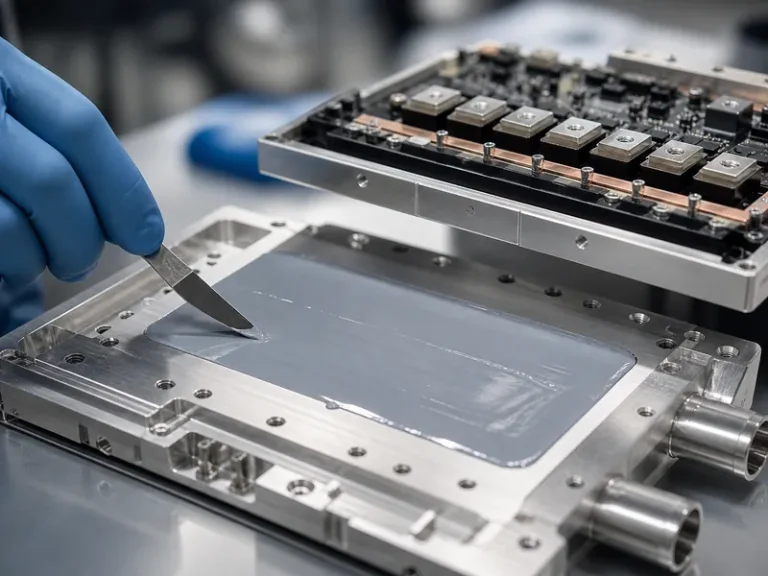
What is Thermal Grease?
Thermal grease is a non-curing thermal interface material (TIM) that fills the microscopic air gaps between a heat source and a cooling surface so…
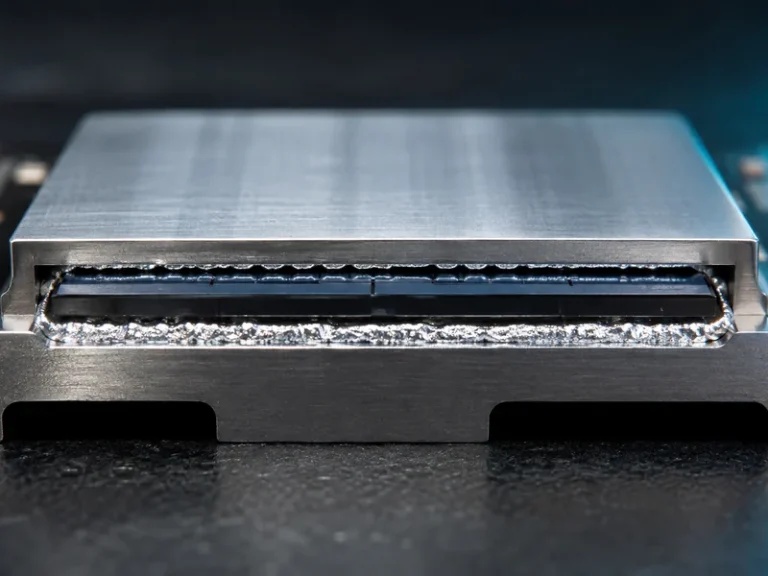
Solder Thermal Interface Material: Uses and Limits
Solder thermal interface material gives the lowest die-level thermal resistance on thin, flat, solderable joints. See where it fits and where pads win.
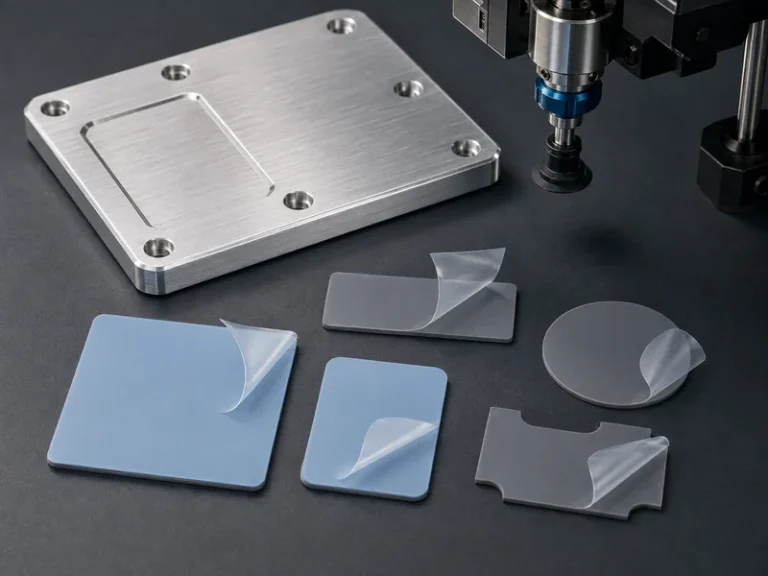
Die Cut Thermal Interface Material: Types and Selection
Die cut thermal interface material selection: compare pre-cut pads and dispensed gap fillers by gap, insulation, and assembly stress before you spec.