
The lifespan of an energy storage system is how long it holds enough usable capacity to do its job. Most modern lithium-based systems last about 10 to 15 years, or several thousand charge and discharge cycles. Whichever limit comes first sets the real number. That figure depends on cycle count, temperature, depth of discharge, and the threshold used to define end of life. Two identical systems can retire years apart.
Cycle Life vs Calendar Life in Energy Storage Systems
Energy storage lifespan runs on two clocks, cycle life and calendar life, and end of life arrives when either drops usable capacity below about 70 to 80 percent of the original rating. Cycle life counts how many full charge and discharge cycles the cells deliver before capacity fades. Calendar life is the slower ageing that happens with time, even while a system sits idle.
People often assume lifespan is a fixed number of years. That misses how the two limits interact. Take a system rated for 6,000 cycles, run at two full cycles a day. It uses up its cycle budget in about eight years (6,000 ÷ 2 ≈ 8), long before its calendar rating matters. So the first check is simple. Compare the rated cycle count against the real daily duty before you trust the year figure on a datasheet.
Size a system on cycle life alone, without checking the daily depth of discharge, and the calendar-life estimate tends to fall apart early. The operator then replaces modules mid-warranty.
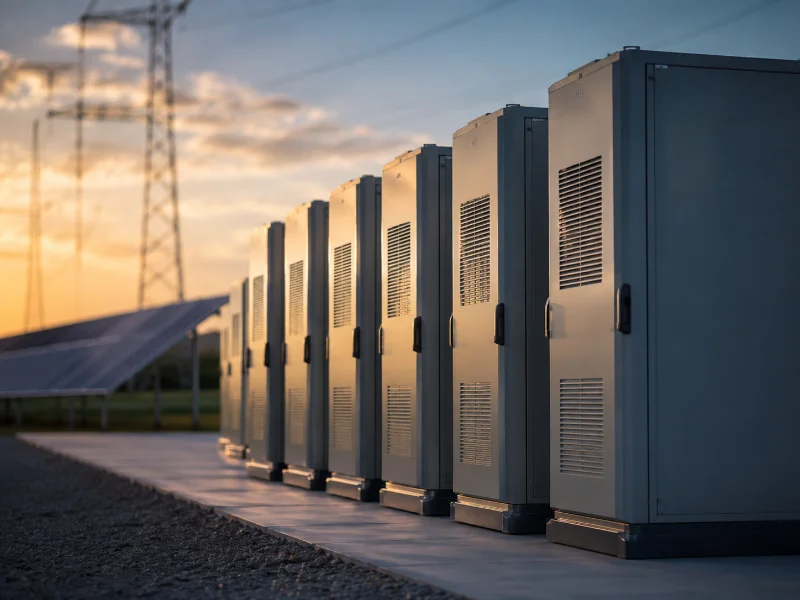
Typical Lifespan by Battery Chemistry
Typical lifespan ranges from about 3 years for legacy lead-acid to around 20 years for flow batteries, depending on the chemistry. The lithium chemistries that dominate today sit in between, and they vary by cell type.
The ranges below are typical nameplate or commonly reported values. Real figures shift with depth of discharge, charge rate, temperature, cell design, and the end-of-life threshold used. Treat them as planning bands, not guarantees.
| Chemistry | Typical calendar life | Typical cycle life | Where it fits |
|---|---|---|---|
| LFP (LiFePO₄) | 10–15+ years | 4,000–10,000 | Stationary ESS, daily cycling |
| NMC / NCA | 8–12 years | 1,000–3,000 | EV packs, high energy density |
| Lead-acid | 3–5 years | 300–1,200 | Backup, budget off-grid |
| Flow (vanadium) | up to 20 years | 10,000+ | Long-duration grid storage |
| Sodium-sulfur | up to 15 years | 2,500–4,500 | High-temperature grid |
LFP is the workhorse for stationary storage. It pairs a high cycle count with better thermal stability than the nickel-rich chemistries, which matters when a system cycles every day for a decade. NMC and NCA show up where energy density comes first, mainly EV packs. Some ESS designs use them too, depending on cost, platform, and safety architecture. Whatever the chemistry, these bands narrow once real operating conditions apply.
What Determines How Long a System Lasts
Four operating variables govern energy storage lifespan: temperature, depth of discharge, charge rate, and cycling frequency. None acts alone, and their weight is not equal.
Temperature is one of the strongest levers you can control. Heat, and especially uneven heat across the pack, speeds up both calendar and cycling ageing. That is why thermal management, not just nameplate capacity, often decides whether a system reaches its rated life. How the temperature window is held, through cold plate design and coolant choice, is a separate engineering job that we cover on its own. The point here is simpler: uneven cooling is a lifespan problem, not only a performance one.
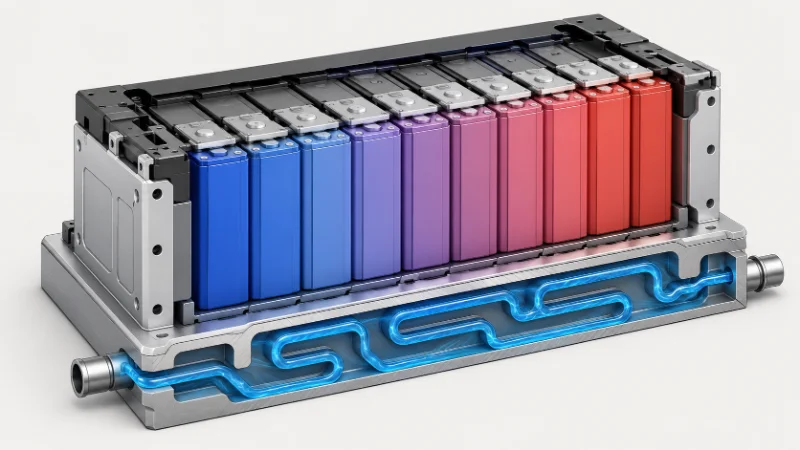
Depth of discharge sets how hard each cycle works the cell. Keep the working window away from both 0 and 100 percent, and the usable cycle count goes up. That is why most stationary systems run a capped depth of discharge instead of full swings. Charge and discharge rate adds a second stress. High power makes internal heat, so a system pushed hard for fast response wears faster than one cycled gently.
Degradation also shows up unevenly in the field. Where a pack sits in an unconditioned outdoor enclosure, the modules against the enclosure wall usually fade first. It is worth checking that before you assume a whole rack ages at the same rate.
How to Extend Energy Storage System Lifespan
Extending lifespan means managing the same variables that shorten it: temperature, depth of discharge, and charge rate. No single additive or setting does the work.
- Keep cells in their thermal window. A well-matched thermal management system is the highest-leverage move, because temperature drives both clocks and worsens every other failure path.
- Cap depth of discharge. Set the battery management system to a conservative window. You trade a little capacity now for many more cycles later.
- Ease off sustained high charge rates where the application allows. Lower power per cycle means less heat and slower wear.
- Track capacity over time. Regular state-of-health checks catch a fading module before it drags down the whole string.
Before you accept a ten-year claim, ask what conditions sit behind it: depth of discharge, end-of-life threshold, charge rate, ambient temperature, and warranted throughput. A number without those conditions is a marketing range, not an engineering one.
When an Energy Storage System Reaches End of Life
End of life is a capacity threshold, not a breakdown, usually the point where usable capacity falls to about 70 to 80 percent. At that stage the system still charges and discharges; it just holds less. What to do next depends on how much capacity the application can give up. Three paths open up: repurposing, replacement, or swapping out the weakest modules.
Cells retired from a hard job often still suit an easier one. Packs pulled from EV or high-cycling duty can run lower-demand stationary roles for years in a second life. Their remaining capacity is fine where peak performance is not the priority.
It also helps to separate the several lives a system has. Warranty life is what the manufacturer guarantees, usually tied to throughput or capacity retention. Useful life is how long the system stays fit for its actual duty. Economic life is when replacement makes more financial sense than running on. These rarely line up, and replacement timing drives total cost of ownership more than the headline year figure does.
One distinction matters for safety. End-of-life capacity fade is gradual and expected. Do not confuse it with thermal runaway, which is a separate safety event with different causes and prevention.
Conclusion
No single number answers the lifespan question. Three things decide it, and a buyer controls all three: the chemistry, the duty cycle, and the operating temperature.
In our work on thermal interface materials and liquid cold plates for ESS and EV packs, one pattern holds. The systems that reach their rated life are the ones that keep temperature in range across the whole pack, not just at the sensor. Capacity tends to fade first at the cells a cooling layout overlooks, such as rack-edge modules or those against an enclosure wall. We treat even temperature distribution as a lifespan question, because the figures on a datasheet only hold when the operating conditions are verified.
If you are sizing or de-risking an energy storage system, start with the duty cycle and thermal envelope, then match them to the chemistry you are specifying. We are glad to review a thermal approach against your target lifespan and operating profile. Share your pack layout and duty requirements to begin.
FAQ
How long do most energy storage systems last?
Most lithium-based systems run for 10 to 15 years or several thousand cycles, and the lower of those two limits decides the real figure. Lead-acid lasts far less, roughly 3 to 5 years. Flow batteries can reach 20 years.
How many cycles does an LFP energy storage battery last?
An LFP cell is usually rated for 4,000 to 10,000 cycles. The number you actually get depends on how deeply it is discharged, how fast it is charged, and how hot it runs. Push any of those harder and the count drops toward the bottom of the range.
What does it mean when a system reaches 80 percent capacity?
Reaching about 70 to 80 percent capacity is the usual definition of end of life, not the point of failure. The system keeps charging and discharging. It simply holds less energy each cycle, so whether you keep it depends on what the application still needs.
Does a hotter location shorten energy storage lifespan?
Sustained heat is one of the fastest ways to age a battery. A system in a hot or poorly ventilated spot usually fades sooner than the same system kept cool. Even cooling matters as much as a low average temperature, because hot spots inside a pack age first.
Can you extend the lifespan of a system you already own?
Most of the gain comes from how the system is run, not from new hardware. Keep it inside its temperature range, leave headroom at the top and bottom of the charge window, and ease off very high charge rates. Each one slows the rate of capacity loss.