
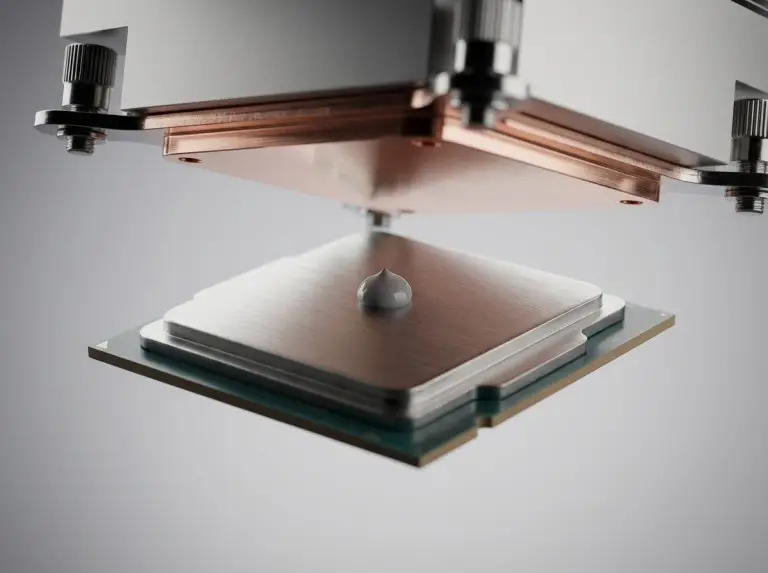
Thermal grease is a heat-conducting material. People call it termal pasta, thermal compound, or TIM. We apply it between a heat source and a cooler. This improves heat transfer at their contact point. At Trumonytechs, we see it as an interface coupler. It does not cool on its own. But it fixes a common block. This block stops heat from reaching the heatsink or cold plate well.
Its main job is simple. Thermal grease replaces trapped air between two flat surfaces. It uses a material made for heat flow. When done right, it cuts thermal resistance at the interface. It keeps device temperature steady. It protects performance and reliability over time.
In this guide, we explain what thermal grease does at the interface. We focus on where it matters most. We cover what makes it succeed or fail. We stick to function and outcomes. We add only key practical notes to understand real results.
Why is thermal grease needed?
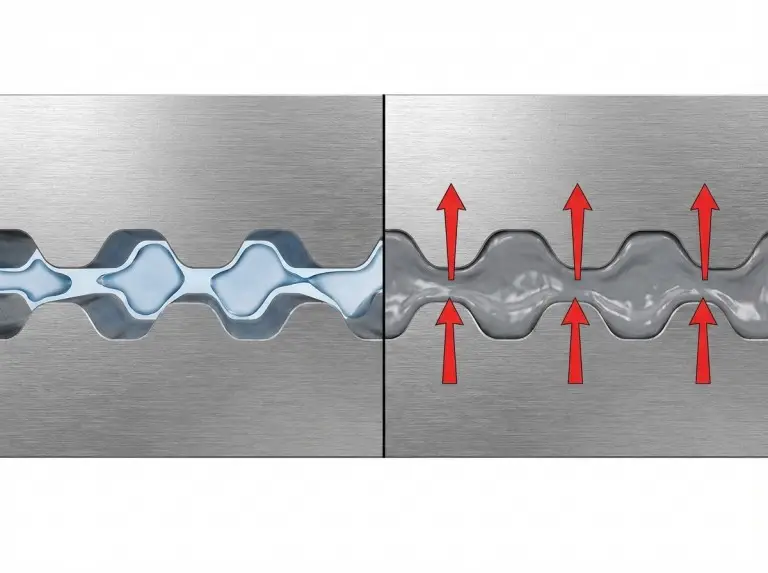
The main issue is not bad heat in metals. Contact is never perfect. CPU heat spreaders have tiny roughness. GPU plates do too. Module baseplates and heatsink faces also have it. When you clamp them, they touch at peaks. Valleys trap air.
Air conducts heat poorly. Those tiny pockets act like insulation. This raises thermal resistance at the interface. The heat source runs hotter for the same work. A system can overheat or throttle. This happens even if the cooler looks big and well-mounted.
Thermal grease fixes this interface block. It flows into micro-voids under pressure. It pushes out air. It creates a steady path for heat. Heat passes from the source into the cooling hardware.
Further reading:What is Thermal Grease?
What thermal grease does at the interface?
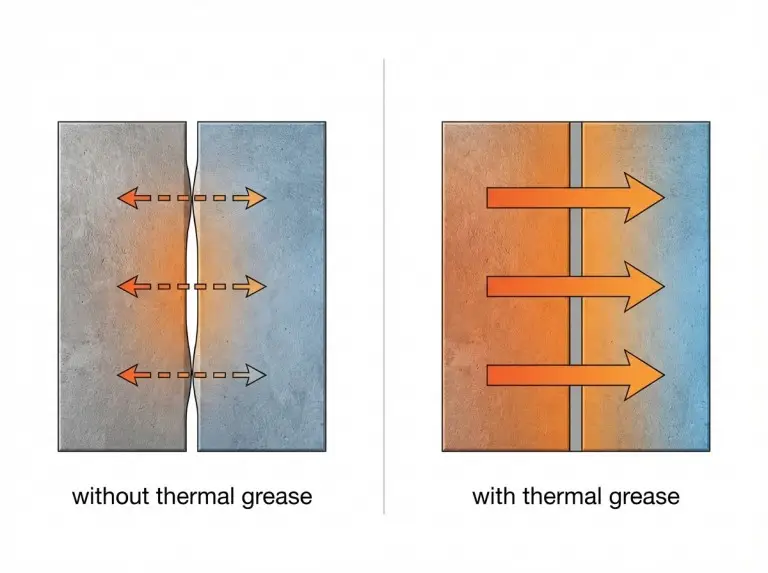
Thermal grease cuts interface thermal resistance. It replaces air gaps with a flexible, heat-conducting layer. The improvement is not magic. It is not just about a high thermal conductivity number. It is about what happens between two rough surfaces under pressure.
At Trumonytechs, we describe the interface in three linked effects. These are void filling, better wetting, and a steady heat path. Each effect counts. The balance depends on surface finish. It depends on mounting pressure. It depends on operating temperature. It depends on the grease’s stability.
Fills microscopic voids to replace insulating air
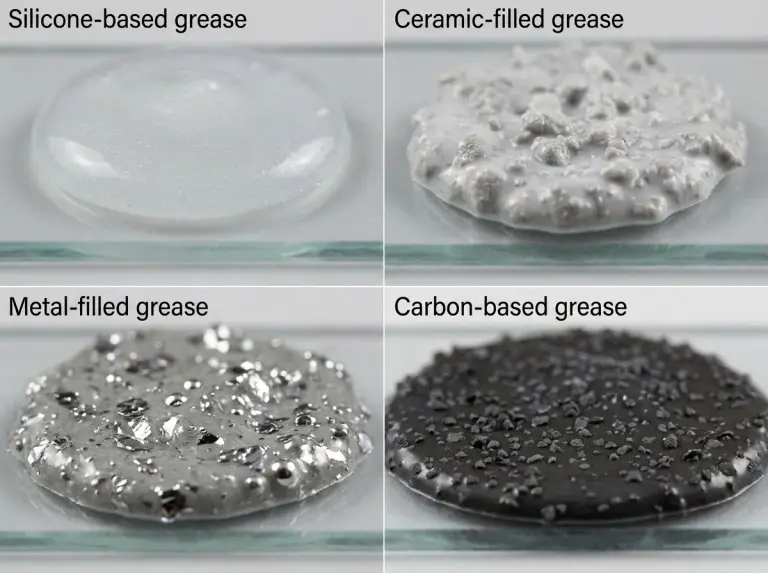
Thermal grease is a base fluid. It is often silicone-based or synthetic oil. It loads with heat-conducting fillers. These are commonly ceramic, metal, or carbon particles. The base lets the material spread and fit. The fillers make conductive routes for heat.
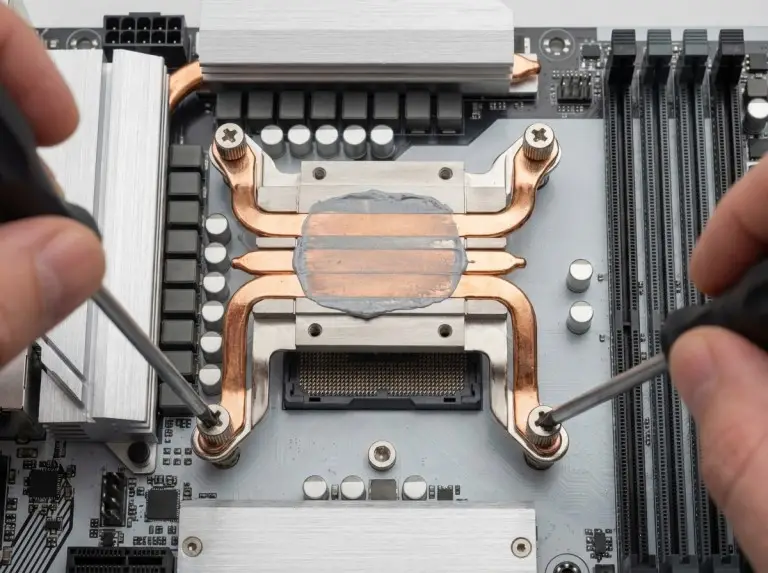
Apply it between a CPU or GPU and a heatsink. The grease flows into tiny valleys. This pushes out air. It raises the true contact area. The interface has fewer air pockets. It has more controlled material layer.
This is why thermal grease matters. Parts look smooth to the eye. But under a microscope, dry contact differs from greased contact. Dry has many isolated points. Greased has a filled interface with fewer insulating gaps.
Improves surface “wetting” to increase real contact area
Wetting means how well a material spreads on a surface. It keeps close contact. It does not bead or pull back. In thermal interfaces, better wetting means fewer voids. It means even coverage under pressure.
A grease that wets well creates a stable interface. It handles small manufacturing differences. It reduces local hot spots from uneven contact. The benefit shows most on rough surfaces. It shows where pressure is low. It shows where the heat source is small and power is dense.
Wetting depends on the mix and surface state. Dirt, oxidation, or old compound can cut wetting. This raises interface resistance. It happens even if the grease is high quality.
Builds a more continuous conduction path across the joint
Thermal grease’s fillers form tiny conductive bridges in the thin film. Heat travels through this layer better than through air. This is why thermal grease boosts heat transfer in real systems.
The interface is a layered system. Heat goes from the device into the grease film. Then it goes into the heatsink face. If the grease layer is too thick, heat travels through more compound. That can raise resistance. This happens even if the compound beats air in conductivity.
The goal is not maximum paste. The goal is a thin, steady film. It fills voids without extra thickness. When balanced, the interface is predictable. The cooler performs close to its design.
What changes when grease is missing, pumped-out, or dried
Thermal grease is missing. The interface relies on peak-to-peak metal contact. It has trapped air too. That raises interface thermal resistance. Temperatures climb. You may see throttling. Fan speeds spike. Instability hits. Protective shutdowns occur under load.
Grease degrades. The effect is similar. But it is gradual. Two common patterns are drying and pump-out. Drying cuts the grease’s ability to fit and fill voids. Pump-out moves the compound away from the center. This happens due to thermal cycling and stress. It leaves thin coverage where needed most.
The key point is clear. Thermal grease’s job lasts only while the interface stays filled and stable. A high-conductivity compound may fail. It happens if it cannot keep a good film over time. A stable compound may work better in real use.
Thermal conductive silicone grease applications
Thermal grease matters most where heat flux is high. The interface limits things. Improving the joint cuts peak temperature. It helps the cooling system stay steady under load.
Below are common interfaces. Thermal grease’s function is clear here. The theme is simple. A high-power device needs a reliable thermal path. It goes from silicon to metal to cooler.
CPU and GPU heat spreader to heatsink or cold plate interfaces
CPUs and GPUs make much heat in small areas. Their cooling transfers heat into a heatsink or cold plate. Contact surfaces are machined. But they are not perfect. The mounting system limits pressure and flatness.
Thermal grease fills micro-gaps. It cuts interface resistance. It helps the cooler work. Without it, the temperature gap rises. This is between the chip package and the cooler. You lose thermal room even if the heatsink is big.
In practice, thermal grease improves temperature stability during long workloads. It cuts throttling events. It keeps the system close to its performance goal.
Power devices and modules to baseplate or heatsink interfaces
Power electronics run hot under steady load. These include VRMs, MOSFET stages, and IGBT modules. Their reliability depends on controlling junction temperature. It reduces thermal cycling stress.
Thermal grease fills surface flaws. It creates a stable conduction layer to the heatsink or baseplate. In industrial settings, vibration and temperature cycling stress the joint. A grease that keeps film integrity preserves thermal performance over time.
For these devices, temperature stability affects lifespan and failure risk. A better interface means lower peak temperature. It means less thermal stress during cycling.
LEDs, SSD controllers, and network processors to chassis or heat spreader
High-power LEDs rely on chassis conduction or heat spreaders. Fast SSD controllers do too. Networking ASICs also. Their cooling faces compact layouts and low airflow. This makes the interface key.
Thermal grease improves heat flow from the device. It goes into a metal housing, heat spreader, or local heatsink. This cuts hot spot chances. It maintains steady behavior under operation.
In these systems, a weak interface shows as temperature spikes under load. Or throttling that seems random. A better interface makes thermal behavior predictable.
Thermal grease families
Thermal grease is not one material. Different families tune for balances. These include thermal performance, electrical safety, and long-term stability. The function stays the same. It lowers interface thermal resistance. But risk and behavior change.
At Trumonytechs, we match grease families to the job. We focus on interface needs. These are electrical risk, temperature range, contact pressure, surface condition, and cycling. Below is a practical view of main families. It shows how they affect interface performance.
Silicone-based
We use silicone-based greases as a stable coupler. They work for general purposes. We choose them for predictable wetting. They have low electrical risk. This fits many electronics assemblies.
They are often the safest default choice. The interface needs consistent contact over time. We avoid chasing the highest conductivity number.
Ceramic-filled
Ceramic-filled greases are our top pick. Electrical insulation is a priority. We still need solid thermal coupling at the interface.
They deliver steady performance. They have a lower short-risk profile. This fits sensitive layouts. It fits mixed-signal environments.
Metal-filled
Metal-filled greases target higher thermal conductivity. This is at the interface. It helps in performance-driven cooling setups.
We see electrical risk as the main limit. Some mixes can be conductive. Or slightly capacitive. The layout around matters. Exposure control matters too.
Carbon-based
Carbon-based greases balance strong thermal performance. They have lower short-risk than many metal-filled options. Formulation matters.
In real use, we focus on long-term film stability. It resists pump-out. It resists dry-out. This keeps interface thermal resistance low. It works over thermal cycling.
What makes thermal grease work?
Thermal grease works when it forms a thin, steady film. The film must stay stable over time. If the film is too thick, it fails. If contaminated, it fails. If uneven or disturbed, resistance rises. The grease stops working.
This section covers practical factors. They influence thermal grease function. We keep it short on how-to. We focus on interface mechanics. These explain why results vary.
Film thickness
More grease is not better. A thick layer makes heat travel through more compound. This raises thermal resistance compared to a thin film. Even good compound has lower conductivity than metals like copper. Extra thickness slows heat flow.
The target is coverage, not volume. Fill voids. Stabilize contact. Avoid a thick insulating layer. In most assemblies, mounting pressure spreads the grease thin as you install the cooler.
See excessive squeeze-out or uneven coverage after disassembly. It signals the interface may not be optimal. The goal is consistent, uniform film under normal force.
Surface prep and contamination
Thermal grease needs close contact. Dust blocks it. Oil films do too. Old hardened paste or oxidation residues prevent wetting. They trap voids. This raises interface resistance. It happens even with high-quality compound.
Contamination causes uneven film thickness. It creates local hot spots. Those spots speed degradation. They make thermal behavior unstable. For reliable results, the interface must be clean. The grease must wet and spread well.
In service, this explains big thermal performance changes after maintenance. Interface condition often matters as much as grease choice.
Mounting pressure and pattern
Thermal grease conforms under pressure. Mounting pressure can be uneven. The heatsink may seat at an angle. The grease film becomes non-uniform. This leaves voids on one side. It leaves excess thickness on the other.
Even pressure improves contact. It helps the grease work. In many assemblies, tighten in a cross pattern. This reduces tilt. It improves film uniformity. The key is the outcome. Get flat, stable seating with steady pressure.
In low-pressure mounts or warped surfaces, grease may not push out air fully. Interface performance depends more on wetting and viscosity.
dot/line/spread patterns
Different patterns aim for the same result. They want a thin, steady film after clamping. A dot lets pressure spread the compound. A line covers elongated dies. A controlled spread reduces uncovered zones on larger surfaces.
No pattern fixes poor seating. It does not fix contamination. It does not fix wrong thickness. The best pattern achieves full coverage. It has minimal trapped air. It fits your surface area and mounting method.
From an interface view, the endpoint matters. Get uniform coverage. Minimize voids. Keep a stable film under cycling.
Conclusion
Thermal grease fixes the weakest link in many cooling setups. This is the interface between heat source and cooler. It fills microscopic gaps. It improves wetting. It replaces air with a controlled conductive layer. This cuts interface thermal resistance. Heat reaches the heatsink or cold plate well.
At Trumonytechs, we see thermal grease as a reliability tool. It is also a performance tool. A stable, thin film keeps temperatures consistent. It reduces thermal stress during cycling. It helps electronics run close to their limits. When the interface is right, the cooling system performs as designed.
FAQ
What is the primary function of thermal grease?
Thermal grease reduces thermal resistance at the interface. It fills microscopic gaps. It replaces insulating air with a heat-conducting layer. This layer keeps better contact.
Does thermal grease “cool” a CPU or GPU by itself?
No. Thermal grease does not cool a device alone. It improves heat transfer into the heatsink or cold plate. The cooling system works better. Temperatures drop when the interface is optimal.
What happens if I don’t use thermal grease at all?
Air pockets stay between surfaces without thermal grease. Interface thermal resistance rises. Operating temperatures go higher. Throttling or shutdown is more likely under load. Long-term thermal stress increases.
Why can using too much thermal grease make temperatures worse?
Too much grease creates a thick film. This slows heat flow compared to a thin layer. Excess paste traps voids. It squeezes out unevenly. This raises interface resistance. It creates hot spots.
Is metal-based thermal grease always the best choice?
Not always. Metal-filled compounds offer higher conductivity. But they may have higher electrical risk. This depends on the mix and layout. The best choice meets your thermal needs. It matches electrical safety and stability.
How do I know if thermal grease has degraded?
Aging grease shows as higher temperatures under the same workload. Fans get louder. Throttling starts earlier. This happens after long seating. Degradation comes from drying or pump-out. It is common under frequent thermal cycling.