

Liquid thermal compound is a niche thermal interface material. It makes sense only when your cooling limit is the interface itself. You must control electrical and material-compatibility risks. Many systems run hot because airflow, radiator capacity, mounting pressure, or heat-spreader design is the real constraint. The paste is not the issue. This article explains what liquid thermal compound is. It shows where it fits in the thermal stack. It helps you decide if it fits your CPU or GPU.
At Trumonytechs, we design thermal management solutions. We supply customized thermal interface materials. These include thermal pastes for electronics. We treat “better conductivity” as a hypothesis. We verify it with interface conditions, safety controls, and acceptance criteria. The goal is to prevent failures. We improve thermal stability. We do not chase slogans.
What Is Liquid Thermal Compound?
Liquid thermal compound refers to a liquid-metal-style thermal interface material. You apply it between a hot device surface and a cooler contact surface. It reduces interfacial thermal resistance. People often use the term interchangeably with “liquid metal.” The practical meaning is the same. It is a metal-alloy TIM. It stays liquid at operating conditions. It forms a very thin bond line when you spread and clamp it correctly. This definition limits to CPU and GPU thermal interfaces. It does not cover general-purpose heat transfer fluids.
A thermal interface material displaces insulating air. It conforms to microscopic surface roughness between two solids. Even a polished heat spreader and a cold plate have micro-asperities. Air trapped in those voids blocks heat flow. A liquid-metal-style compound wets the surface. It forms a thin, continuous film. This reduces the thermal bottleneck at the contact plane. It works when everything else is adequate.
Traditional thermal paste is a different TIM class.Some readers even search for “thrmal paste” when they mean standard thermal paste, so keep the risk-profile differences in mind. It has a different risk profile. Paste uses conductive filler particles. They suspend in a non-metallic binder.A Silicone Thermal Compound is a common thermal paste variant that uses a silicone carrier, which keeps application forgiving and compatibility broad. This makes application forgiving. Spill risk is low. Liquid thermal compound changes the trade-off. It introduces electrical conductivity. It adds material-compatibility constraints. These do not exist for most conventional pastes.
Thermal pads and phase-change sheets relate to this topic. Do not treat them as liquid thermal compound. Pads fill gaps. They handle tolerance stack-up. Contact pressure is lower. Surfaces are not parallel. Phase-change materials act “semi-liquid” under heat. They are not liquid-metal compounds. Evaluate them under their own acceptance criteria.
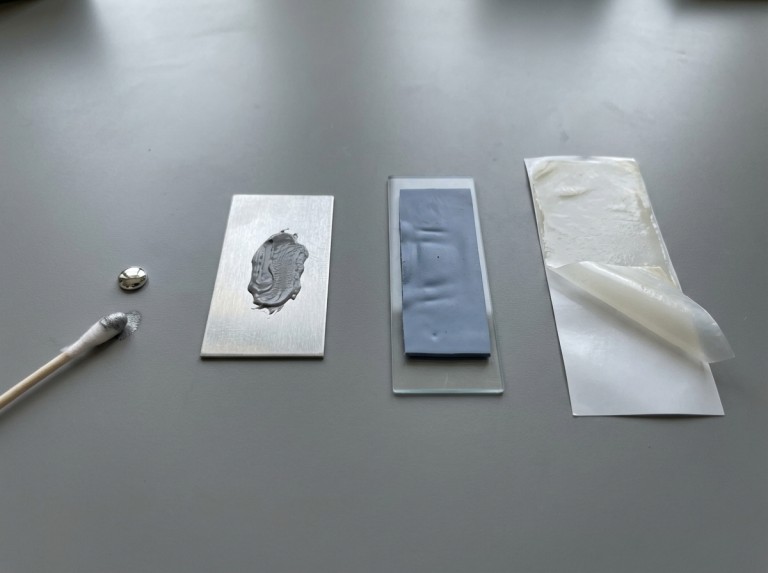
Comparison Snapshot for Interface Decisions
| Interface material class | Typical use case at the interface | Key advantage | Primary risk that must be verified |
|---|---|---|---|
| Liquid thermal compound (liquid-metal-style TIM) | High-pressure, flat contact surfaces (CPU IHS to cold plate, or controlled direct-die setups) | Very thin bond line and strong wetting potential | Electrical conductivity and material compatibility |
| Thermal paste (particle-in-binder TIM) | Mainstream CPU/GPU interfaces with normal mounting and maintenance expectations | Safe handling and broad compatibility | Long-term stability depends on operating cycles and mounting |
| Thermal pad (elastomeric gap filler) | Larger gaps, uneven surfaces, tolerance stack-up, lower pressure | Bridges gaps reliably | Higher thermal resistance vs thin bond line interfaces |
| Phase-change sheet (PCM) | Flat interfaces where clean handling and repeatability matter | More controlled application and migration behavior | Requires correct activation conditions and mounting |
Misconceptions Leading to Misuse and Risk
Liquid thermal compound fails most often when people treat it as “the same as paste, just better.” This is not true for electrical safety or materials compatibility. Some users assume any TIM works with the same habits. A liquid-metal-style compound behaves differently at the edges. It acts differently around components. If the system design does not control spill paths, the risk rises faster than the benefit.
A second misconception is that higher conductivity predicts better real-world temperatures. Interface performance depends on surface condition. It relies on clamping force. Flatness matters. Contact area counts. The hottest point must be limited by the interface. A better TIM cannot fix an undersized cooler. It cannot correct an uneven mount. It cannot fix a heat-spreader design that concentrates hotspots away from the contact plane.
A third misconception is that a “metal-looking” heatsink base is compatible. Many coolers use different base materials or coatings. Liquid-metal-style compounds can react with certain metals. You must verify compatibility from manufacturer specifications. Use controlled material identification methods. Do not rely on visual inspection alone.
Main Types of Liquid Thermal Compound
Liquid thermal compound products fall into gallium-based liquid metal and non-gallium variants. These are marketed as “liquid” TIMs. Gallium-based liquid metal is common in enthusiast and repair contexts. It wets common interface metals under the right conditions. It forms a thin bond line. The defining feature is metallic wetting behavior. It includes electrical conductivity.
You consider gallium-based liquid metal for CPU heat spreaders. It fits controlled direct-die applications where the interface is a known bottleneck. The most common use is between a CPU integrated heat spreader (IHS) and a compatible cold plate or heatsink base. Direct-die GPU use exists. It demands tighter safety barriers. Nearby SMD components are exposed. The margin for spill is lower.
Non-gallium “liquid” thermal compounds position as easier or safer alternatives. They still require verification. Some reduce certain compatibility issues. The core decision bases on interface conditions and safety controls. Do not rely on marketing language. If a product is electrically conductive, treat it as conductive material near energized components.
Hybrid “liquid-like” TIM products confuse with liquid thermal compound in search results. Some are pumpable pastes or low-viscosity compounds. They behave more like paste than liquid metal. These can be valid choices. Categorize them by actual risks and acceptance criteria. Avoid a generic “liquid” label.
Deciding Appropriateness for Hardware and Workload
Liquid thermal compound fits only when you control the interface. The remaining cooling stack must be competent. This decision starts with the interface type. A CPU with an IHS has a different risk profile than a bare GPU die. It depends on whether you tolerate careful application. It requires re-verification compared with standard paste.
For a desktop CPU with an IHS, liquid thermal compound is a reasonable option. Verify the heatsink base material compatibility. Ensure the mount is mechanically stable. The IHS creates a larger, flatter target surface. It reduces the chance that a small edge defect becomes a catastrophic spill. You still need controlled application. The geometry is more forgiving than direct-die work.
For bare GPU dies and delidded CPUs, liquid thermal compound is a higher-risk decision. Exposed components sit close to the interface plane. A single migration path can reach SMDs or traces. The cooler mounting process can smear material where it should not go. These setups are not wrong. They require stronger masking and insulation controls.
Thermal paste is the safer choice when you maintain the system casually. It fits when you transport often or service by multiple people. Paste is preferable when the heatsink base material is uncertain. It works when the mount is inconsistent. It suits when rework risk is unacceptable. In many builds, replace degraded or poorly applied paste with high-quality paste. Fix contact issues. This provides most achievable gains.
Pads or phase-change materials work better when you need controlled thickness. They fit repeated assembly or tolerance to minor geometric mismatch. They reduce handling risk. They improve repeatability in service workflows. The correct choice depends on what you verify. It relies on failure modes you prevent.
Verifying Heatsink Compatibility and Safety Barriers
Heatsink compatibility and electrical isolation are prerequisites for liquid thermal compound use. Common failures come from incompatible heatsink base material. They arise from allowing conductive material to reach powered components. Treat compatibility as a gate. Pass it before opening the product.
Start with the heatsink base material. Check any surface coating that contacts the compound. Verify compatibility from manufacturer documentation when possible. If documentation is unavailable, pause the plan. Choose a safer TIM class. Do not guess. The downside is hardware damage.
Plan electrical safety barriers based on exposed areas near the interface. A CPU IHS installation has less exposed circuitry than a bare GPU die. A direct-die application requires protection for nearby SMD components and traces. Use insulation methods for the environment and service life. Check adhesion and coverage before assembly.
Handling controls matter. Liquid metal can smear and migrate if treated like paste. Keep the work area stable, clean, and brightly lit. Plan how to dispense, spread, and clean. Avoid crossing tools between surfaces. A controlled workflow is a safety system.
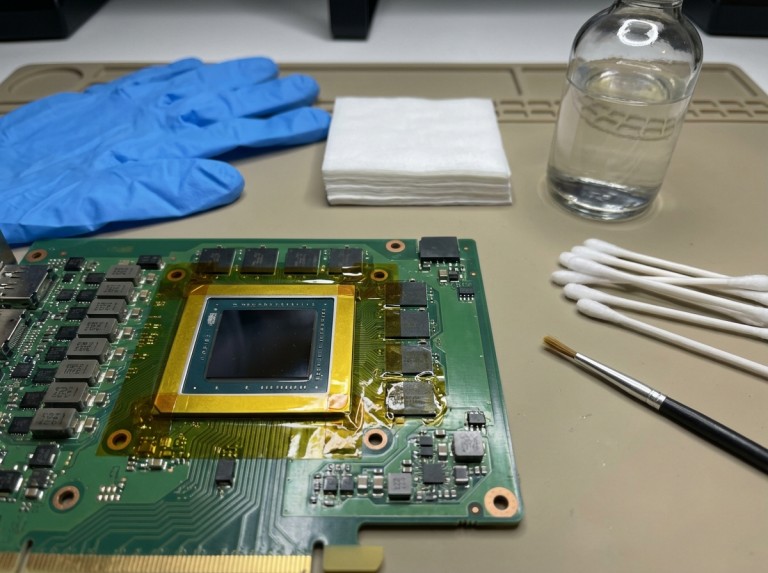
Application Method and Acceptance Criteria
A stable liquid thermal compound bond line needs a thin, continuous film. It wets the intended surfaces. It leaves no excess material at the edges. Many failures come from incomplete wetting. They arise from contamination or uncontrolled squeeze-out. Define acceptance criteria before applying. You cannot judge quality after messy assembly.
Surface preparation is the first gate. Clean contact surfaces of old TIM residue, oils, and loose debris. Cleaning controls the variable. Contamination prevents wetting. It creates local hot spots that seem like cooler problems.
Dispense and spread for coverage control, not volume. A small initial amount is easier to manage than excess. Liquid-metal-style compounds resist wetting at first. Spreading requires repeated gentle passes for a uniform film.
Mount to minimize lateral shifting. This could push material outward. After mounting, check stability first. Do not chase a specific temperature drop. If temperature behavior is erratic, assume a contact or coverage issue. Verify it.
Define re-check triggers in advance. Watch for unexpected temperature increase. Note new throttling behavior. Check changes after transport. These prompt verification. Liquid thermal compound is not “set and forget” in every build. This holds if vibration or frequent disassembly occurs.
| Acceptance item | What “pass” looks like | What “fail” looks like | First corrective action to verify |
|---|---|---|---|
| Surface cleanliness | No visible residue, no oily smears, consistent surface appearance | Streaks, patches, residue rings from prior TIM | Re-clean and re-check with fresh wipes/tools |
| Coverage continuity | Thin, continuous film across the intended contact zone | Bare patches, beading, uneven wetting | Re-spread with controlled small passes |
| Edge control | No obvious excess pooling near edges | Puddling, streaks extending outward | Remove excess and re-apply smaller amount |
| Mount stability | Cooler seats evenly with consistent mounting torque pattern | Cooler shifts, uneven clamp, repeated reseating | Re-mount and confirm contact pattern assumptions |
| Post-mount behavior | Temperatures stable under repeatable load conditions | Worse temps or large swings with the same load | Inspect contact, coverage, and mount before blaming the cooler |
Preventing Mistakes and Troubleshooting Temperatures
Abnormal temperatures after application indicate a process problem. They do not show a hardware limitation. Prevent repeated rework. Identify the likely failure mode. Verify it in order. Do not change settings randomly. Avoid swapping coolers. This masks the real cause.
Over-application creates squeeze-out risk. It worsens outcomes by pushing material toward sensitive areas. Too much material makes controlled film thickness harder. The cooler rides on excess instead of seating uniformly. If you suspect excess, stop. Rework the interface with smaller application. Do not “let it settle.”
Uneven wetting or poor contact shows as worse temperatures than paste. It causes significant fluctuations. Contamination often causes this. Incomplete spread or uneven mounting pressure contributes. Re-check surface prep and spread method first. Do not assume the compound is defective.
Compatibility failures appear as visible surface changes. They show degraded contact quality or long-term drift. If you see signs of compatibility issue, stop. Revert to a compatible, non-conductive TIM. Continuing increases risk without stable performance.
Troubleshooting Sequence to Avoid Mistakes
- Verify your test method is consistent, including the same workload, fan behavior, and ambient conditions.
- Verify mount stability and seating before changing any TIM assumptions.
- Verify coverage continuity and edge control by inspecting the interface if symptoms persist.
- Prevent repeat spill risk by improving masking and tool discipline before re-applying.
- Decide to revert to paste or an alternative TIM if compatibility or safety cannot be confidently controlled.
Conclusion
Liquid thermal compound is a high-risk TIM choice. It needs high control. It justifies only when the interface is a verified bottleneck. Safety gates must be satisfied. Drive the decision by interface type. Check heatsink base compatibility. Implement electrical barriers and acceptance criteria. When conditions are not met, use well-applied thermal paste. Choose an alternative TIM for reliable cooling.
At Trumonytechs, we treat liquid thermal compound as a controlled engineering variable. It is not a universal upgrade. Define interface constraints. Verify compatibility. Adopt pass/fail checks. This reduces failure risk. It improves thermal stability where the interface matters. If you cannot verify conditions, choose the safer TIM path. Optimize the rest of the cooling stack first.
FAQ
Is liquid thermal compound the same as liquid metal?
Liquid thermal compound is a general term. Many readers mean a liquid-metal-style TIM. It has metallic wetting behavior and electrical conductivity. Treat any product marketed as “liquid metal” as electrically conductive. Verify otherwise. If conductive, apply it with insulation and compatibility controls. Do not use paste habits.
Can liquid thermal compound be used with aluminum heatsinks?
Do not use liquid thermal compound with an aluminum heatsink base. Verify compatibility explicitly by reliable documentation. Material compatibility is a go/no-go gate. The downside is physical damage and unstable contact. If heatsink material cannot be confirmed, use conventional paste. Choose another TIM format with safer compatibility.
Do you need to apply liquid thermal compound on both surfaces?
Apply a controlled thin film on both mating surfaces. This helps establish immediate, continuous contact. The method depends on interface geometry. It relies on your ability to control squeeze-out. Ensure continuous wetting across the contact area. Minimize edge excess. If applying to both increases spill risk, prioritize edge control over symmetry.
How do you confirm “enough coverage” without using too much?
Enough coverage means a thin, continuous film across the full contact zone. It is not a thick layer. Verify no bare patches, beads, or pools near edges before mounting. If coverage is uneven, re-spread with small controlled passes. Do not add a large second dose.
What should you do if temperatures worsen after applying liquid thermal compound?
Worse temperatures indicate poor contact. They show incomplete wetting, contamination, or inconsistent mounting. This is not a material failure. Verify test consistency first. Then check mount seating and interface coverage. If you cannot stabilize without increasing spill risk, revert to a safer TIM. Fix mechanical or airflow constraint first.
Facebook
Twitter
LinkedIn
Related posts
0
What Does Thermal Grease Do?

0
Thermal Gel vs Thermal Paste

0
Thermal Grease vs Thermal Paste