
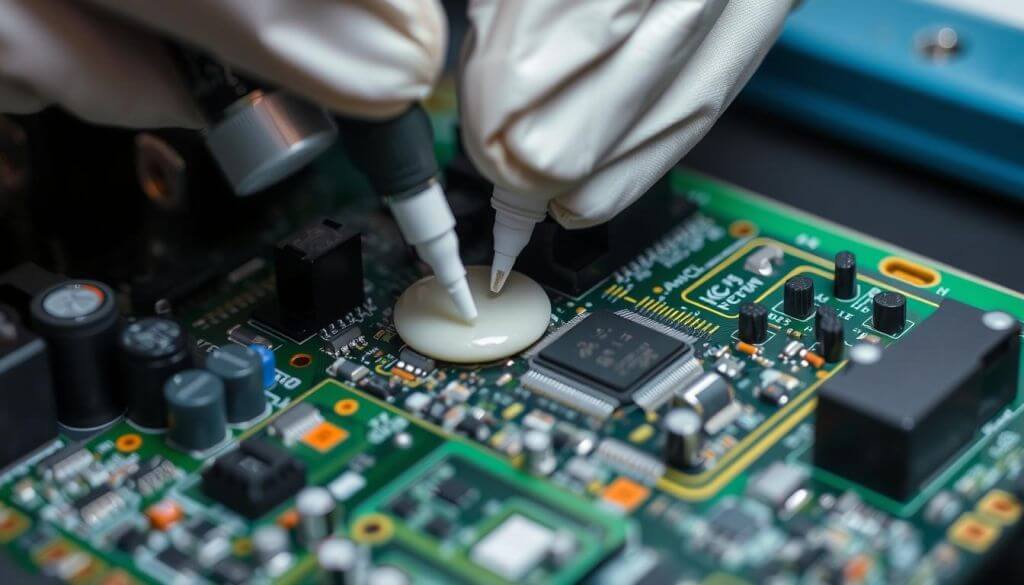
Trumonytechs grasps the significance of potting in electronics. This process fills an electronic assembly with a solid or jelly-like material. It boosts resistance to shocks, vibrations, and environmental factors.
This method is vital for safeguarding sensitive components in devices. It ensures their durability and reliability. By encasing the PCB or assembly in a potting box, we offer superior protection against corrosive agents and moisture.
Trumonytechs excels in delivering top-notch potting solutions. We cater to the evolving needs of the electronics sector, focusing on thermal management and performance.
Key Takeaways
- Potting enhances the durability of electronic assemblies by protecting them from environmental stressors.
- The potting process involves filling electronic assemblies with specialized compounds.
- Potting provides superior protection compared to other methods like conformal coating.
- Thermal management through potting is becoming increasingly important in high-performance electronics.
- Various types of potting compounds are available, each with specific applications.
- Selecting the right potting solution is critical for optimal electronic device performance.
Understanding Potting in Electronics
Electronic potting safeguards components from environmental stressors. At Trumonytechs, we manufacture thermally conductive materials, including POTTING GLUE. We recognize the importance of this process in ensuring electronic devices’ longevity and reliability.
Potting in electronics fills an enclosure with a semi-solid compound, protecting components inside. It differs from other strategies in electronic design, encapsulating components in a compound. The main goal is to offer comprehensive protection, encapsulating components fully. This approach provides superior resistance to moisture, dust, and chemicals, making it ideal for harsh conditions.
Potting stands out from other methods like conformal coating. Conformal coating applies a thin layer on components, whereas potting fills the entire enclosure. This difference leads to more comprehensive protection. We compare potting to other methods, highlighting its advantages in protection level and permanence. However, potting involves trade-offs, including considerations on repairability and cost. Our expertise at Trumonytechs aids in choosing the most suitable protection method based on application requirements and environmental conditions.

The Science Behind Electronic Potting
Understanding the science behind electronic potting is crucial for manufacturers aiming to enhance device durability and performance. Potting involves encapsulating components in a protective material to shield them from harsh environments and mechanical stress. This process is vital for ensuring electronic assemblies’ reliability and longevity.
How Potting Compounds Protect Electronic Components
Potting compounds are key in safeguarding electronic components from environmental stressors like moisture, dust, and chemicals. By encapsulating components in a robust compound, manufacturers significantly reduce damage risk from these factors. The compounds used are typically polymers enhanced with fillers for improved thermal, electrical, or mechanical properties. For instance, adding alumina to the polymer enhances heat dissipation, preventing overheating and improving device performance.
Thermal Management Through Potting
Effective thermal management is key in electronic potting. Polymers in potting compounds have low thermal conductivity, limiting their use in high-heat applications. To overcome this, thermally conductive fillers are added to enhance heat dissipation. This is vital for preventing overheating, which can shorten the lifespan of electronic components.
By managing heat effectively, potting compounds improve the efficiency and reliability of power electronics and other heat-generating components. At Trumonytechs, we focus on developing potting compounds with optimized thermal conductivity for various electronic applications. Our solutions are tailored to meet our clients’ specific needs.
Understanding how potting compounds protect electronic components and manage thermal conductivity helps manufacturers make informed decisions. This enhances the performance and reliability of their electronic devices.
Types of Potting Compounds for Electronics
Electronic devices need robust protection, which is where different types of potting compounds come in. These compounds shield sensitive electronic components from environmental stressors like moisture, dust, and vibration.
Epoxy Potting Compounds
Epoxy potting compounds are known for their exceptional chemical resistance and mechanical strength. They are widely used in electronics for encapsulating components exposed to harsh environments. Epoxy resins provide a rigid, protective shell that prevents damage from chemical exposure and physical stress.
Silicone Potting Materials
Silicone potting materials offer flexibility and high-temperature resistance, making them ideal for applications where thermal stability is crucial. They provide excellent electrical insulation and are often used in devices that are subject to varying temperatures and environmental conditions.
Polyurethane Potting Solutions
Polyurethane potting solutions are valued for their balance of flexibility and strength. They offer excellent electrical insulation properties while maintaining good mechanical protection. The flexibility of polyurethane is especially critical as it accommodates the different substrates found in electronic devices, including metal alloys, ceramics, plastics, and glass. We explore the composition and properties of polyurethane potting solutions, highlighting their versatility in various electronic applications.
Urethane potting compounds offer flexibility, elongation, and abrasion resistance. These traits make them ideal for a broad spectrum of electronic uses, from consumer gadgets to car parts. At Trumonytechs, we’ve tailored polyurethane potting solutions for various electronic needs. We guide on choosing polyurethane over other materials based on application and environmental conditions.
What Does Potting Mean in Electronics?
In the world of electronics, potting boosts the durability of assemblies. It involves encasing components in a protective resin. This shields them from environmental stress and mechanical harm.
The Potting Process Step-by-Step
The potting process is vital for extending the life of electronic parts. We start by cleaning each component to remove dust or dirt. This ensures the resin bonds evenly.
Next, we mix the potting material accurately and thoroughly. Epoxy resin is often chosen for its strong adhesive properties. When applying the compound, spreading it evenly is key. We pour it slowly to avoid air bubbles and degas before it sets.
The curing stage is also critical. The time and conditions needed vary with the material used.
Common Misconceptions About Potting
There are misconceptions about potting in electronics that need clearing up. One myth is that potting is a permanent fix. However, components may need to be reworked or replaced in some cases. Another myth is that all potting materials are the same. In reality, the right material is crucial for specific applications.
We also debunk myths about potting costs. The initial investment in proper potting can lead to long-term savings through improved reliability. Properly selected potting materials can enhance, not hinder, component performance. At Trumonytechs, we’ve helped customers overcome these common challenges and misconceptions.
Key Benefits of Potting in Electronic Manufacturing
Electronic manufacturers use potting to protect their products against harsh conditions and enhance performance. Potting offers multiple benefits, addressing various challenges faced by electronic devices in different environments.
Environmental Protection: Potting compounds act as a protective barrier against moisture, dust, and chemicals. This is essential in preventing corrosion and damage to sensitive components. By encapsulating components, manufacturers ensure their devices function well even in harsh conditions.
Mechanical Stability and Vibration Resistance: Potting enhances the mechanical stability of assemblies by securing components and absorbing vibrations. This is crucial in applications where devices face mechanical stress or vibration, such as in automotive or industrial settings. The added stability prevents damage from movement and stress.
Thermal Conductivity Advantages: Potting compounds manage heat through thermal conductivity. Good heat dissipation prevents overheating, extending the lifespan of components. Polyurethane resins with high thermal conductivity are particularly effective in high-power devices, ensuring reliable performance and efficiency.
Optimizing thermal conductivity is critical in managing heat within devices. This prevents overheating and improves performance and reliability. At Trumonytechs, we specialize in developing potting compounds with optimized thermal conductivity for various applications, enhancing the efficiency and lifespan of our clients’ products.
Applications of Potting in Modern Electronics
Potting is essential in modern electronics, enhancing durability and reliability in various devices. As technology advances, the need for protected components grows, making potting a vital process in manufacturing modern electronics.
Automotive and Transportation Electronics
In the automotive and transportation sectors, potting protects electronic components from harsh environments. This includes extreme temperatures and vibrations. It’s crucial for safety-critical systems like airbag control units and anti-lock braking systems (ABS). By encapsulating these components, manufacturers ensure their reliability and longevity.
Potting in automotive electronics also covers infotainment systems and navigation units. It prevents damage from moisture and dust. As vehicles become more electrified and autonomous, potting’s role in ensuring electronic system reliability will grow.
Industrial Control Systems
Industrial control systems benefit from potting, especially in manufacturing and processing plants. These systems face harsh environments with chemicals, dust, and extreme temperatures. Potting protects the electronic components, ensuring they operate well and reducing maintenance needs.
Consumer Electronics and Medical Devices
Potting is used in consumer electronics and medical devices too. Smartphones and tablets benefit from potting, keeping their internal components safe from heat and moisture. Medical devices, like pacemakers and insulin pumps, rely on potting to protect their complex electronics, ensuring patient safety.
At Trumonytechs, we’ve developed specialized potting solutions for these applications. Our focus is on meeting the unique needs of these products. We create more durable and reliable products, balancing protection with considerations of weight, size, and aesthetics.
Our Thermally Conductive Potting Solutions at Trumonytechs
At Trumonytechs, we specialize in thermally conductive potting solutions for various electronic applications. Our expertise in material science allows us to develop customized compounds. These provide optimal thermal management, ensuring the reliability and performance of electronic devices.
Specialized Potting Glue for Thermal Management
Our specialized potting glue offers superior thermal conductivity. It allows for efficient heat dissipation in electronic components. We offer materials with different properties, including thermal conductivity, viscosity, and hardness, to meet specific application needs.
Using our thermally conductive potting compounds enhances the performance and lifespan of electronic devices. It reduces thermal stress and improves heat transfer.
Custom Potting Solutions for Specific Applications
We collaborate with customers to understand their unique challenges. We develop custom potting solutions tailored to their needs. Our resin-based potting solutions meet the precise requirements of various applications, from automotive and industrial electronics to consumer and medical devices.
Our range of customization options includes adjusting cure time, operating temperature range, and other critical properties. This ensures compatibility with different electronic components and environments.
Conclusion
As a leading manufacturer of thermally conductive interface materials, including potting glue, we’ve seen firsthand the impact that potting can have on electronic devices.
In conclusion, our exploration of potting in electronics has highlighted its critical role in protecting and enhancing electronic components. The right potting materials and techniques are essential for achieving optimal thermal conductivity and ensuring the reliability of electronic devices.
At Trumonytechs, we’re committed to developing high-performance, thermally conductive potting solutions that meet the evolving needs of the electronics industry. By selecting the appropriate potting compounds and working with experienced manufacturers like us, businesses can improve the performance and longevity of their electronic applications.
For more information about our potting solutions and how they can benefit your specific electronic applications, we invite you to contact us. As a trusted partner in the electronics industry, we’re dedicated to helping our customers solve their electronic protection and thermal management challenges.
FAQ
What is the primary purpose of potting in electronics?
The primary purpose of potting is to protect electronic components from environmental stressors, such as moisture, dust, and chemicals, while also providing mechanical stability and vibration resistance.
How do potting compounds protect electronic components
Potting compounds protect electronic components by encapsulating them in a protective material that prevents damage from environmental factors, mechanical stress, and thermal shock.
What types of potting compounds are available for electronics?
We offer a range of potting compounds, including epoxy, silicone, and polyurethane, each with its own unique properties and benefits, such as thermal conductivity, flexibility, and chemical resistance.
How does thermal conductivity impact the performance of potted electronics?
Thermal conductivity plays a crucial role in the performance of potted electronics, as it helps to dissipate heat generated by components, reducing the risk of overheating and damage.
Can potting compounds be customized for specific applications?
Yes, we can customize potting compounds to meet the specific needs of various applications, including automotive, industrial, and consumer electronics.
What are the benefits of using thermally conductive potting compounds?
Thermally conductive potting compounds offer improved thermal management, reduced risk of overheating, and increased reliability, making them ideal for high-performance electronics.
How does the potting process affect the reliability of electronic components?
The potting process can significantly impact the reliability of electronic components, as it provides a protective barrier against environmental stressors and mechanical damage.
Are there any common misconceptions about potting in electronics?
Yes, some common misconceptions about potting include the idea that it is a simple process that can be done without specialized knowledge or equipment, or that it is only necessary for certain types of electronics.