
Thermal Conductive Silicone Grease: Three Standard Grades, 3.5 to 5.0 W/m·K
Trumonytechs supplies thermal conductive silicone grease in three standard grades — 3.5, 3.8 and 5.0 W/m·K. Which one applies depends first on whether the interface has to isolate electrically: only the 3.5 W/m·K grade is listed as insulating. The material does not cure and provides no mechanical fixing.
Send the grade or target conductivity and say whether the interface has to isolate electrically.
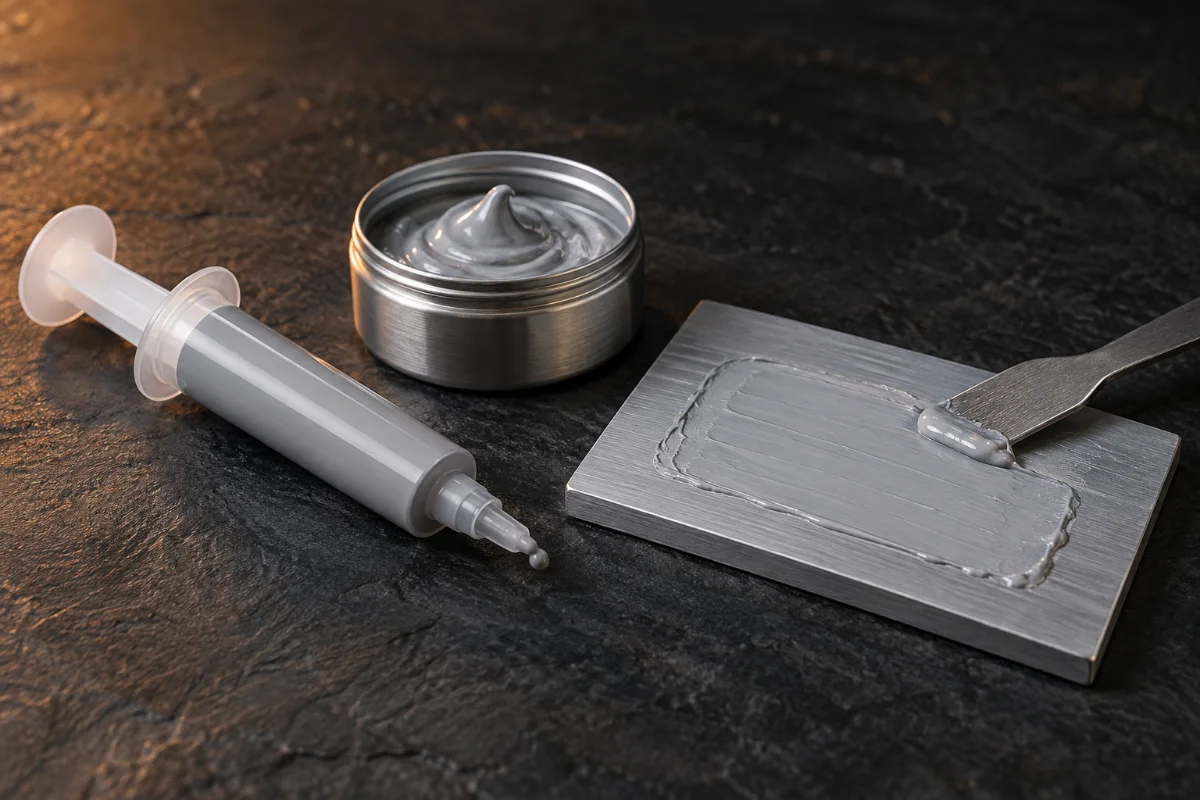
Where This Grease Fits at an Interface
Thermal grease fills the microscopic gaps between two mating surfaces so that heat crosses the joint through material rather than through trapped air. The layer is spread or scraped on before the parts are brought together, and it stays a paste afterwards. Nothing about it is structural, and nothing about it is permanent in the sense of a cured joint.
Thermal conductivity across the three grades on this page, measured to ISO 22007-2.
- 01The interface also has to isolate electrically
Only 30108-0350 is listed as insulating. The 3.8 and 5.0 W/m·K grades are listed as non-insulating, which removes them from consideration before conductivity is compared.
- 02The joint has to carry load
Grease does not cure and adds no bond strength. Cell-to-plate bonding is the job of a structural adhesive, not of a paste that stays a paste.
- 03The assembly is weight-sensitive
These grades use an alumina powder of very low particle size, which is why density runs high — 2.6 to 3.3 g/cc. Grease is described on this site as unsuitable for products trending toward lightweight construction.
Scope ends at the material. Bond line thickness, clamping pressure and surface finish sit on your side of the interface, and none of them are specified here. If the choice between grease, gel and a pad is still open, our guide to silicone thermal compounds covers how the three differ before any grade is picked.
Thermal Conductive Silicone Grease Grades, Side by Side
Grade selection starts with the isolation row, because that is a yes/no gate rather than a sliding scale. Conductivity becomes a choice only on whichever side of the gate the application lands, and the viscosity column is what decides how the chosen grade behaves under a scraper.
| Propiedad | 30108-0350 | 30108-0380 | 30108-0500 | Método de prueba |
|---|---|---|---|---|
| Aislamiento eléctrico | Aislante | No aislante | No aislante | — |
| Conductividad térmica | 3.5 W/m·K | 3.8 W/m·K | 5.0 W/m·K | ISO 22007-2 |
| Densidad | 3.3 g/cc | 2.6 g/cc | 2.7 g/cc | ASTM D792 |
| Viscosidad | 100,000 mPa·s | 80,000 mPa·s | 210,000 mPa·s | ASTM D2196 |
| Color | Blanco | Not published | Not published | Visual |
Thermal resistance is not published for these grades. A UL 94 V-0 flame rating applies at series level and is not attributed grade by grade, which is why it sits outside this table.
Viscosity across the three runs from 80,000 to 210,000 mPa·s, and it does not track conductivity — the 3.8 W/m·K grade is the thinnest of the three, not the 3.5. A higher-viscosity grade is harder to scrape out thin and harder to control at low layer thickness, while a lower-viscosity grade is more prone to slumping on a vertical face.
Density spans 2.6 to 3.3 g/cc. Converting that into a mass on your bill of materials needs an applied volume, which means a coverage area and a layer thickness — and no recommended layer thickness is published here.
Material Basis, Filler and Temperature Behavior
All three grades share a base of silicone fluid mixed with thermally conductive filler, with no cure step at any point. The filler is described as an alumina powder of very low particle size, chosen for a fine, smooth, thixotropic paste — and that choice is also the stated reason the density runs high.
Published descriptions state the material holds a grease condition from -50 °C to 230 °C. That describes the form the material keeps across the range, not a rated operating window for an assembly, and no performance-versus-temperature data is published for these grades. A program qualifying to a temperature profile should treat the range as a screening filter and request test data separately.
Low oil separation and weathering resistance are described as properties of the material. Substrate compatibility is a different question. Migration, swelling and corrosion behavior against specific plastics, coatings or connector materials is not published here — buyers with those materials near the interface should raise it in the RFQ.
Not published on this page: recommended layer thickness, thermal resistance, dielectric strength, volume resistivity, hardness, oil bleed figures, ageing and failure-mode data, shelf life and storage conditions. Where a specification needs any of them, ask before ordering rather than after.
Grade or target conductivity, isolation requirement, annual volume, destination port — those four open a quotation.
One Boundary You Can Grade Around, and One You Cannot
Electrical isolation is a grade-level gate on this page: moving between 30108-0350 and the other two settles it. Form and density are not grade-level at all — every grade here is a non-curing, high-density paste, and no amount of grade selection changes that.
30108-0350 is listed at 3.5 W/m·K and as insulating. 30108-0500 is listed at 5.0 W/m·K and as non-insulating. Where the interface has to stand off voltage, 3.5 W/m·K is the listed ceiling on this page, and any further thermal headroom has to be found outside the material.
No grade here cures, so no grade here contributes bond strength or survives being specified as a fixing. Every grade also carries the density that comes with a low-particle-size alumina filler, which is the property that rules grease out of weight-sensitive assemblies regardless of which of the three is chosen.
Two conditions push the answer off this page entirely. Where the interface is assembled by automated dispensing, or where the assembly is weight-sensitive, our own product comparison points to a two-component gel termoconductor rather than to grease. Gel can be dispensed automatically and reaches high conductivity at low density; grease goes on by hand. A almohadilla conductora térmica is the other direction to check when the gap is dimensional rather than a matter of surface finish.
How the Three Measured Numbers Were Taken
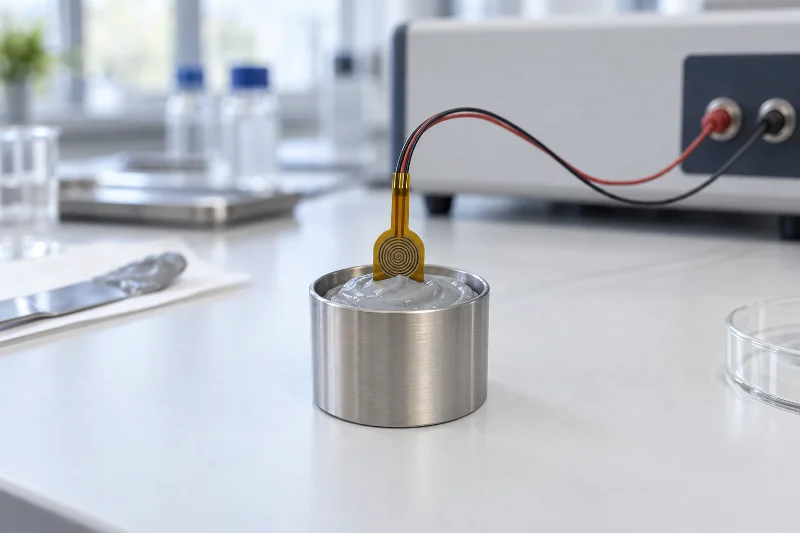
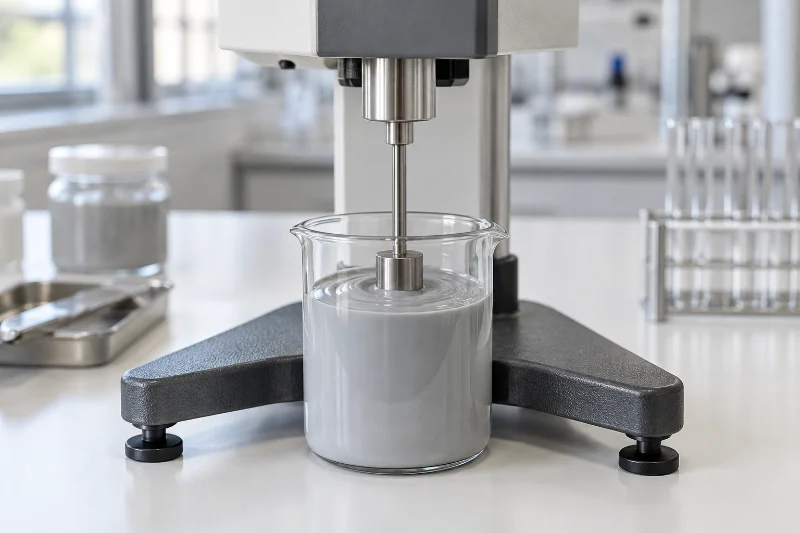
Thermal conductivity, density and viscosity are the three figures on this page that carry a test method, and each is listed with it in the table above. Two suppliers quoting 5 W/m·K under different standards are not describing the same material, and the method is the only part of the claim that lets a buyer tell.
Thermal conductivity, all three grades.
Density, all three grades.
Viscosity, all three grades.
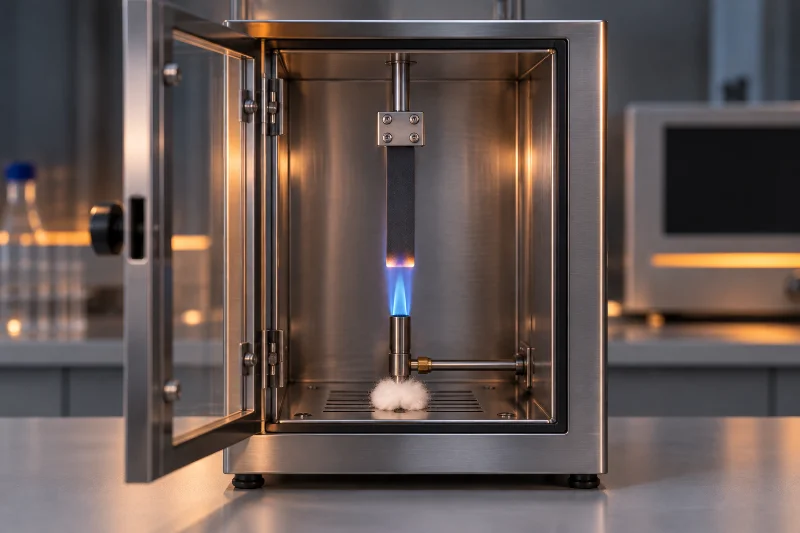
A flame rating at series level and a statement about the formulation. Neither is a certificate held under a number published here.

Quality system certificates, ISO 9001 and IATF 16949, are available on request; specify which you need in your inquiry. We confirm case by case whether a given certificate's scope covers this product line, rather than asserting it here.
Project references are not published for these grades — no customer names, no applications, no years. A page carrying those without an authorization record would be asking a buyer to accept an unverifiable claim as evidence, which is the opposite of what a supplier assessment is for. What can be checked is narrower and more useful: the three measured values, the standard behind each, and the data sheet for whichever grade reaches quotation. Batch-to-batch process control and traceability records are not published here either; ask for what exists against a specific order.
Ordering: What Has to Be Confirmed Before a Quote
Price is not published on this page. Production lead time, minimum order quantity, payment terms, third-party inspection, packing formats, shipping documents and warranty terms are not published on this page, and none of them are set by which grade is chosen. Warranty terms in particular are not published here and should be requested with the RFQ. The five lines below are what an inquiry needs to carry for any of it to be answered.
- Grade, or the thermal conductivity you are targeting
- Whether the interface must isolate electrically
- Annual volume
- Packaging preference
- Puerto de destino
Two of these lines do most of the narrowing. The isolation requirement comes first, because only the 3.5 W/m·K grade is listed as insulating; the target conductivity then picks among the grades that remain. Price and what a quotation covers are set against the annual volume, and the destination port decides transit time, duties and import paperwork. Routes and contacts are on the contact page.
Questions Buyers Ask Before Specifying a Grade
Which of the three grades is electrically insulating? +
Only 30108-0350, listed at 3.5 W/m·K, is insulating. The 3.8 and 5.0 W/m·K grades are listed as non-insulating. Where the interface stands off voltage, that gate closes before conductivity is compared, and 3.5 W/m·K becomes the listed ceiling on this page.
Does the grease cure, and does the assembly have to wait? +
No cure step exists, so no cure schedule enters a line balance and no station waits on one. The layer stays a paste after application. The same property means the joint carries no load from this material — a grease specified as a fixing is doing a job it was never formulated for.
How is it applied? +
By hand. The paste is fine and thixotropic, which suits scraping it directly onto the heat-generating surface; automated dispensing is described for gel rather than for grease. Viscosity across the three grades runs 80,000 to 210,000 mPa·s to ASTM D2196, so the 5.0 W/m·K grade is the heaviest to work.
Why is the density so high, and does it matter? +
The filler is an alumina powder of very low particle size, chosen for a smooth, fine paste, and high density follows from that choice. Density runs 2.6 to 3.3 g/cc. In weight-sensitive assemblies this is the property that rules grease out, whichever grade is picked.
Should I use grease or a thermal gel? +
Grease goes on by hand and suits scraping onto a surface. Gel can be dispensed automatically, reduces surface stress on the parts, and reaches higher conductivity at lower density — which is why this site points battery pack assembly toward gel rather than grease. The gel page has the comparison.
How thick should the layer be? +
No recommended bond line thickness is published for these grades. Layer thickness depends on the surface finish and clamping pressure of your assembly, neither of which is specified here. Interface conditions included in an RFQ can be put to engineering, but no thickness guidance is published on this page.
What is the minimum order quantity, and what does it cost? +
Neither is published on this page. Both are settled at quotation against the grade, the annual volume and the packaging you need, so sending those three at the same time avoids a round trip. No price range or price-driver breakdown is published here.
Can you support our annual volume and schedule? +
Capacity figures are not published for this product line, and figures carried across from other lines would not describe it honestly. Send the annual volume and the schedule it has to hold against, and what can be committed will be confirmed in writing rather than implied here.
Is the thermal conductive silicone grease RoHS compliant and flame rated? +
The formulation is RoHS-compliant, and a UL 94 V-0 flame rating applies at series level rather than grade by grade. Neither statement is a certificate held under a number published on this page. Quality system certificates, ISO 9001 and IATF 16949, are available on request; specify which you need.