
Thermal Conductive Pad Supplier: Five Silicone Models
Trumonytechs' 30101 silicone thermal conductive pads come in five models from 1.5 to 8.0 W/m·K, each 0.4–10 mm thick. Cell-to-cold-plate joints in EV and energy storage (ESS) battery packs are the main applications, and the same pads are supplied for other applications as well. Cell format or component layout, sheet size, thickness and the joint's insulation requirement are the inputs that narrow the model and construction. We list a named test method beside the measured properties, and the series is offered bare or with PI film, PI tape or glass-fiber cloth reinforcement.
Share the cell format or component layout, pad sheet size and yearly volume, the first details a 30101 quote needs.

Is a Thermal Conductive Pad Right for Your Joint?
A thermal conductive pad suits joints where a pre-formed silicone sheet can sit between a heat source and a cold plate or heat sink under low assembly stress, conforming to both surfaces and damping vibration; in a battery pack, that is between the cells and the cold plate. The 30101 series is listed for prismatic cells, cylindrical cells and serpentine cold plates, with the construction deciding which of those a pad is listed for.
Every 30101 model lists the same thickness range, measured to ASTM D374, so thickness is specified separately from conductivity.
- 01Cells must be bonded to the plate.
The pads are self-adhesive, while bonding cells to the cold plate is what the 30107 polyurethane structural adhesive is described for, with 11 MPa Al/Al shear strength listed for 30107-0120.
- 02The TIM has to go on by dispenser.
The two-part 30102 värmeledande gel supports automated dispensing, and its cured properties are described as equivalent to a thermal pad.
- 03The joint is small and sits on prismatic cells.
On prismatic cells the bare pad is the listed construction, its suggested size runs to 300 × 200 mm, and it costs less than any reinforced version. It also conducts heat and rebounds better than the reinforced pads, so where the joint needs no extra handling strength, insulation layer or adhesive backing, the bare pad avoids paying for them.
Pads are one of several TIM product families in the Trumonytechs range, compared side by side on the material för termiska gränssnitt page. The Plattor för vätskekylning a pad presses against are specified on their own page, and pack-level cooling design is covered under termisk hantering av batteripaket.
Four Pad Constructions: Listed Uses, Size Limits and Cost
30101 pads come in four constructions, bare or reinforced with PI film, PI tape or glass-fiber cloth, and sheet size, handling needs and, for three of them, a listed cell format separate them. Suggested attachment sizes are 300 × 200 mm for the bare and glass-fiber versions and 500 × 420 mm for both PI versions.
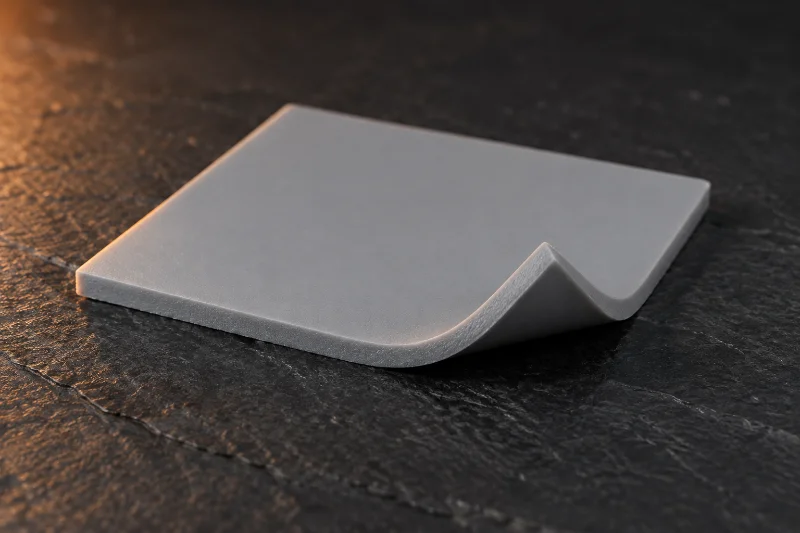
Bare pad (A)
No reinforcing layer, and it costs less than any reinforced version. Conductivity and compression rebound are better than in the reinforced pads; body strength and self-adhesion are weak, large pieces deform, and air bubbles are harder to press out during attachment.
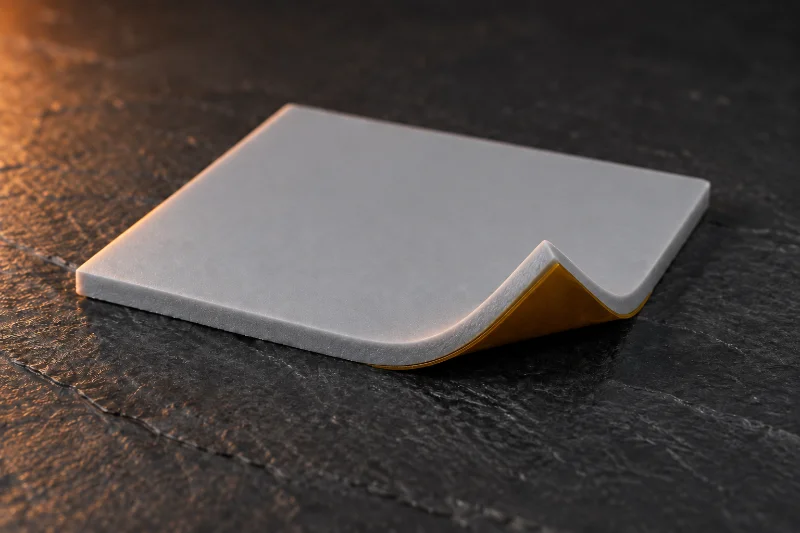
PI film reinforced (B)
A plain PI film with no adhesive backing. Apart from the missing backing, its properties are described as matching the PI-tape version, at a higher cost than a bare pad.
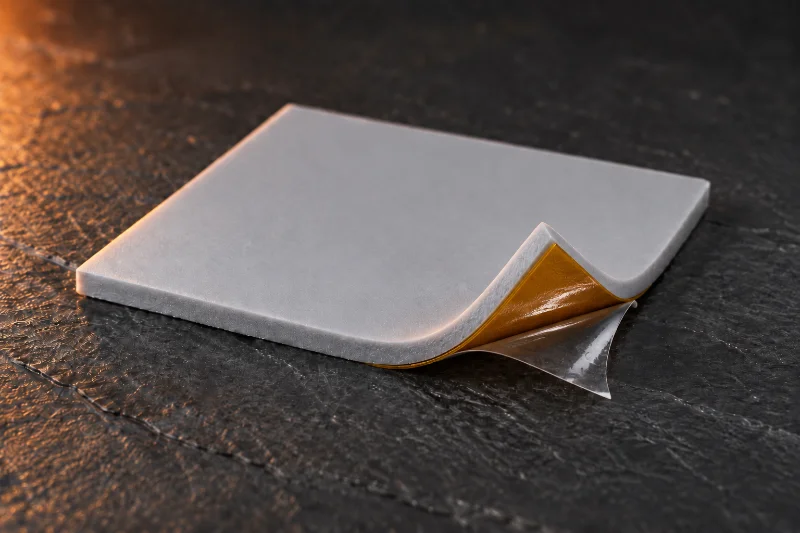
PI tape reinforced (C)
PI tape greatly raises body strength, the PI film adds insulation, and the adhesive backing bonds more firmly to the cold plate. That backing may reduce manual attachment cost, though the pad itself costs more than a bare one.
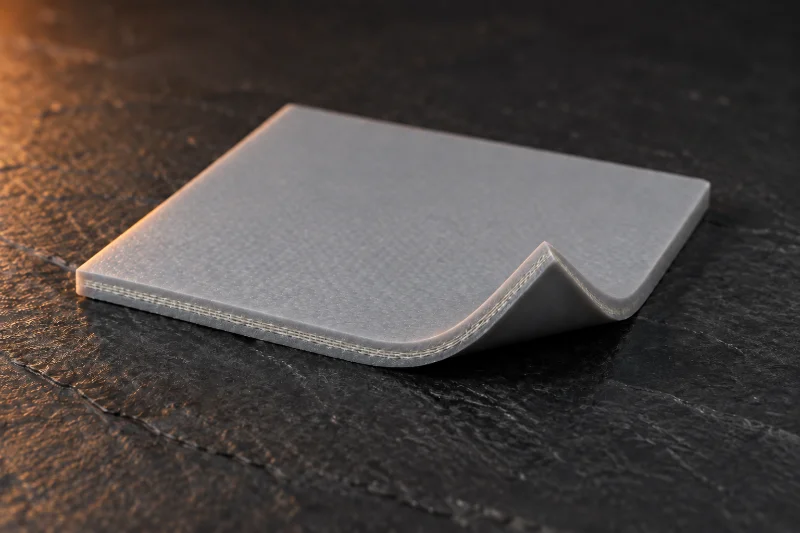
Glass-fiber cloth reinforced (D)
Glass-fiber cloth adds flexibility and body strength. The trade is a relatively high cost and lower overall conductivity than a bare pad.
Sizes are the suggested attachment limits listed for each construction. The range also includes a high-strength silicone mat for photovoltaic panel lamination; it conducts heat poorly and is not a thermal interface material.
For prismatic cells the listed construction is the bare pad, for cylindrical cells it is PI film or glass-fiber cloth, and serpentine cold plates appear against all three. No cell format is listed for the PI-tape version, which is described by its strength, insulation and adhesive backing. The datasheet does not list which models are made in which construction, so the pair you want needs its availability confirmed in the RFQ.
If the sheet must exceed 300 × 200 mm, only the two PI versions list a larger suggested size, up to 500 × 420 mm, and both add body strength for handling. Within 300 × 200 mm, the bare pad is the lower-cost option with better conductivity and rebound, while glass-fiber cloth adds strength and flexibility at higher cost and lower conductivity.
Silicone Pad Model Data: Conductivity, Hardness and Dielectric Values
All five 30101 models are silicone formulations measured to the same methods, so values compare directly across models wherever a property lists a test method. Thickness range, flame rating, D4–D10 content and recommended temperature range are the same for every model.
| Fastighet | 30101-0150 | 30101-0200 | 30101-0350 | 30101-0400 | 30101-0800 | Test method |
|---|---|---|---|---|---|---|
| Thermal conductivity, W/m·K | 1.5 | 2.0 | 3.5 | 4.0 | 8.0 | ISO 22007-2 |
| Hårdhet, Shore 00 | 55 | 5–80 | 5–80 | 10–80 | 20–80 | ASTM D2240 |
| Density, g/cc | 2.4 | 2.1 | 2.9 | 3.2 | 3.4 | ASTM D792 |
| Tensile strength, MPa | 0.1 | 0.1 | 0.2 | 0.01 | 0.01 | ASTM D412 |
| Elongation at break | 50% | 20% | 30% | 30% | 30% | ASTM D412 |
| Genombrottsspänning, kV/mm | >12 | >10 | >8 | >8 | >6 | ASTM D149 |
| Volymresistivitet, Ω·cm | >10¹² | >10¹² | >10¹² | >10¹² | >10¹¹ | ASTM D257 |
| Thickness, mm | 0.4–10 | 0.4–10 | 0.4–10 | 0.4–10 | 0.4–10 | ASTM D374 |
| Flamklassificering | V-0 | V-0 | V-0 | V-0 | V-0 | UL 94 |
| D4–D10 content | <100 ppm | <100 ppm | <100 ppm | <100 ppm | <100 ppm | GC |
| Recommended temperature, °C | −40 till +150 | −40 till +150 | −40 till +150 | −40 till +150 | −40 till +150 | — |
| Färg | Grey / optional | Grey / optional | Blue / optional | Grey / optional | Grey / optional | Visual |
ISO 22007-2 is a transient plane source method, so the conductivity figures describe the pad material itself. Contact at the surfaces on either side of the pad adds its own resistance, which is why thickness and clamping pressure belong in the RFQ alongside the model.
Breakdown values are listed as greater-than figures in kV/mm, so they show the level each model is stated to exceed rather than a ranking of actual breakdown. Hardness is listed as one value for 0150 and as a span for the other four, and what those spans represent is not stated.
These are datasheet results for the material under the listed methods, not measurements taken in a finished assembly.
Thermal Pad Cost by Construction, and What a Quote Confirms
The one cost direction in the 30101 data is by construction: a bare pad costs less than the PI-film, PI-tape or glass-fiber versions, and glass-fiber cloth is described as relatively high in cost. Any price is confirmed in the quote against model, volume and packaging form. No price range, online estimator or list of quote inclusions is published, so construction, sheet size and quantity belong in one request.
Where a bare pad and a PI version could both fit your sheet size, name both; we confirm which of them your chosen model is supplied in before quoting.
Datasheet evidence
Test Methods Behind the Measured Pad Values
Measured properties in the 30101 datasheet are reported against named methods, which gives an incoming inspection a basis to re-test samples of the same model. No project references are published for 30101, so we point to those methods as the evidence to check against.
ISO 22007-2 conductivity for all five models
ASTM D149 breakdown voltage and ASTM D257 volume resistivity
ASTM D2240 hardness, D412 tensile and elongation, D792 density, D374 thickness
UL 94 flame rating, V-0 on every model; D4–D10 content by gas chromatography
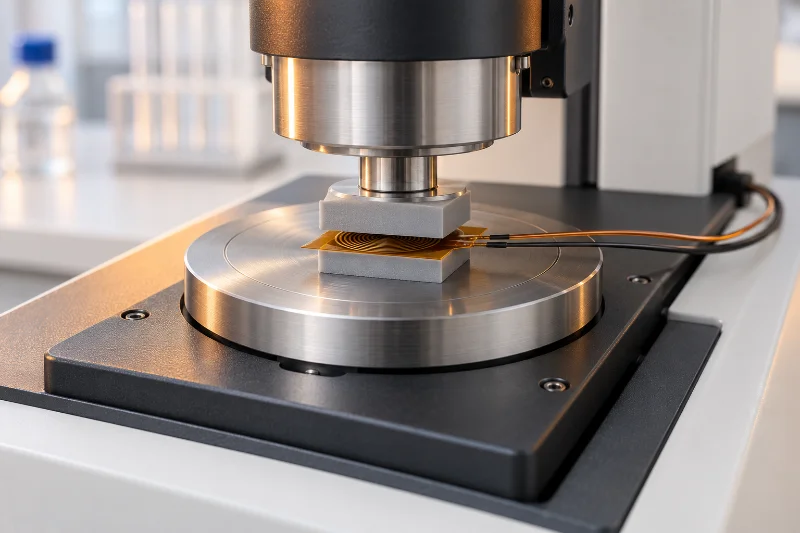
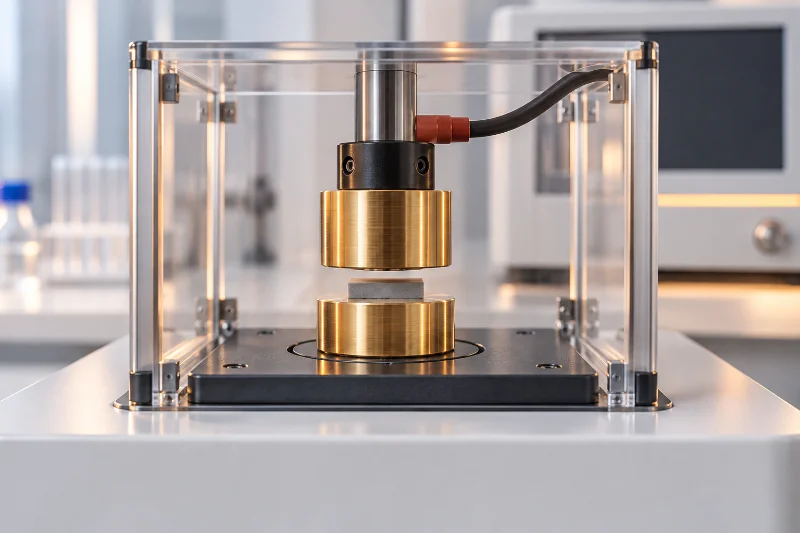
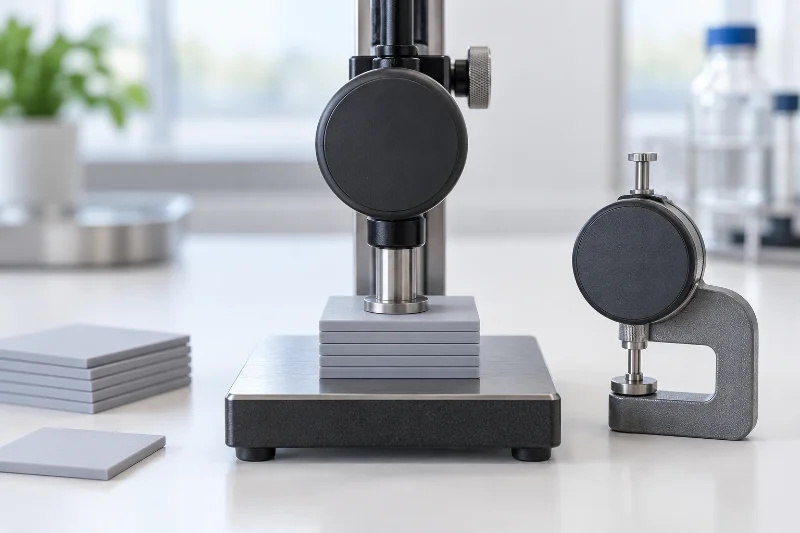
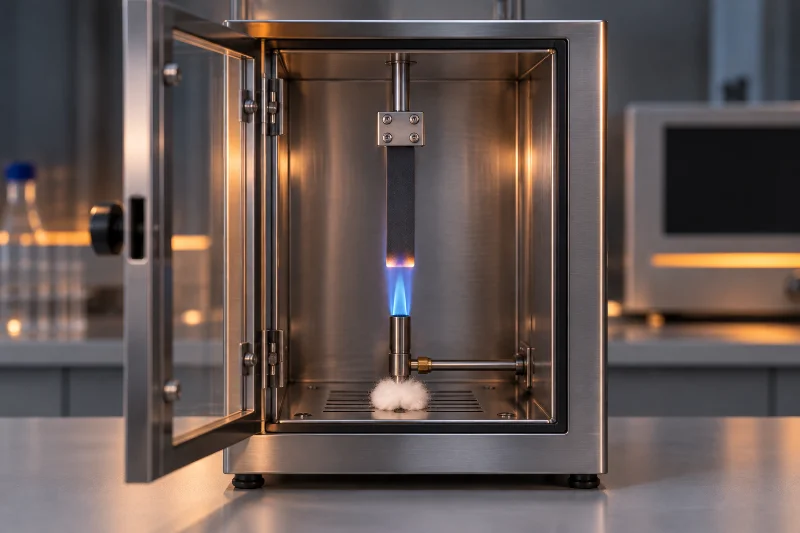
Dielectric breakdown is the failure an insulating pad must not allow, and each model lists breakdown voltage and volume resistivity against it. Outgoing inspection items and lot records are not published; whether lot data can be reported for the properties your incoming check covers is a question for the RFQ.
On paper, the compliance evidence is a RoHS-compliant formulation in the series description and a V-0 result in the UL 94 flame test. A RoHS test report, UL file details and supply capacity are not published for the pads. Warranty terms are not published on this page. Ask for them with your RFQ, together with after-sales and claim terms.
UL 94 results apply to the thickness tested, and the 30101 data does not state that thickness; with pads listed from 0.4 to 10 mm, the tested thickness is worth confirming against yours.
What to Send for a Thermal Conductive Pad Quote
A pad quote needs the joint's size, thickness and insulation requirement, plus the volume and packaging form it is priced on. Whether your model and construction pair can be supplied is the first point to settle.
- Cell format or component layout, and cold plate or heat sink type
- Sheet length × width and preferred construction
- Pad thickness within 0.4–10 mm
- Target conductivity or model number
- Working voltage and the insulation margin required
- Annual volume and packaging form
For 30101, this page carries no MOQ, sample or production lead time, packaging, shipping-document, payment or inspection terms, so name the ones your purchase depends on in your RFQ. Transit time, duties and import paperwork follow the destination, so the RFQ should state the destination port.
Thermal Conductive Pad FAQ
Does a thermal conductive pad stick to the cold plate by itself? +
All 30101 pads are self-adhesive, but the bare construction's self-adhesion is listed as weak. PI-tape reinforced pads add an adhesive backing that bonds more firmly to the cold plate. Where cells must be held to the plate, the 30107 polyurethane structural adhesive is the material described for that job.
Is a pad electrically insulating without a PI layer? +
Each 30101 model states a breakdown strength from above 6 to above 12 kV/mm and volume resistivity above 10¹¹ or 10¹² Ω·cm, and the series lists insulation as a feature. PI-tape reinforcement is described as adding insulation. Breakdown figures are per millimeter of material, so whether a given pad thickness meets your working voltage and margin needs an engineering check.
What do the D4–D10 figures mean for a silicone-sensitive design? +
D4 to D10 are low-molecular-weight cyclic siloxanes, the volatile species usually tracked in silicone materials. Every 30101 model lists them below 100 ppm, measured by gas chromatography. Where a specification limits silicone near contacts or optics, that is the figure to check, and whether a GC report for the chosen model can be supplied is worth asking.
Is the UL 94 V-0 rating a UL certification? +
No. V-0 is the flame rating the material achieved under the UL 94 test method, and it is listed for all five models. No UL listing, yellow card or file number is published for 30101, so an approval that needs one should confirm it exists before relying on the rating.
Is thermal resistance or compression data published for 30101 pads? +
Not on this page. The datasheet gives conductivity to ISO 22007-2 but no thermal resistance, deflection-versus-pressure curve or thickness tolerance for any model. Whether data can be supplied at your target thickness and clamping pressure is a question to raise in the RFQ before qualification.
Which 30101 model adds the least mass per square meter? +
30101-0200, with a listed density of 2.1 g/cc, which works out to about 2.1 kg per square meter at 1 mm thick. The 8.0 W/m·K model, 0800, is the densest at 3.4 g/cc, or about 3.4 kg/m² at 1 mm, and mass rises in proportion to thickness for every model.
What are the MOQ, lead time and price for 30101 pads? +
None of the three is published for 30101, and neither are sample terms or supply capacity. Put the model, construction, sheet size and annual volume in your RFQ, and ask for MOQ, sample and production lead times and a price against your packaging form in the same request.