
Custom Liquid Cold Plates for EV Battery Packs, ESS Modules and Power Electronics
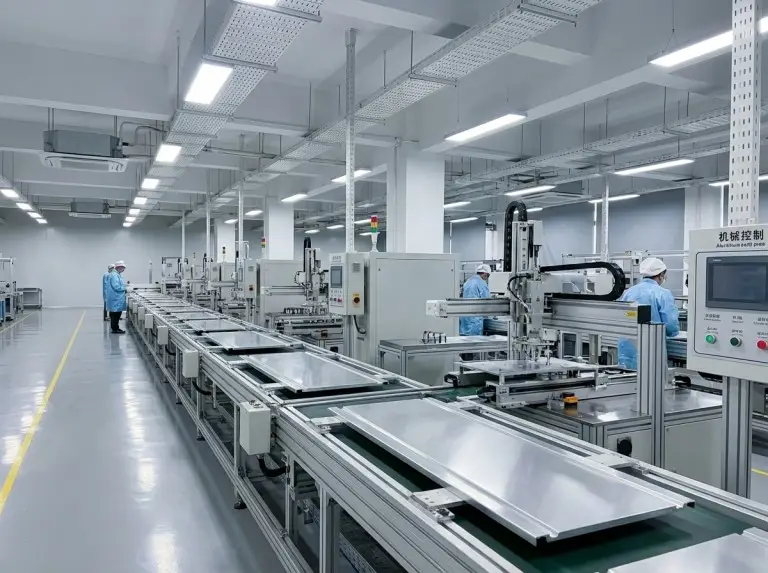
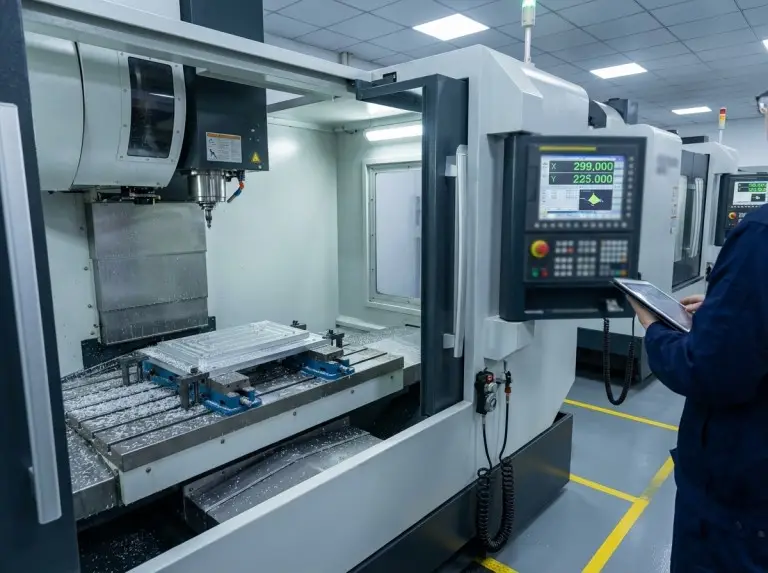
Trumonytechs builds custom liquid cold plates to your cell format and thermal boundary conditions, in microchannel, snake tube and stamped constructions — which one fits depends on pack layout and annual volume. Every plate is helium leak tested piece by piece before it ships. We quote from a CAD file or boundary dimensions, heat load data, coolant type, target temperature range and expected annual volume. DFM feedback comes back with the quote at no charge. CNC prototypes typically ship two to three weeks after design freeze; tooled constructions extend that, and the schedule is confirmed at design review.
Have a cell format and a heat load figure? That is enough to get a construction recommendation back.
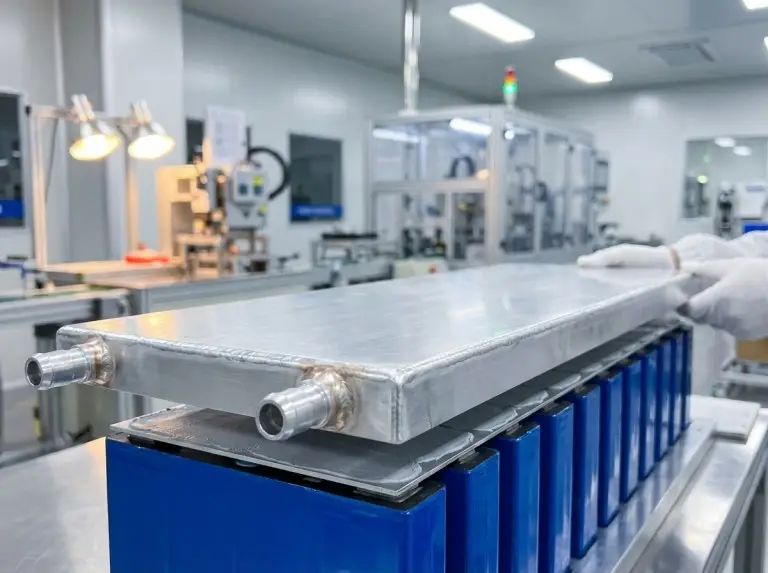
When Liquid Cooling Is the Right Call — and When It Is Not
Liquid cooling earns its cost when heat load per unit area passes the threshold a passive path can carry, or when cell-to-cell spread has to be held under 3–5 °C.
The cell-to-cell spread below which a passive path usually stops being enough.
- 01Passive is enough
Where the heat load can be managed by natural convection or a heatsink, a passive design is simpler and cheaper to qualify.
- 02No loop available
Where the system cannot accommodate a liquid loop — pump, reservoir, heat exchanger — the plate solves nothing on its own.
- 03Fluid incompatible
Where the working fluid is not compatible with aluminum or copper, the material question has to be settled before any geometry is worth drawing.
The heat path itself is short: cells generate heat, a thermal interface material carries it to the plate face, coolant picks it up in the channels, and an external exchanger rejects it. For grid-scale and C&I storage the design is driven by long duty cycles and sustained heat load, and that case is set out on our ESS koeloplossingen pagina.
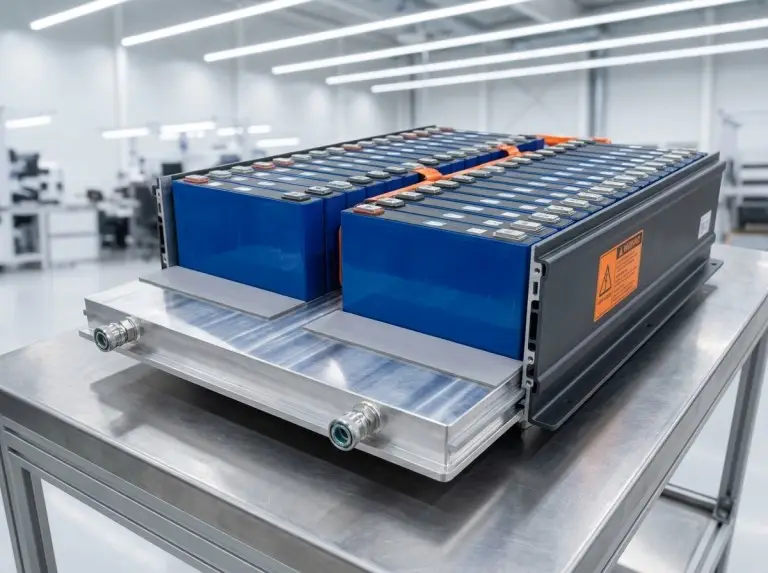
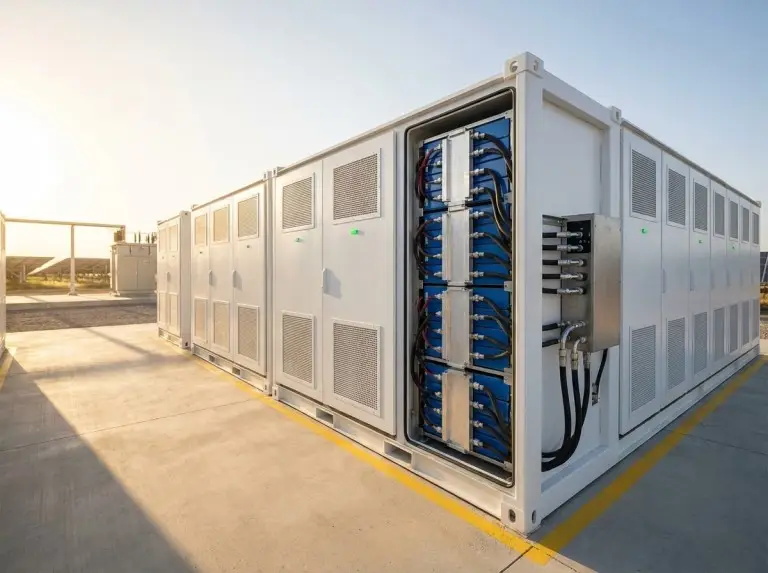

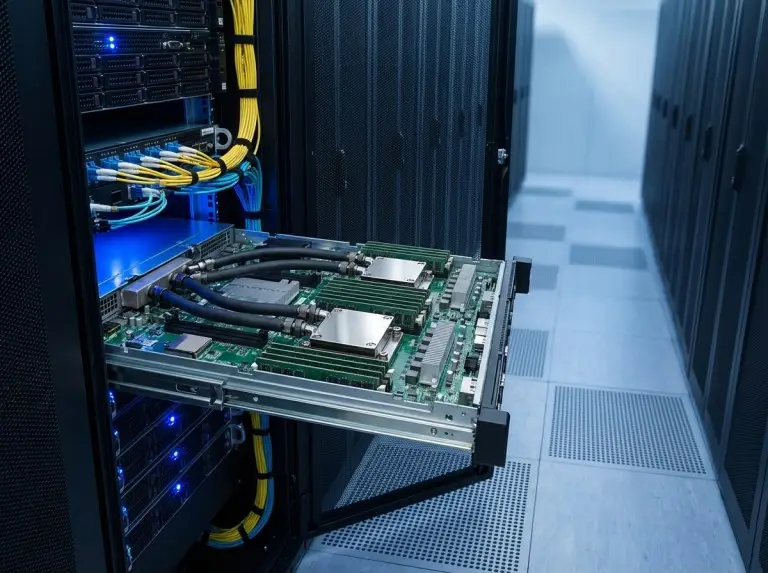
Microchannel, Snake Tube or Stamped: Matching Construction to Cell Format
Construction follows cell format and pack layout — the same duty can be met by three different plates, and the one that fits depends on how much room the pack gives the channels.

Microkanaal
Extruded profile with brazed fittings in 3003 aluminum alloy, the usual battery cold plate choice for prismatic and pouch packs where a large face has to be held even.

Snake tube
S-formed tube brazed into the assembly, for cylindrical modules — 18650, 2170, 4680 — where space is tight and routing options are limited.

Gestempeld
Flow path formed in the sheet, fins where needed. Stamped water cooling plates suit large faces and EV or ESS programs that have to scale.
Those three figures are plates already built, not an envelope limit. Maximum face, minimum channel width and minimum wall thickness depend on construction and tooling, and are fixed at drawing review.
Three things get decided in order. Cell format and pack layout set which constructions are geometrically possible. Annual volume then sets which of those is economic. Below the quantity where a dedicated die pays back, CNC and friction stir welded plates carry no tooling charge and reach a drawing faster. Above it, stamping brings per-piece cost down. Heat load and flow range come last, sizing channel density within the construction already chosen.
Channel density trades against pressure drop: packing more channels under a hot spot evens out face temperature and costs head the pump has to carry. We size that trade to the flow range you give us rather than to a default; the structural side of it is set out in our note on ontwerp vloeistofkoelplaat. Where the plate sits inside the pack and what the frame carries is a separate question — see thermisch beheer batterijpakket.
Materials, Coolant Compatibility and Surface Finish
Material selection on a liquid cold plate is decided as much by the coolant as by conductivity, because the fluid sets which alloys stay intact over the service life.
| Materiaal | Conductivity (approx.) | Corrosion resistance | Typical application | Note |
|---|---|---|---|---|
| 3003 aluminum | ~150 W/m·K | Goed | EV, ESS | Standaard |
| 1060 aluminum | ~234 W/m·K | Onder | Roll-bonded plates | Hoge geleidbaarheid |
| Koper | ~390 W/m·K | Moet gegalvaniseerd worden | IGBT, laser | Not in an aluminum loop |
Aluminum and copper do not share a coolant loop — galvanic pairing in a common fluid attacks the less noble metal. Glycol concentration works the same way: a specific concentration can accelerate attack on a specific alloy grade, so the pairing is verified early, not at qualification.
Anodizing, nickel plating and chromate conversion are available where the environment or the mating part calls for one. Outdoor cabinets and seasonal temperature swings are where the question comes up. Send the coolant type and concentration with the drawing — the alloy and any surface treatment follow from it, not the other way round.
What Drives the Cost of Custom Liquid Cold Plates
Price on custom liquid cold plates is driven by heat load, plate face size, the space available, production volume and the construction those four allow. Trumonytechs quotes against a drawing, not from a rate card. Tooling cost on a stamped plate and the volume at which it pays back are set per project. Scope of supply — whether fittings, interface material, test reports and packing are in or out — is worth asking for explicitly with your RFQ. DFM feedback is included at no charge.
Whether the part needs a dedicated die changes what it costs to make — send the annual quantity and we will tell you which side of that line you are on.
Cold Plate and Thermal Interface Material From One Supplier
Contact resistance at the plate face belongs to whoever owns both sides of the joint, and on most projects those two sides come from two suppliers.
Trumonytechs makes the plate and the thermische interfacematerialen that sit on it — pads, gels, gap fillers and potting compounds. Flatness tolerance on the plate and compression set on the interface get specified against each other, not separately.
Where a gap tolerance opens up, the fix can come from either side, and there is one party to ask.
How We Prove the Plate Will Not Leak and Will Hold Tolerance
Leakage is the failure mode that ends a cold plate program, and the test that catches it has to run on every piece rather than on a sample.
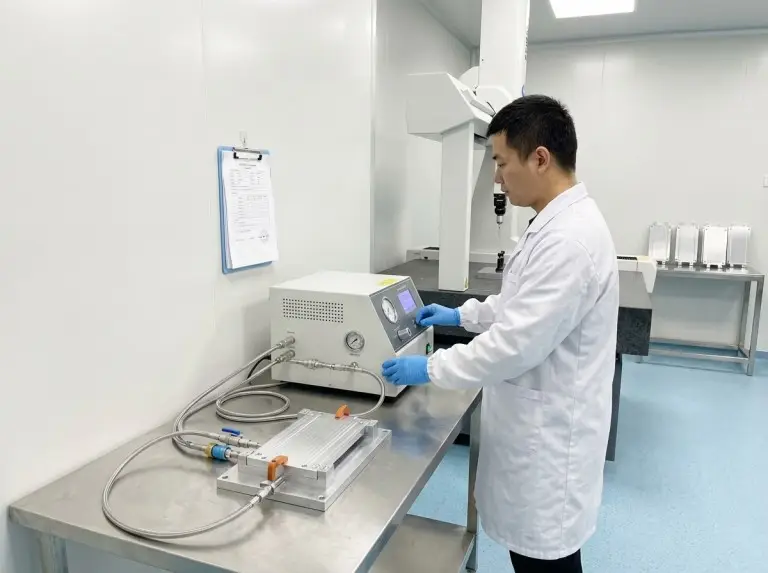
Every plate goes through helium leak detection — helium mass spectrometry is the most sensitive leak detection method available commercially — before it leaves the line. Hydrostatic burst testing runs above rated working pressure.
Weld and braze joints are checked visually and by metallographic section, on friction stir welds and brazed joints alike.
Dimensional control runs on CMM, including flatness across the thermal interface face.
A first article inspection report covers full dimensions and function before series release. Critical dimensions are held under statistical process control against a CPK target, and every batch ships with full traceability labeling.


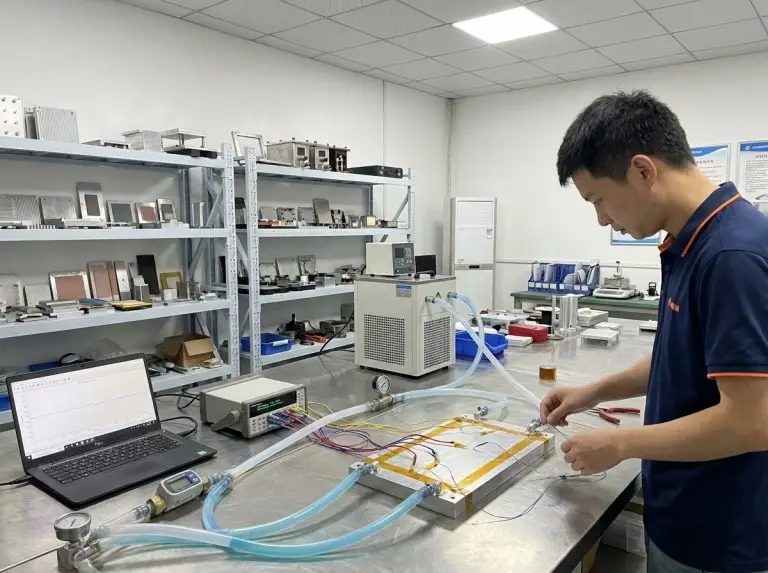
Before any of that, the design has to be shown to reach the numbers on your drawing, with a customer sign-off at each stage.
- Thermal assessmentFeasibility
Preliminary thermal assessment against your heat load and targets.
- Interface drawings2D
Drawings fixing the critical interface dimensions.
- Flow concept + CFDSimulatie
Flow path and fitting configuration, with a thermal and flow summary.
- Prototype and testVoorbeelden
CNC prototypes, tested, then iterated.
- VerificationAfsluiting
Verification against the agreed targets before series release.
Quality system certificates (ISO 9001, IATF 16949) are available on request; specify which you need in your inquiry. RoHS and REACH declarations and SVHC communication are available on request, and material composition supports IMDS submission.
We do not publish a customer list, and a named reference is something a buyer should be able to verify rather than take on trust. What can be verified is the record that travels with the parts: the helium test on each piece, the FAI report, mill certificates and a certificate of conformance in the shipping documents. DFM feedback on your drawing comes before you commit to anything.
Design Inputs, Lead Time and What Ships With the Order
Two inputs decide most of an OEM liquid cold plate quote, and both are yours to fix before anything else can be priced. Cell format and pack layout come first, because the construction choice follows from them. Heat load and duty cycle come second — peak and continuous both — because they set channel density and flow. Temperature targets, coolant type and inlet range, flow range and allowable pressure drop, and the mechanical envelope with its mounting points all matter. Each of them is priced against the first two, not on its own.
A first quote needs less:
- CAD file or boundary dimensions
- Warmtebelastingsgegevens
- Koelvloeistoftype
- Doeltemperatuurbereik
- Verwacht jaarlijks volume
- Design freezeInputs fixed
Construction, interfaces and program inputs are fixed.
- CNC prototype2–3 weeks
CNC prototypes, which need no tooling, typically ship two to three weeks after design freeze.
- Tooled constructionPlus tooling
Constructions that need dedicated tooling extend that by the tooling lead time, confirmed during design review rather than quoted as a fixed number.
Series lead time is set per program against volume and construction. Sample and prototype quantities stay flexible; series minimums follow the process and are set once the drawing and annual forecast are in. Before shipment the record is the inspection itself — helium test, CMM, FAI and the accompanying documents.
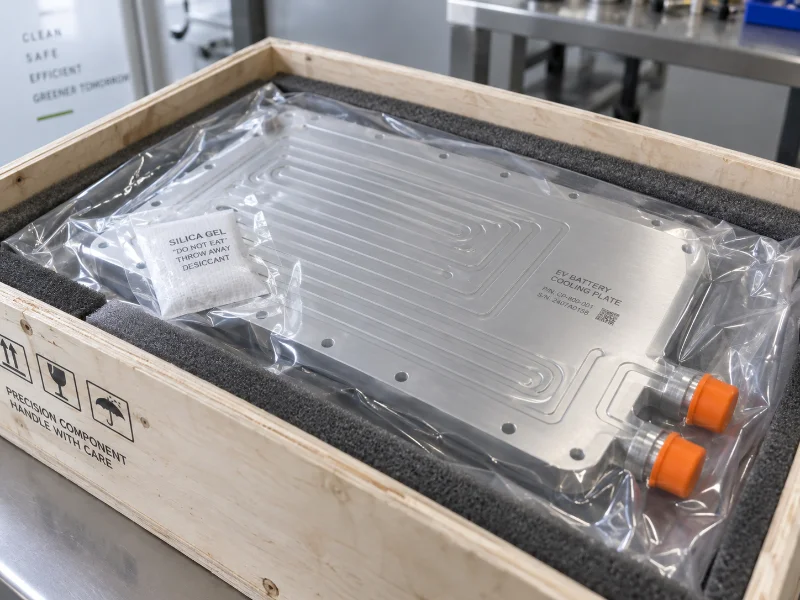
Plates ship in moisture-sealed packaging with desiccant and port plugs in place to keep particulate out, in wooden cases on larger orders. A certificate of conformance, technical data sheet, mill certificate and packing list travel with the goods.
Frequently Asked Questions
What is the MOQ for custom liquid cold plates?+
No single number covers it. A CNC or friction stir welded plate can run at low quantity because there is no die to amortize; a stamped plate needs enough annual volume to justify one. Prototypes are a separate case and stay flexible. The figure lands once the drawing and forecast are in.
What is the tooling cost on a stamped plate, and at what volume does it pay back?+
Tooling is quoted per project against part geometry and the annual figure, since both the die and the payback point move with them. A CNC or friction stir welded route avoids the question entirely at lower volumes. Send the drawing and a volume estimate with your RFQ.
Kun je het stroompad aanpassen op basis van onze warmtebronkaart?+
Yes. The flow path and fitting configuration are set during design, with a CFD thermal and flow summary against your heat load and duty cycle. Channel density can be concentrated where the map shows the hot spots. Send the heat source map together with the drawing.
How long does sea freight take to our port, and who handles customs?+
Transit time depends on loading port, destination and service, so the figure is confirmed against your port in the quotation, not published as a standard. Duties, clearance and any pre-shipment inspection follow the destination's own rules. Name the port in your first message and it is priced in the same round.
What happens after delivery — spares, claims, support?+
Traceability labeling on every batch means a plate can be tied back to a specific production run and the inspection records behind it — helium test, CMM and the first article report. Claims and spares terms are not set out on this page; ask for them with your RFQ.
Which commercial terms are not on this page?+
Warranty, payment terms, capacity against a specific annual forecast, and drawing confidentiality are not published on this page. Ask for the ones your procurement process needs when you send the RFQ, and say which stage you need them fixed at — RFQ or PO.
Aluminum or copper — what actually changes?+
The table above puts copper at roughly 390 W/m·K against 150 for 3003 aluminum, but copper needs plating for corrosion resistance and cannot share a coolant loop with aluminum parts. 3003 is the standard for EV and ESS plates; copper shows up on IGBT and laser work.