
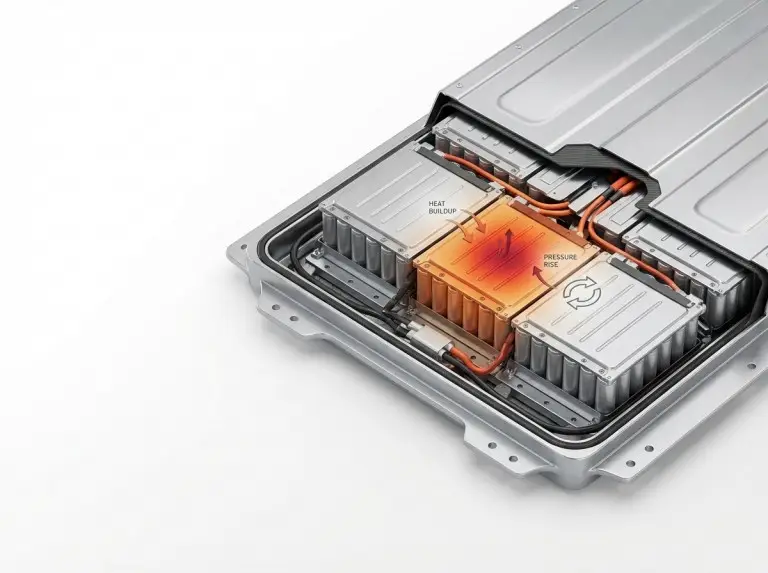
Thermal runaway is a dangerous chemical reaction. It can happen in lithium-ion batteries. It has become a major problem for the electric vehicle (EV) industry. This phenomenon describes a rise in runaway heat and pressure inside the battery. It can cause worse performance, shorter battery life, and even fires and explosions. EVs need more range. But, higher battery density and capacity have greatly increased the risk of thermal runaway. This affects the battery’s efficiency and safety. It also affects the brand reputation of EV makers. It affects the safety of users’ lives and property.
Against this backdrop, good BTMS are critical. They ensure battery cells stay at a safe temperature. This prevents thermal runaway. In the following article, we will explore thermal runaway to help you better understand the issue.
What Is Thermal Runaway?
thermal runawayThermal runaway is a risky event in lithium-ion batteries. It is an uncontrollable and fast rise in temperature and pressure inside the battery. The process starts with the battery heating up inside. When it reaches a critical temperature, it speeds up the chemical reactions. This makes the battery get even hotter. This quickly leads to a decline in battery performance. It also causes serious safety incidents like gas emissions, high temperatures, toxic fumes, and fires.
Due to the high energy density characteristics of lithium-ion batteries of current batteries. The battery’s temperature may rise rapidly. This can happen if heat from charging or discharging is not dissipated well. Or if the battery is damaged, overcharged, or faces other abnormal conditions. If the temperature exceeds the safety limit, the battery’s electrolyte may decompose. This creates more heat and gas and makes the risk of thermal runaway worse.
So, a good battery thermal management system (BTMS) is needed to prevent overheating and keep batteries safe. Trumonytech’s advanced liquid-cooled plate technology is designed to solve this problem. It provides EV/ESS with an efficient and reliable BTMS that makes the battery environment more stable.

How Does Thermal Runaway Start and Spread?
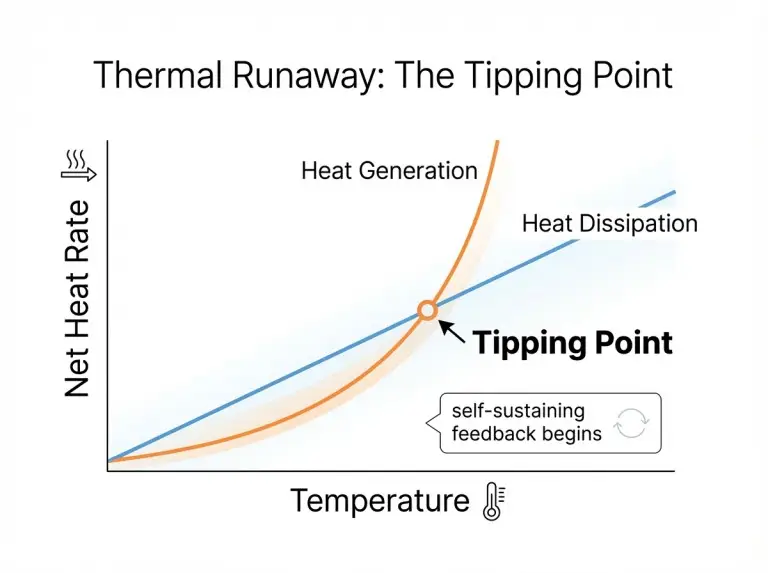
Thermal runaway does not start from nothing. It starts when heat inside the cell beats heat loss to outside. The imbalance lasts long enough. It pushes the cell past a no-return point.
In normal use, every lithium-ion battery makes some heat during charge and discharge. This heat is normal. It is easy to handle. Pack design, cooling, and controls keep temperatures safe. Problems start with odd conditions. They add heat. They cut heat removal. Or they make a fault with high local heat.
Heat Generation vs. Dissipation: The Key Balance
The core idea is balance. If the cell loses heat faster than it makes heat, temperature stays steady. If heat making wins, temperature rises. Reaction rates grow. Heat making speeds up.
This ties thermal runaway to system setup. The same cell may stay stable in one design. It may risk in another. Thermal paths, insulation, enclosure, and airflow differ. Early steps matter. Before the loop sustains itself, cut current. Lower temperature. Restore heat loss. This can stop growth.
From Cell to Pack: How It Propagates
A battery pack is not one cell. It is many cells in modules, then in a pack. Thermal runaway is most dangerous when a bad cell heats neighbors enough to stress them.
Spread risk grows when cells pack tight. Thermal barriers lack. Heat has few escape paths. If a cell vents hot gases and heat into a closed module, local temperature rises fast. Nearby cells reach their limits. This makes a chain.
This is why big packs need strict design. A single cell event in a phone may stay alone due to low energy. In an EV/ESS pack, stored energy is much higher. More cells raise fault chance. The job is to stop cell faults from becoming pack events.

Signs of Developing Thermal Runaway
Thermal runaway can show as fast local heat, swelling, odd smells, or venting sounds. In late stages, the cell releases gases and aerosols under pressure. In a pack, venting comes with a quick temperature jump and signal change.
The key is not to learn one sign. Understand it as a process with stages. Early odd heat warns of shifting balance. Late venting shows strong reactions and pressure.
Main causes of thermal runway
Thermal runway is dangerous. It can happen in the operation of lithium-ion batteries. It involves many factors, including internal short circuits, overcharging, and discharging. Also, it involves the effects of external heat sources, electrolyte decomposition, BMS deficiencies, and battery aging and wear. Understanding these factors is critical to improving battery safety and reliability.
Internal short circuits: Short circuits inside batteries cause most thermal runaways. They can come from physical damage, manufacturing defects, or broken partitions. These conditions can make the electrodes touch. This contact triggers a short circuit. It can quickly raise battery temperature.
Overcharging and discharging: Exceeding a battery’s recommended charging and discharging limits adds stress to the battery. This can lead to runaway chemical reactions. Overcharging is very dangerous. It can make the electrolyte overheat and decompose. This speeds up the start of runaway thermal.
External Heat Sources: High temperatures or being near heat-generating equipment can greatly raise a battery’s temperature. High temperatures and heat-generating equipment can raise a battery’s temperature. This can push it to a critical point that triggers thermal runaway.
Electrolyte Decomposition:At high temperatures, the electrolyte in the battery may break down. This breakdown produces gases and other substances. These gases can increase the pressure inside the battery, causing the battery case to rupture or, in more severe cases, explode.
Inadequate Battery Management System: A good Battery Management System (BMS) is essential. It monitors the battery and controls its temperature. A bad BMS may not monitor charge and discharge or battery temperature well. This can cause overheating and thermal runaway.
Aging and Wear and Tear: Battery performance degrades over time and with use. The battery ages. This leads to more resistance and loss of parts. This raises the risk of thermal runaway.

Hazards of Thermal Runaway: What Gets Released
Thermal runaway hazards go beyond heat. Venting releases gases and aerosols. The hazard has two parts: toxicity and flammability. Both count. They shape how risk spreads in real settings.
Venting and Pressure Build-Up Stages
As reactions speed, the cell makes gases. They raise pressure. Cells have vents to ease pressure. But venting shows the cell in bad state.
Venting can look like smoke, mist, or vapor based on cell and enclosure. Release may be short or long. Enclosure and airflow shape what follows.
Toxic and Flammable Risks Explained
Some compounds harm breathing. Even without fire, air around the pack turns dangerous. This matters in closed spaces. Gases build up.
Some gases burn. Hazard is not just release. It is mix with heat and sparks. Seeing thermal runaway as fire risk only is wrong. It is also chemical exposure and spark risk.
Vapor Cloud Ignition and Explosion Dangers
Flammable gases vent and mix with air. A cloud forms. Under right setup, it ignites. Spark may come now or later if cloud spreads.
This explains sudden severity change. A pack vents first, then ignites. Grasp this for better prevention. Control heat. Cut venting chance. Limit spread paths for big releases.
How to Prevent and Manage battery thermal runaway
Preventing and managing thermal runaway in lithium-ion batteries is key. It ensures the safe operation of electric vehicles (EVs) and energy storage systems (ESS). The risk of battery thermal runaway can be greatly reduced. A set of measures can protect battery systems from damage. Below are some key prevention and management strategies:
Design and Manufacturing: Quality control is critical. It happens during the design and manufacturing of the battery. Internal short circuits can be prevented by using high-quality materials and ensuring accurate assembly of battery components. This includes strengthening the battery separators to avoid damage and defects. It also includes ensuring that there is enough isolation between battery cells to reduce short circuits.
Effective Battery Management System (BMS): An advanced BMS is key to preventing thermal runaway. It allows real-time monitoring of the battery’s status. This includes its voltage, current, and temperature. The BMS provides precise charge and discharge control. It stops overcharging and discharging. This reduces the risk of thermal runaway. Also, the BMS can act right away when it detects a problem. For example, it can disconnect the battery or turn on the cooling system. This prevents further temperature rise.
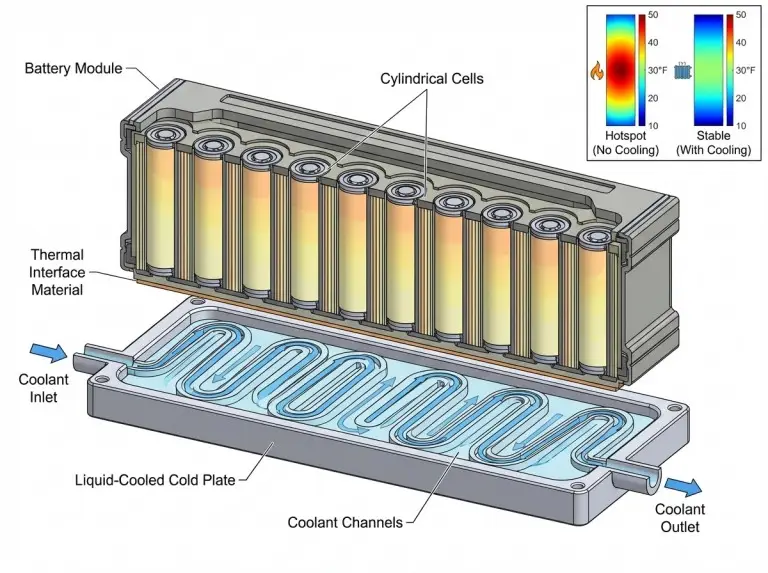
Temperature regulation: Implementing good cooling and thermal barriers is key. They control battery temperature and prevent thermal runaway. Liquid and air-cooled systems are common. They conduct the heat made by the battery well. In some tough cases, PCM and heat pipes can boost cooling.
Regular Inspection and Maintenance: Battery systems in high-demand applications need regular health checks and maintenance. These measures are important to ensure safety. This includes checking the battery’s physical condition. It also includes testing battery performance. And it involves assessing if the BMS is working well. By identifying and resolving issues promptly, thermal runaway events can be effectively prevented.
Impact of thermal runaway on the electric vehicle industry
Thermal runaway has a big impact on the electric vehicle (EV) industry. It affects vehicle safety and the maker’s finances and brand. Thermal runaway events can overheat the battery. This can cause a fire or explosion. They endanger passengers and those around them. Such incidents can result in big injuries. They can also cause damage to the vehicle and its surroundings.
A thermal runaway event can cause costly recalls from an economic perspective. These costs include direct repair and replacement costs. They also include indirect losses from reduced sales, lower stock prices, and weakened consumer confidence. Also, a thermal runaway event can draw regulators’ attention. This can lead to stricter safety standards and testing, raising the complexity and cost of EV production.
Preventative measures are critical to safeguarding consumer safety and maintaining brand reputation. By investing in efficient Battery Thermal Management Systems (BTMS) and using advanced Battery Management Systems (BMS), EV manufacturers can greatly reduce the risk of battery thermal runaway. This improves battery safety and stability. It also boosts the EV’s performance and range. In addition, educating users on proper battery use and maintenance is an important part of preventing thermal runaway.
So, being proactive can prevent safety incidents. It can also protect and improve the market position of EV brands. With the rapid growth of the electric vehicle industry, it is incumbent upon every manufacturer to focus on and invest in battery safety technology.
Conclusion
Thermal runaway is a big risk when using lithium-ion batteries. It can cause overheating, fire, and even explosion. This seriously threatens user safety and harms the electric vehicle industry’s growth. An effective Battery Thermal Management System (BTMS) is vital to prevent thermal runaway batteries. This requires accurate battery design, an efficient Battery Management System (BMS), timely temperature regulation, user education, and regular battery inspection and maintenance. Trumonytechs is dedicated to the safe and reliable thermal management of electric vehicles and energy storage. They do this through advanced liquid-cooled panel tech and professional battery pack solutions. and reliable thermal management. Please feel free to contact us today for your dedicated solution.
FAQ
What is thermal runaway?
Thermal runaway is a dangerous phenomenon. It can happen in lithium-ion batteries. It involves a rapid and uncontrollable rise in the battery’s internal temperature and pressure. This rise can cause overheating, fire, or explosion. This state is usually triggered by an uncontrolled chemical reaction within the battery, leading to an increased chain reaction of temperature and pressure.
What are the main causes of thermal runaway?
The main causes of thermal runaway include internal short circuits, overcharging, and discharging. Also, the effects of external heat sources, electrolyte decomposition, and bad battery management systems (BMS). Physical damage or manufacturing defects cause internal short circuits. Excessive charging, discharging, and improper temperatures can worsen chemical reactions in the battery. This increases the risk of thermal runaway.
How fast can thermal runaway develop?
Thermal runaway can grow very fast once the heat loop sustains. Timeline depends on cell type, charge state, pack design, and heat loss. From odd heat to venting or spark can happen in short time.
Why can lithium-ion battery fires re-ignite?
Re-ignition risk comes from retained heat in damaged pack. Unstable cells remain. If reactions go on or neighbors reach limits, event restarts after flames seem gone. Thermal control and containment are key.
How can thermal runaway be effectively prevented?
To prevent thermal runaway, you can: use high-quality battery design and manufacturing standards, use an efficient Battery Management System (BMS) to monitor the battery, use cooling systems, and raise user awareness of battery safety.
Taking these steps reduces the risk of thermal runaway. They protect battery safety and ensure that electric vehicles and energy storage systems are safe and reliable.